Quick answer
For most people, the best chemical free soap in India is a cold-process bar that publishes its complete ingredient list — including the lye — and backs any organic claim with a certificate you can look up yourself. On that test, Soulflower and Juicy Chemistry are the only two brands in this roundup whose organic certification appears in a public register we could search. Five — those two plus Rustic Art, Khadi Natural and Forest Essentials — hold a verified cruelty-free listing. And Rustic Art and Deyga publish the most complete ingredient lists of anyone here.
The uncomfortable finding: of the certification labels printed on natural soap in India, several cannot be verified by a shopper at all — not because the brands are hiding anything, but because the organisations named do not issue that kind of certificate. We checked, on 18 August 2026, and show you each certifier’s own words below.
This article contains affiliate links. We may earn a commission on qualifying purchases, at no extra cost to you.
What’s in this guide
- What we did, and what we did not do
- Four certification labels that cannot be checked
- The certifications that do check out
- How we ranked this list
- Quick comparison of all ten
- What actually makes a soap chemical-free?
- The 10 best chemical free soap brands
- Which soap suits your skin type
- On a budget
- How to read a natural soap label in India
- Our evidence, in full
- Frequently asked questions
What We Did, and What We Did Not Do
Let’s be precise about this, because a lot of “best chemical free soap in India” lists are vague about it.
We did not test these soaps. Nobody at Naatural.in used all ten bars for six weeks and compared lather. Any article claiming that about ten soaps at once is asking you to take a great deal on faith.
What we did was desk research, and a specific kind of it. On 18 August 2026 we read the full ingredient list published for every bar in this list — off the live product listing, not off the product title, which is where most roundups stop. Then we took every certification claim each brand publishes and went looking for that brand in the certifier’s own public register.
That second step is the part nobody else does, and it is where this article earns its place. It also produced a result we did not expect.
Four Certification Labels on Indian Soap That Cannot Be Checked
Before the brands, the labels — because once you know this, you read every natural soap listing in India differently.
1 IFRA does not certify anyone
You will see “IFRA Certified” on fragrance claims. The International Fragrance Association’s own website, checked on 18 August 2026, states that it does not certify compliance with its own Standards. A Certificate of Conformity is a document created by companies that make fragrance mixtures, based on the commercial relationship between a fragrance supplier and its customer.
There is no IFRA register of certified brands to search, by design. At best, an “IFRA Certified” line means the brand’s fragrance supplier issued a conformity certificate for that fragrance compound. It says nothing directly about the soap.
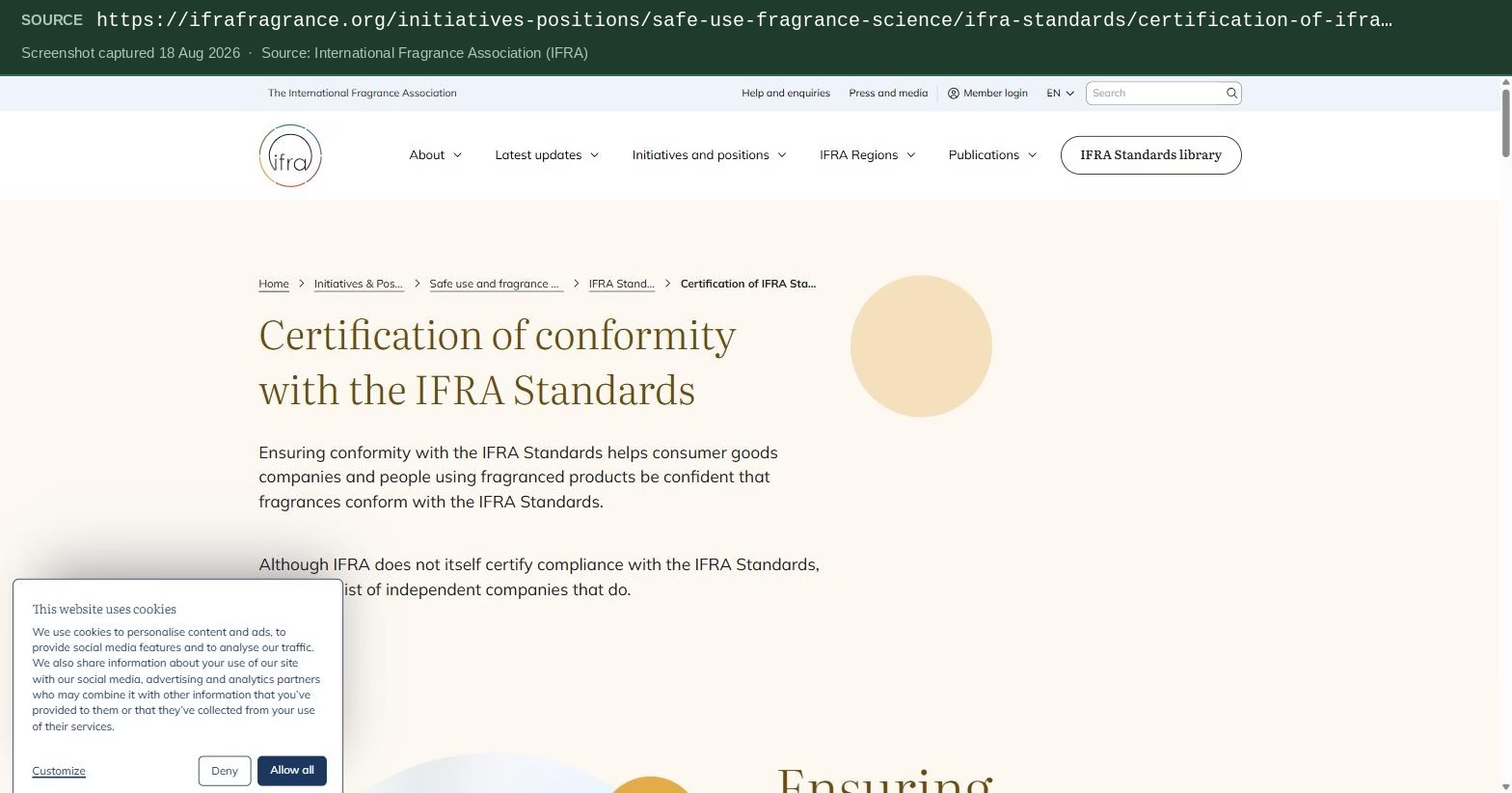
IFRA’s own page on certification of its Standards, captured 18 August 2026. Source: International Fragrance Association.
Check IFRA’s page yourself
2 ISO does not certify anyone either
This one is stated more bluntly than we expected. From ISO’s own website:
“ISO does not perform certification or issue certificates, and it does not permit anyone to use the ISO logo in connection with certification. Certification is performed by external certification bodies, thus a company or organization cannot be certified by ISO.”
Real ISO 9001 certificates absolutely exist — they are issued by accredited external bodies, and a genuine one can be verified through the international accreditation database. But to look one up you need the certificate number and the issuing body, and those are rarely printed anywhere a shopper can see. “ISO certified” on its own is not something you can check.
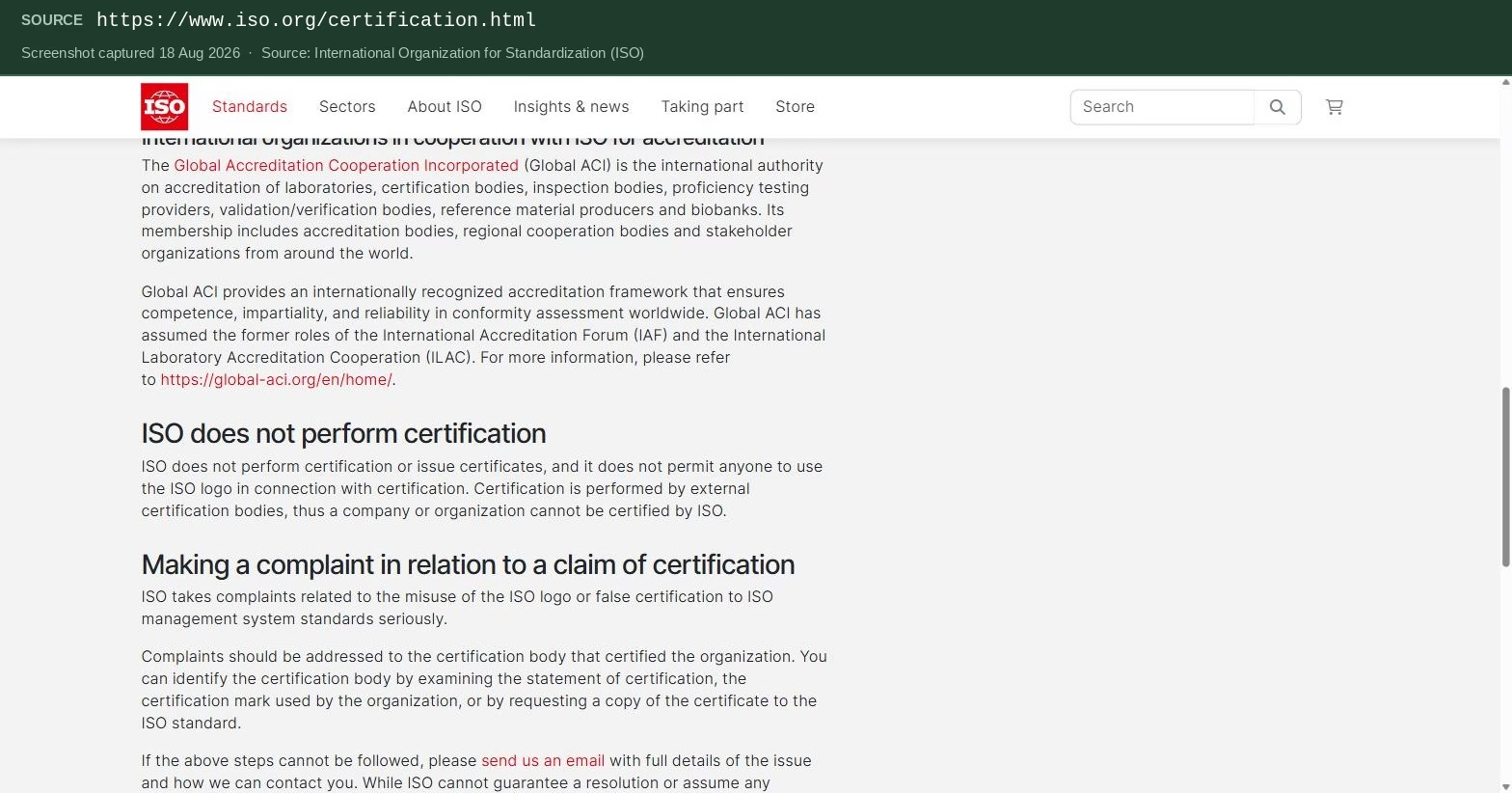
ISO’s certification page, captured 18 August 2026. Source: International Organization for Standardization.
Read ISO’s page yourself
3 WHO’s certification scheme is for pharmaceuticals, not soap
“WHO-GMP” appears on Indian personal care packaging often enough to be worth explaining. The World Health Organization runs a certification scheme covering pharmaceutical products moving in international commerce, and the certificates under it are issued by national regulatory authorities — not by WHO itself. Soap sits outside its scope, and there is no public register of companies to search.

WHO’s certification scheme page, captured 18 August 2026. Source: World Health Organization.
Read WHO’s page yourself
4 India Organic has no public brand register at all
This is the one that genuinely surprised us. India Organic / NPOP certification is real and meaningful — but as of 18 August 2026 there is no public directory where a shopper can type a brand name and see whether it holds one. APEDA’s TraceNet offers only per-shipment Transaction Certificate verification, which requires a registration number, an organisation name, an email address, a mobile number and a CAPTCHA. The Jaivik Bharat site was unreachable when we checked.
So even a completely genuine India Organic claim on a soap is, in practice, unverifiable by the person buying it.
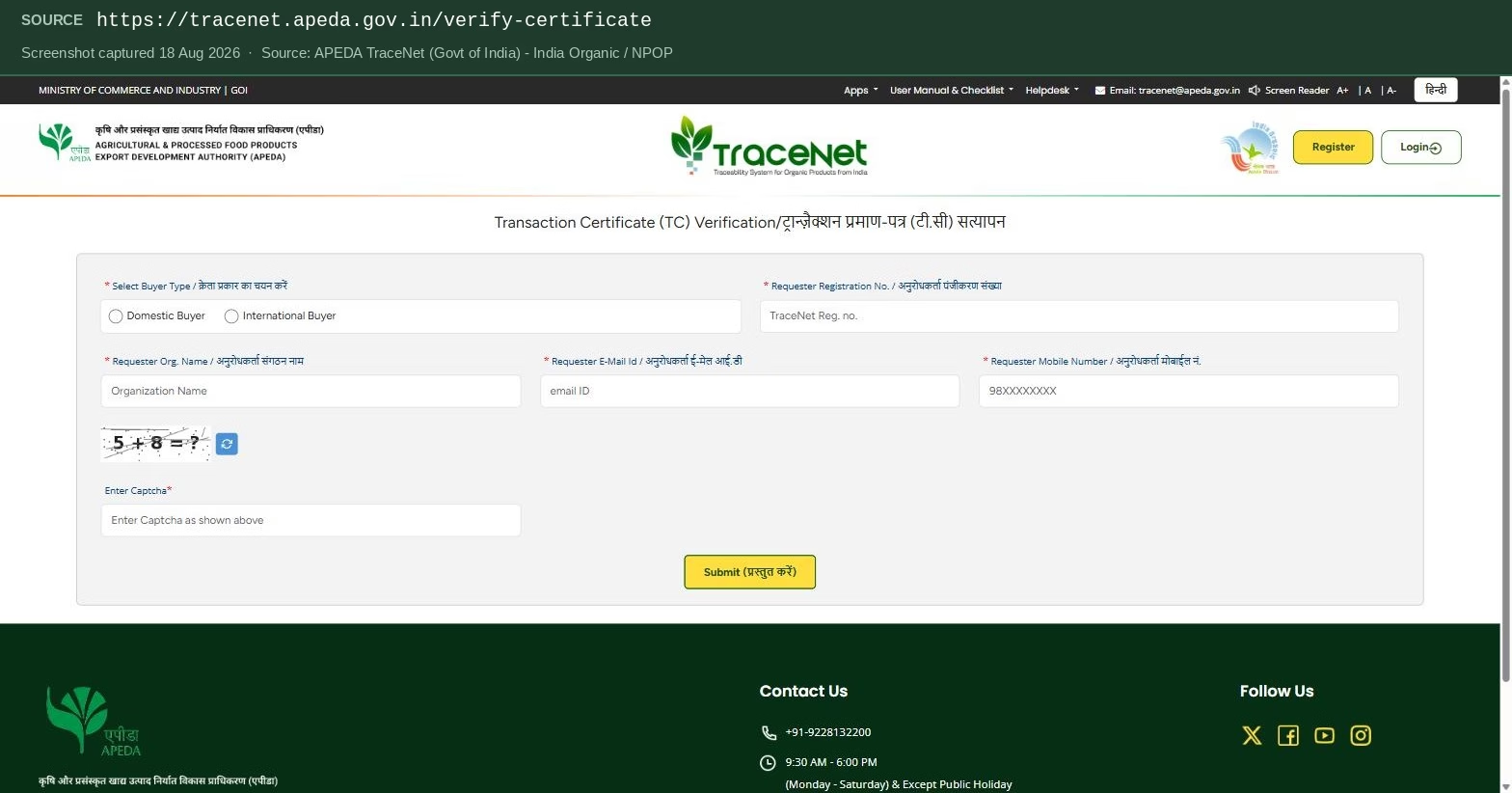
APEDA’s TraceNet verification page, captured 18 August 2026 — per-shipment Transaction Certificate lookup only. Source: Agricultural & Processed Food Products Export Development Authority, Government of India.
See TraceNet yourself
Worth saying plainly
None of this means a brand naming these is doing anything wrong. Most are describing something real in loose shorthand — a factory that follows GMP practice, a fragrance supplier’s conformity paperwork. The problem is structural: the shorthand looks like a certificate you could check, and it isn’t one.
The Certifications in This Roundup That Do Check Out
Here is the other half, and it matters more than the criticism.
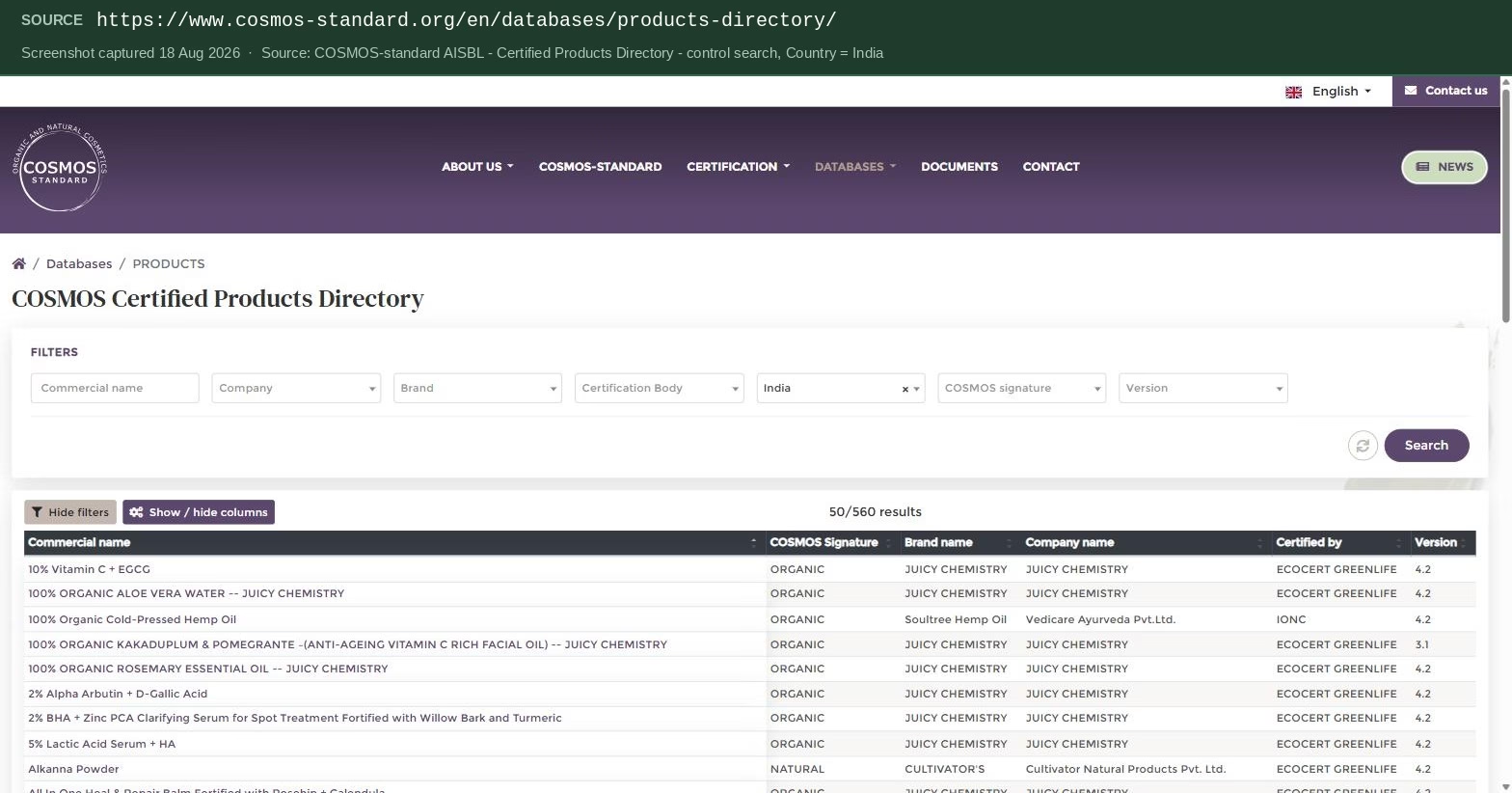
COSMOS-standard maintains a genuinely public, searchable directory of certified products — 31,283 of them worldwide, 560 registered in India. Type a brand name, get its certified products, the certifying body, and the standard version. This is what a checkable certification looks like.
Juicy Chemistry appears in it with 40 certified products, all COSMOS ORGANIC, all certified by Ecocert Greenlife. That is the most substantiated organic claim in this entire roundup.
A word on which register to search — because we got this wrong first
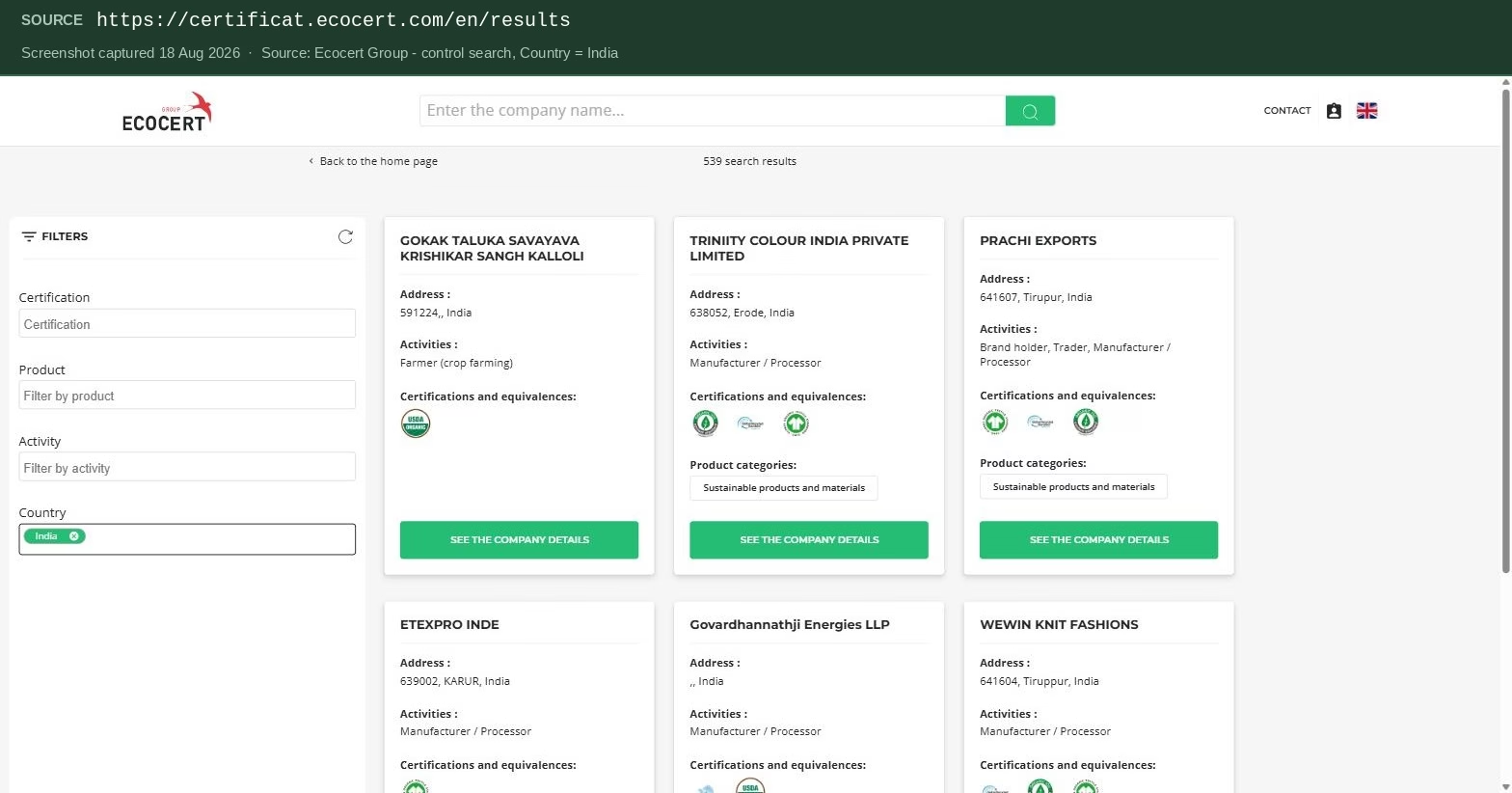
We began by searching Ecocert’s own directory of certified companies and found nothing — and very nearly recorded that as a blank. It was the wrong book. Ecocert’s company directory is opt-in and skews agricultural: 539 Indian entries, mostly farms and processors. The COSMOS products directory is where finished cosmetics appear. Same certifier, two different registers. If you go looking for a brand and come up empty, check you are searching the register that would actually contain it before concluding anything.
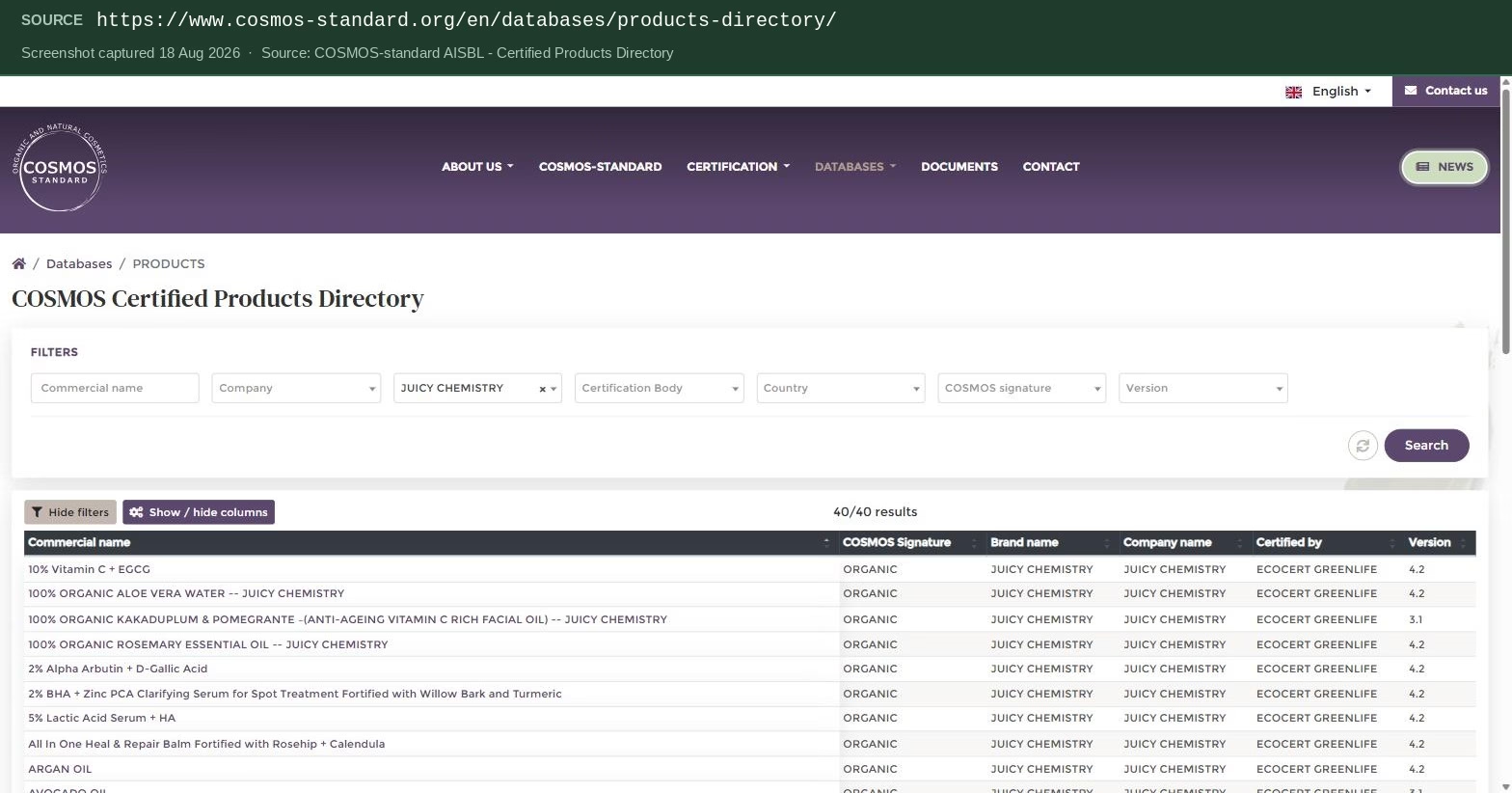
Juicy Chemistry’s entry in the COSMOS Certified Products Directory, captured 18 August 2026. Source: COSMOS-standard AISBL.
Search the directory yourself
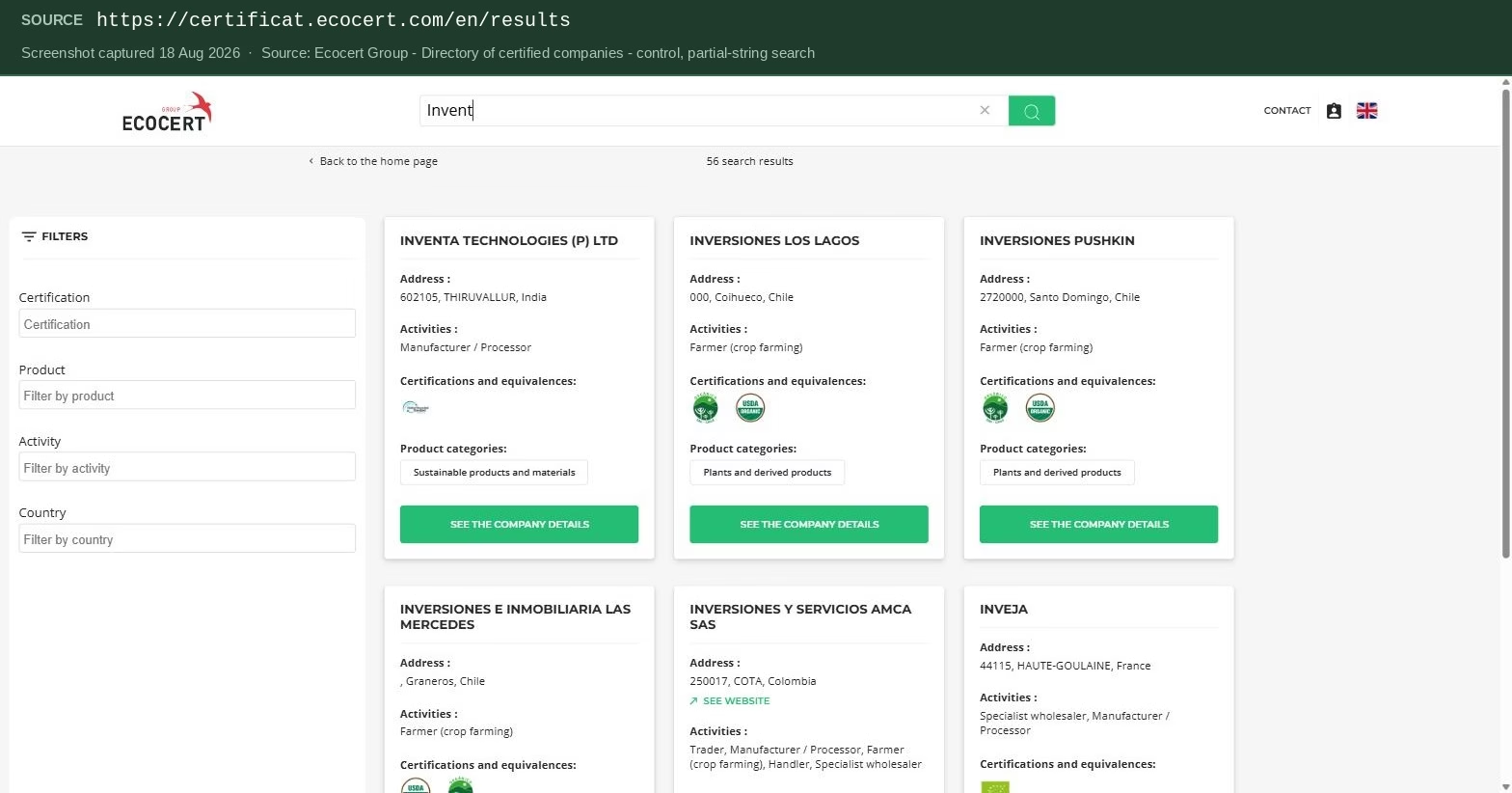
Soulflower appears with 14 certified products, also COSMOS ORGANIC via Ecocert Greenlife, registered under its company name P T Invent India Pvt. Ltd.
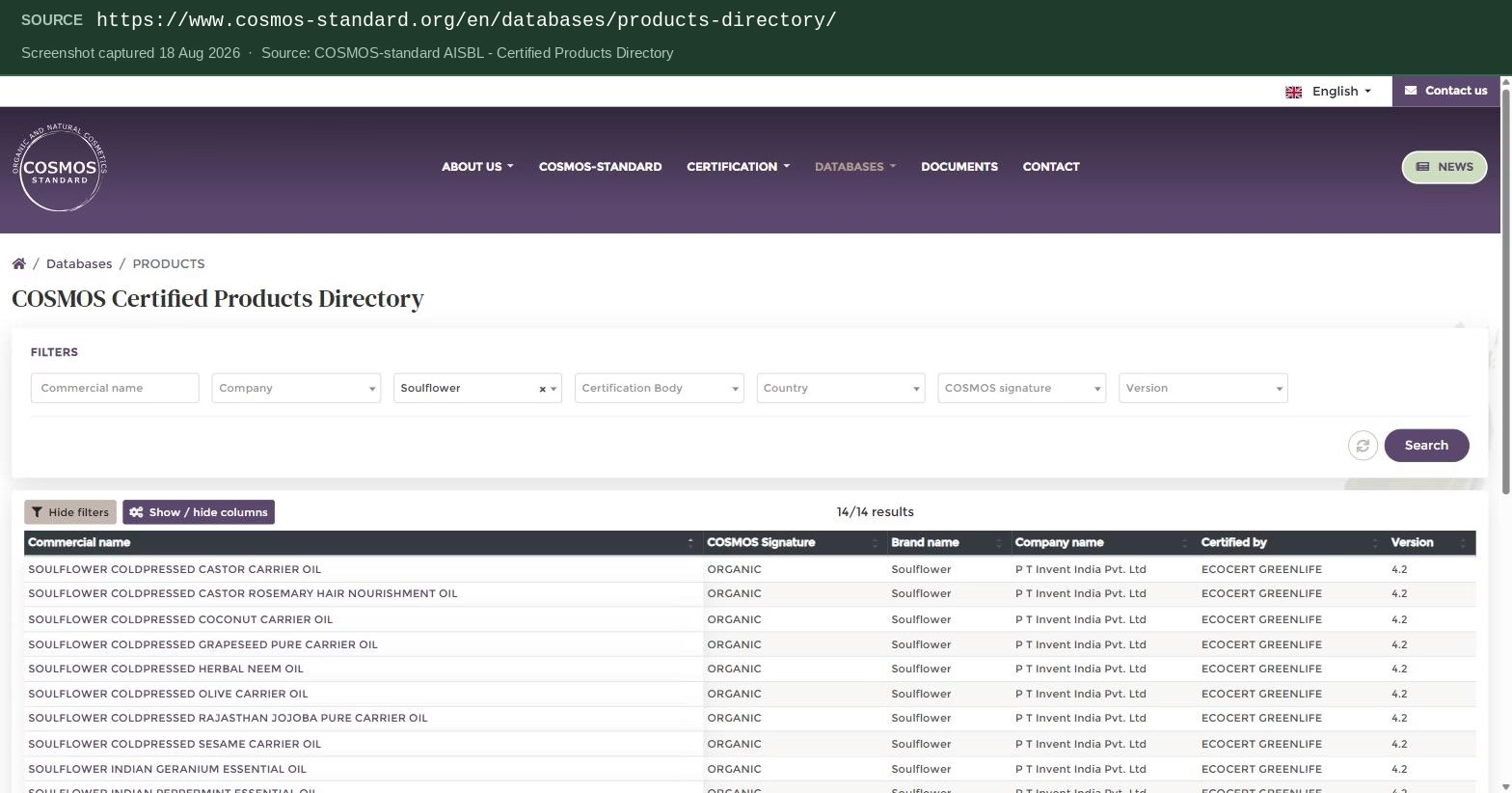
Soulflower’s entry in the COSMOS Certified Products Directory, captured 18 August 2026. Source: COSMOS-standard AISBL.
Search the directory yourself
The honest caveat — and it changes what these certificates mean for you
We read every one of those 54 certified product entries. Not one of them is a soap bar. Juicy Chemistry’s 40 are oils, hydrosols, serums, deodorants, lip balms, a face wash, a baby wash and a cleansing powder. Soulflower’s 14 are all cold-pressed carrier and essential oils.
A COSMOS certificate attaches to named products, not to a company’s whole catalogue. So both brands are genuinely, checkably certified — and their soap bars are not the products the certificate covers. That is not a criticism of either brand. It is how product certification works, and almost nobody explains it.
The practical takeaway: when a brand tells you it is certified, the useful follow-up question is not “by whom?” but “for which products?”
Five cruelty-free claims that check out
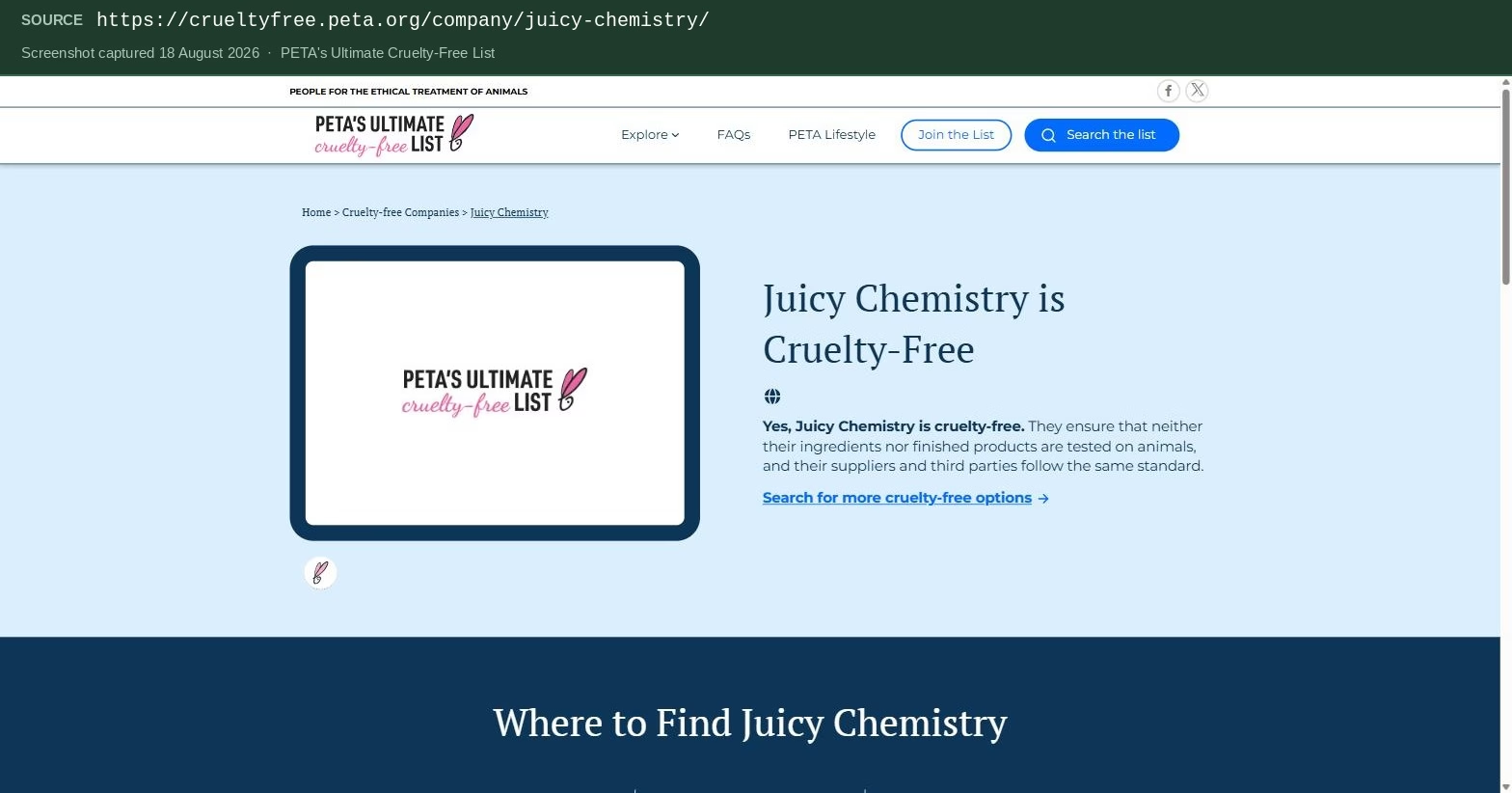
Cruelty-free is the one claim in this category that is genuinely easy to verify, because PETA publishes a free, searchable database and most brands that hold the listing say so.
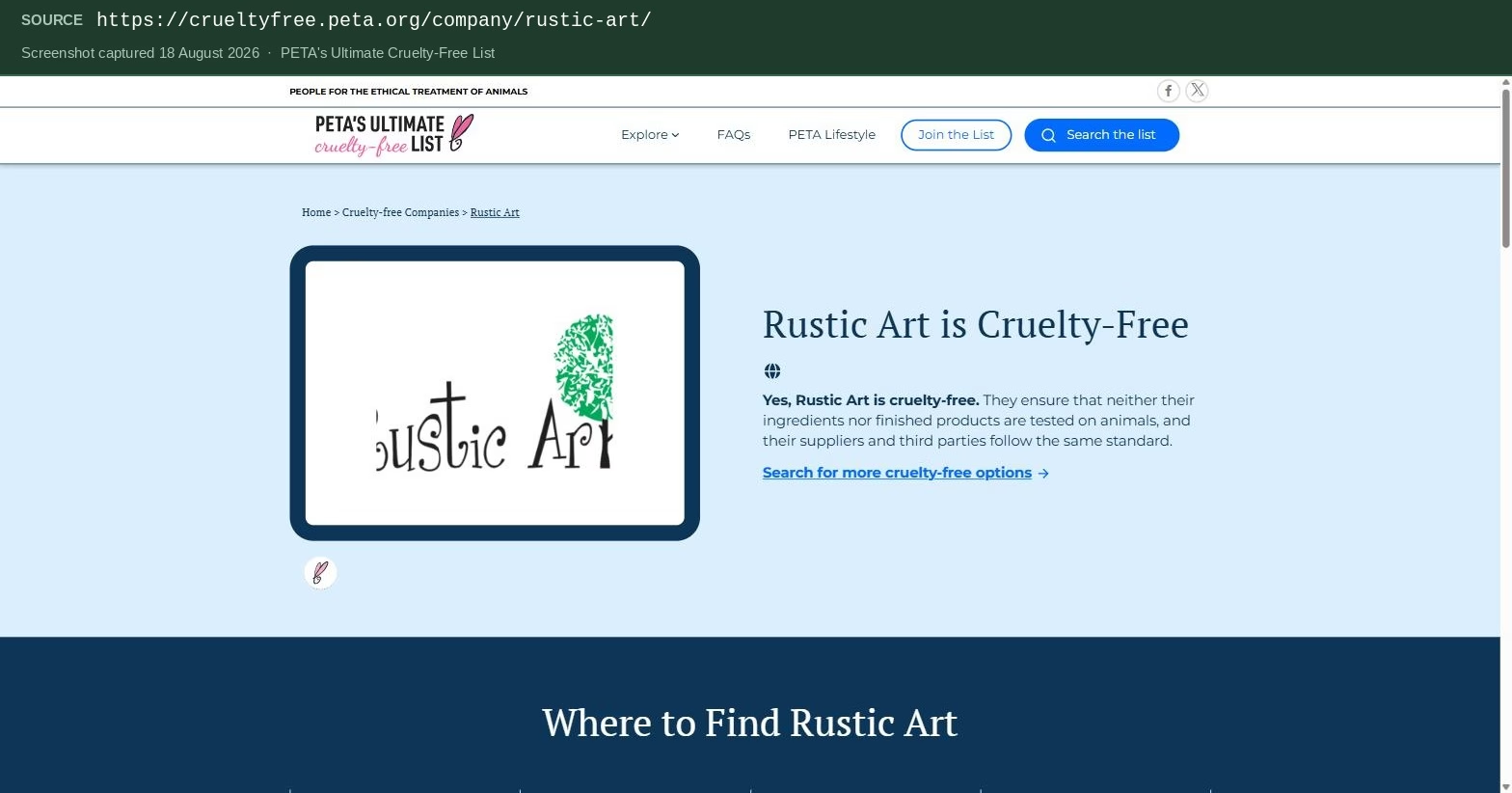
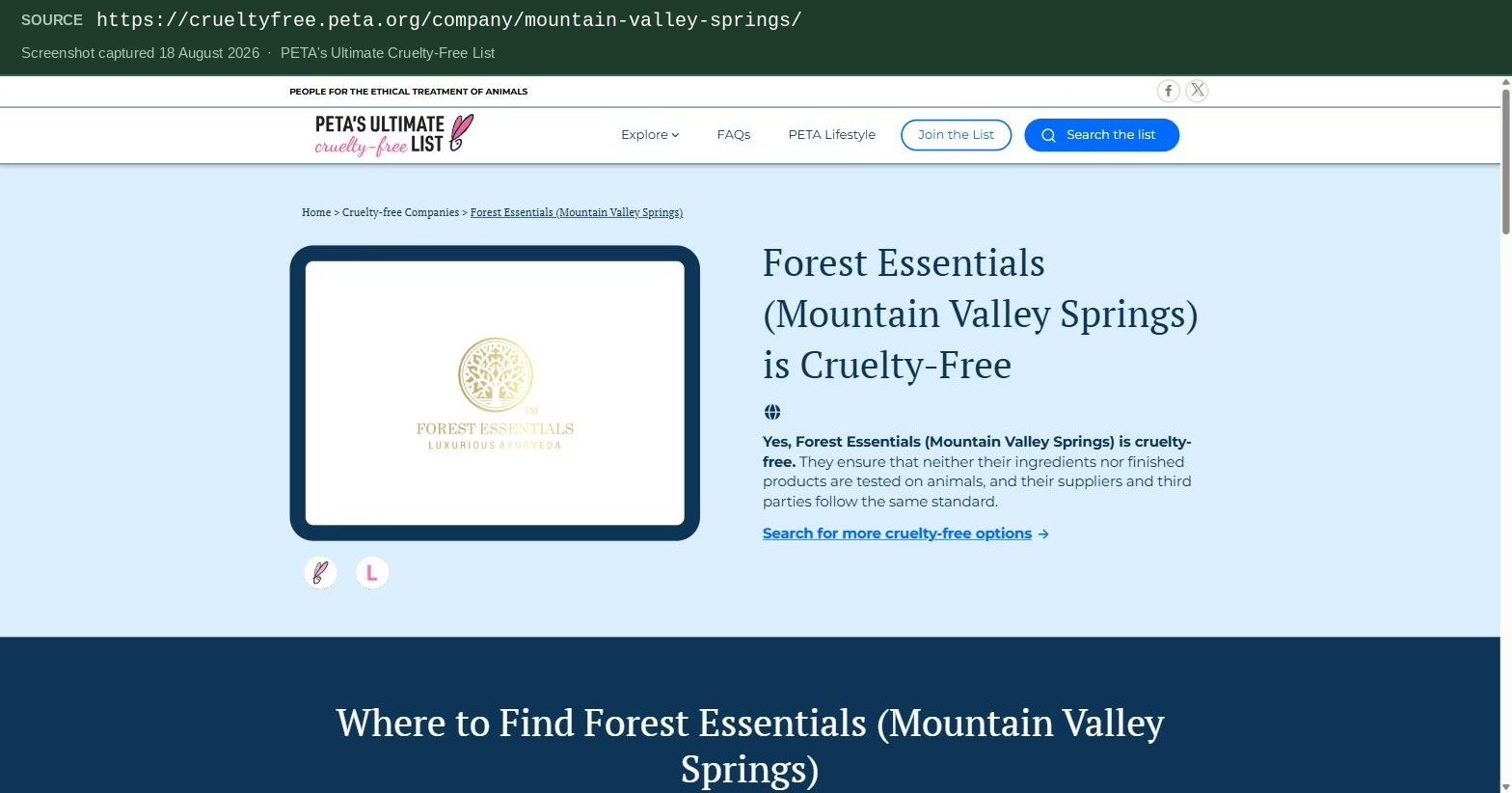
We searched it on 18 August 2026. Five brands in this roundup are listed: Juicy Chemistry, Rustic Art, Khadi Natural, Soulflower, and Forest Essentials — the last of these under its registered entity, Mountain Valley Springs, which is worth knowing if you search the brand name and find nothing.
One detail worth carrying into every future purchase: PETA issues two separate badges, and they are not the same thing. Cruelty-free means no animal testing. Vegan means no animal-derived ingredients. A brand can hold one without the other — and in this roundup, only Soulflower carries both.
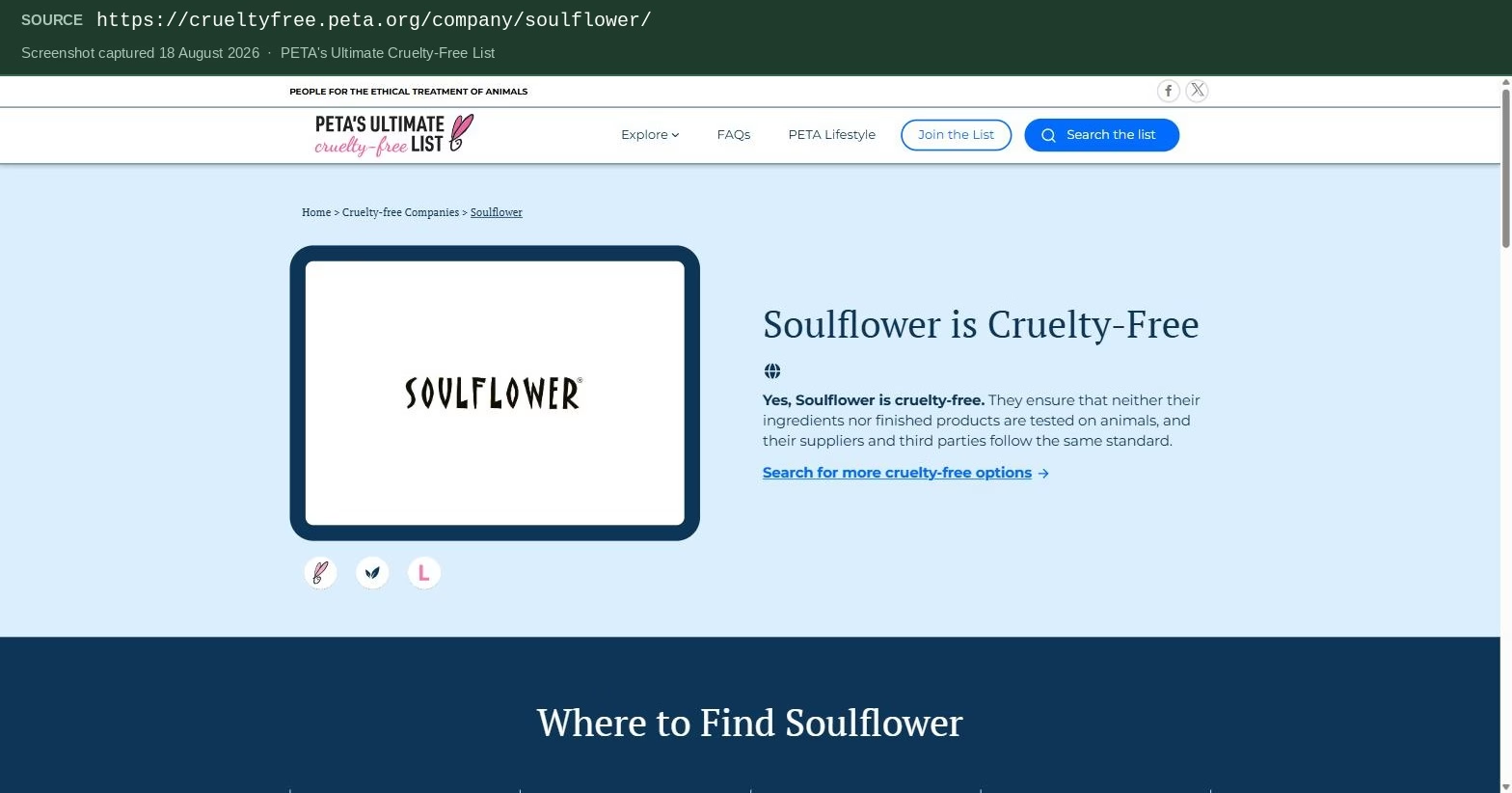
Soulflower’s entry in PETA’s Beauty Without Bunnies database, captured 18 August 2026 — carrying both the cruelty-free and the vegan badge. Source: PETA.
Search PETA’s database yourself
That distinction matters more than it sounds. Several bars in this list contain goat milk or honey, which are animal-derived but have nothing to do with animal testing. A brand can be entirely, verifiably cruelty-free and still sell a soap that is not vegan.
How We Ranked This List
No hands-on testing, so we are not going to pretend to a verdict we did not earn. Four criteria, weighted in this order:
- Certification you can actually look up. Two brands clear this for organic certification; five clear it for cruelty-free. Both count, and they are not the same thing.
- Ingredient transparency — does the brand publish a full INCI list, including the lye?
- Depth of customer evidence behind the specific bar we link to.
- Price accessibility, so this list works at more than one budget.
Where a brand sits near another on the first three, price decides — which is why the list spans roughly a fourfold range from the cheapest bar to the most expensive.
Quick Comparison: 10 Chemical Free Soap Brands in India
| Brand | Best for | Publishes full ingredient list? | Certification you can look up | Approx. price |
|---|---|---|---|---|
| Soulflower | Best overall value | Yes, plain names | COSMOS ORGANIC (oils, not this bar)PETA cruelty-free & vegan | around ₹100–175 |
| Juicy Chemistry | Sensitive skin | Yes, full INCI | COSMOS ORGANIC (not this bar)PETA cruelty-free | around ₹390–410 |
| Rustic Art | Label-readers | Yes, including the lye | PETA cruelty-free | around ₹215–235 |
| Deyga | Cold-process purists | Yes, including the lye | None named | around ₹360–380 |
| Khadi Natural | Budget herbal | Partial | PETA cruelty-free | around ₹190–210 |
| Earth Rhythm | Sensitive skin, syndet | Yes, full INCI | None named | around ₹300–320 |
| Forest Essentials | Luxury Ayurvedic | Key ingredients only | PETA cruelty-free | around ₹500–520 |
| Vilvah | Dry skin, goat milk | Mostly, one bar omits lye | None named | around ₹410–430 |
| Ancient Living | Everyday Ayurvedic | Partial | None named | around ₹360–390 (2 × 100g) |
| Biotique | Lowest entry price | Key ingredients only | None named | around ₹145–160 (2 × 150g) |
Scroll the table sideways to see every column.
What Actually Makes a Soap Chemical-Free?
Strictly, nothing is chemical-free — water is a chemical. What people mean by the phrase, and what this article means by it, is a bar without synthetic detergents, synthetic fragrance, synthetic colourants and petrochemical preservatives.
Three practical markers separate a genuine chemical-free soap from marketing:
It publishes a complete ingredient list, including the lye. All real soap is made by reacting fats with an alkali — sodium hydroxide for bars. None survives in the finished bar; it is fully converted during saponification. A brand that lists it is being straight with you. A brand that hides it is managing your impression of the product.
Its fragrance is named. “Fragrance” or “parfum” as a single word can legally cover dozens of undisclosed compounds. Named essential oils cannot.
Its claims name an issuer. “Organic certified” with no certifying body behind it is not a certification; it is an adjective.
The 10 Best Chemical Free Soap Brands in India
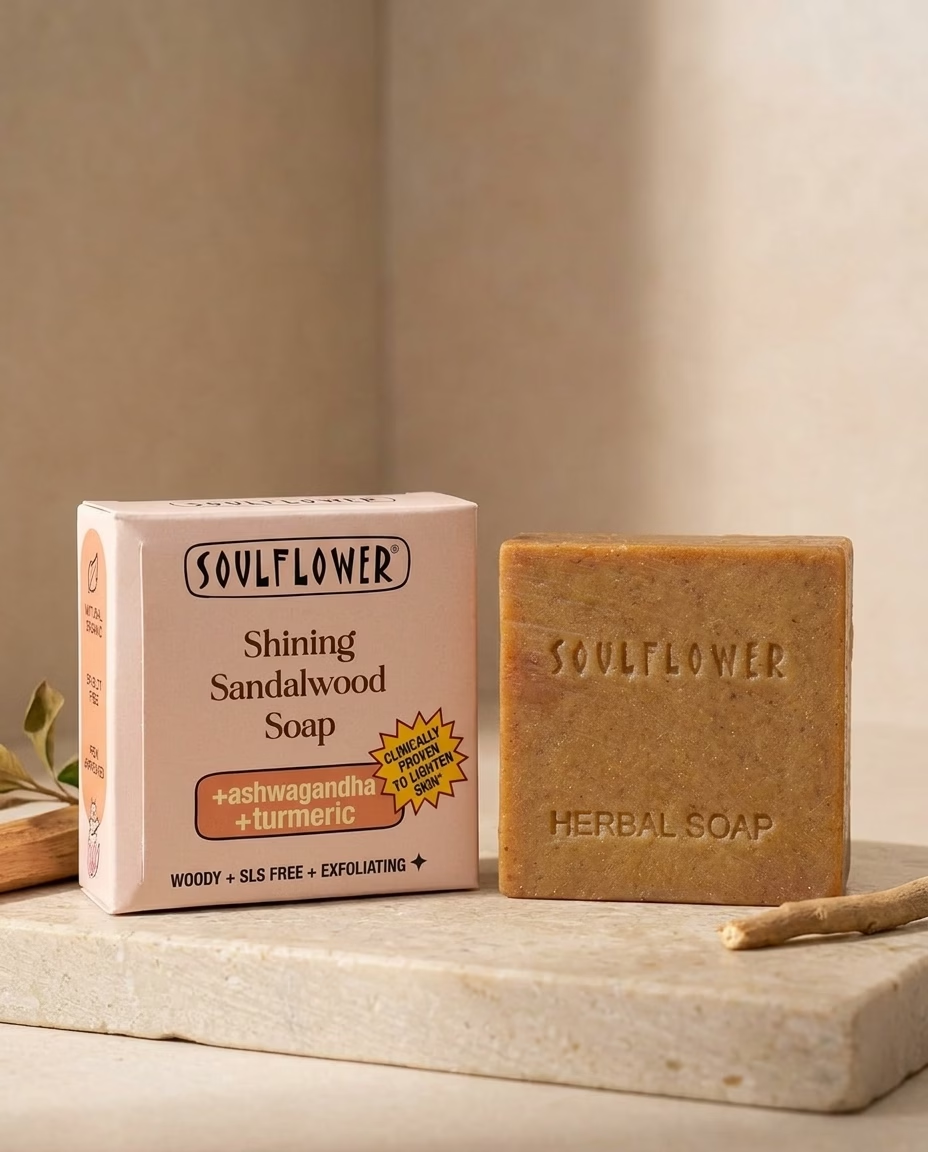
Both PETA badges — verified Cruelty-free and vegan
No. 1 · Best overall
Soulflower — Best Overall Chemical-Free Soap in India
Soulflower earns the top slot on the two things we can actually verify: it holds real, checkable COSMOS ORGANIC certification through Ecocert Greenlife on 14 of its products, and it has by a clear margin the largest and best-established base of customer reviews of any bar in this roundup. It is also the most accessible price in the list.
The ingredient lists are published in plain English rather than INCI, which is more readable but slightly less precise. PETA lists the brand as both cruelty-free and vegan — one of only two brands here carrying the vegan badge as well as the cruelty-free one.
The caveat we owe you: the COSMOS certificate covers Soulflower’s cold-pressed oils, not this soap.
Best for: anyone wanting the strongest evidence-to-price ratio in this list.
No. 2
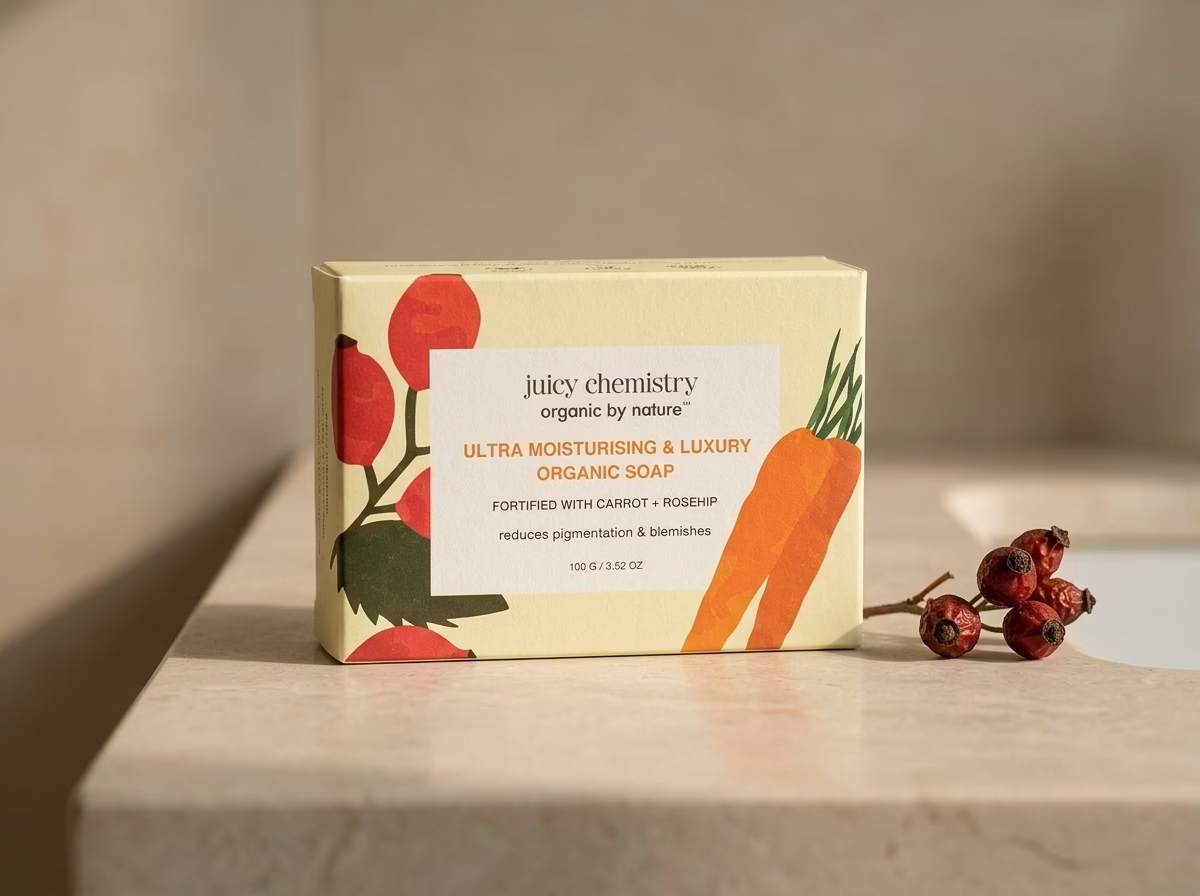
Juicy Chemistry — Best Chemical-Free Soap for Sensitive Skin
Juicy Chemistry publishes a complete INCI list for every product, states plainly that it does not use the word “organic” unless Ecocert permits it, and is certified at facility level with an annual re-audit. In a category full of loose language, that discipline stands out — and unlike almost every other organic claim we chased, this one is in a public register you can search yourself.
It moves down from the top slot for two honest reasons: the certificate does not cover this soap bar, and the customer evidence behind this particular listing is thinner than several others here — a real rating, but built on a modest number of reviews rather than an established base.
PETA lists the brand as cruelty-free. Formulations lean simple and cold-pressed, which is why it remains our pick for reactive skin.
Best for: sensitive or reactive skin, and anyone who reads INCI lists properly.
PETA cruelty-freewe checked the register
Juicy Chemistry
Sensitive or reactive skin, and anyone who reads INCI lists properly.
No. 3
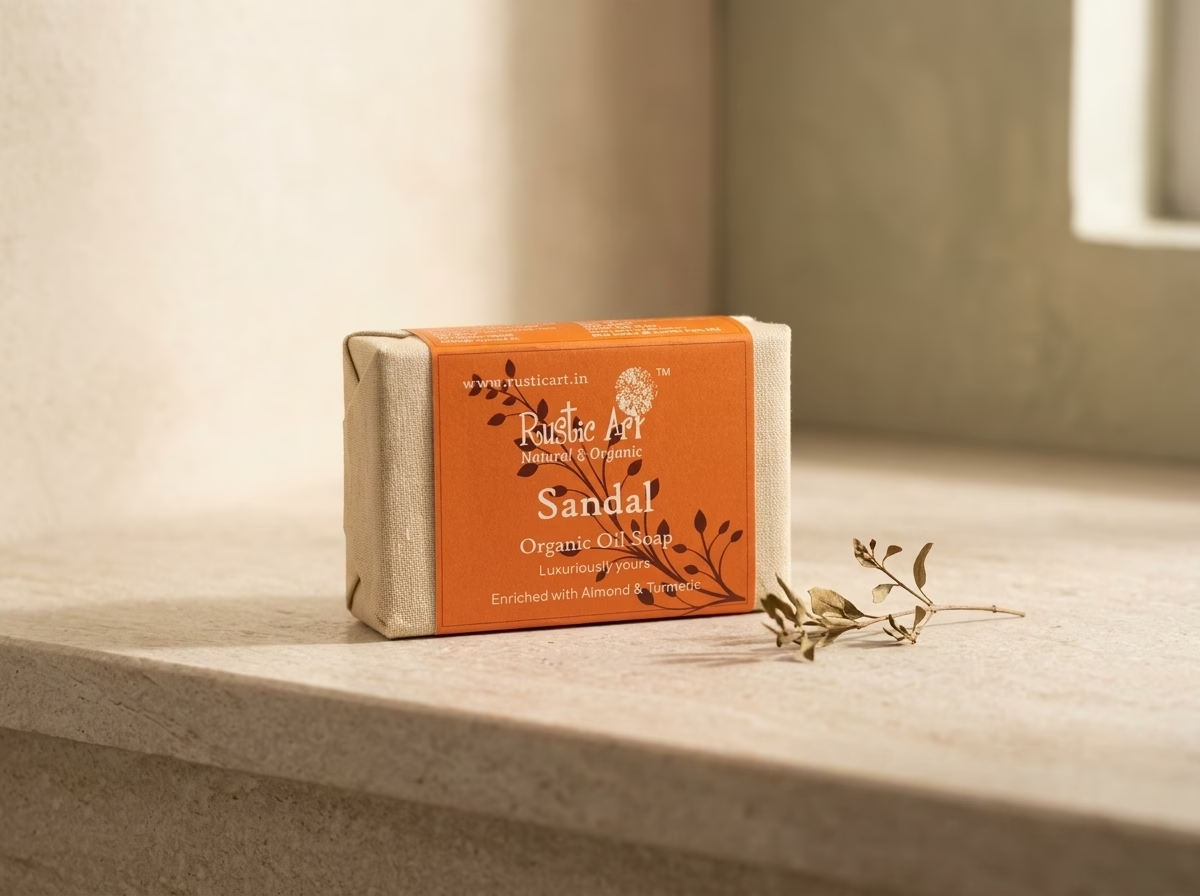
Rustic Art — Best Chemical Free Soap for Label-Readers
Rustic Art publishes the most complete ingredient information in this roundup, lye included, and it is the only brand here making a bar-level packaging commitment: each bar is hand-wrapped in cotton fabric. Every other brand’s packaging language covers the company generally, or bottles, or nothing.
It also publishes its legal entity, corporate identity number, factory address and founding year, and states that it runs on solar power with zero liquid discharge and that over 80% of its workforce is women. Those are self-declared with no auditor named — but publishing them at all, with a named legal entity attached, puts the brand ahead of most of this list. PETA lists it as cruelty-free.
No third-party certification is named for the soap itself.
Best for: oily and acne-prone skin, and anyone who wants to read exactly what is in the bar.
PETA cruelty-freewe checked the register
Rustic Art
Oily and acne-prone skin, and anyone who wants to read exactly what is in the bar.
No. 4
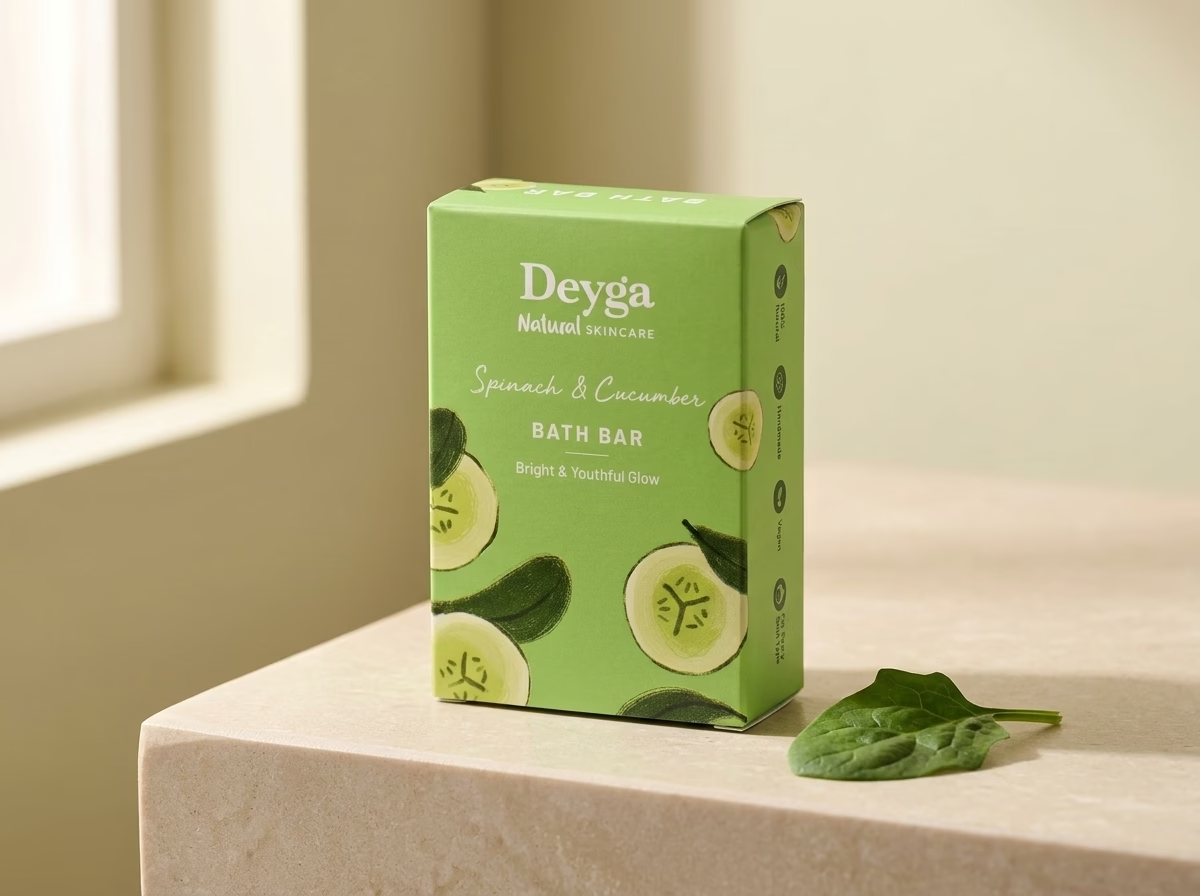
Deyga — Best Cold-Process Natural Soap in India
Deyga publishes the lye on every single bar, which sounds small and isn’t — it is the clearest signal in this category that a brand is describing a real cold-process soap rather than managing how the label reads. Ingredient lists are short and legible.
The brand describes its products as clinically tested but does not name the laboratory, so we can report the claim without being able to point you anywhere to check it. No certifying body is named on the about page as of 18 August 2026.
Best for: cold-process purists and anyone with a short-ingredient-list preference.
Deyga
Cold-process purists and anyone with a short-ingredient-list preference.
No. 5
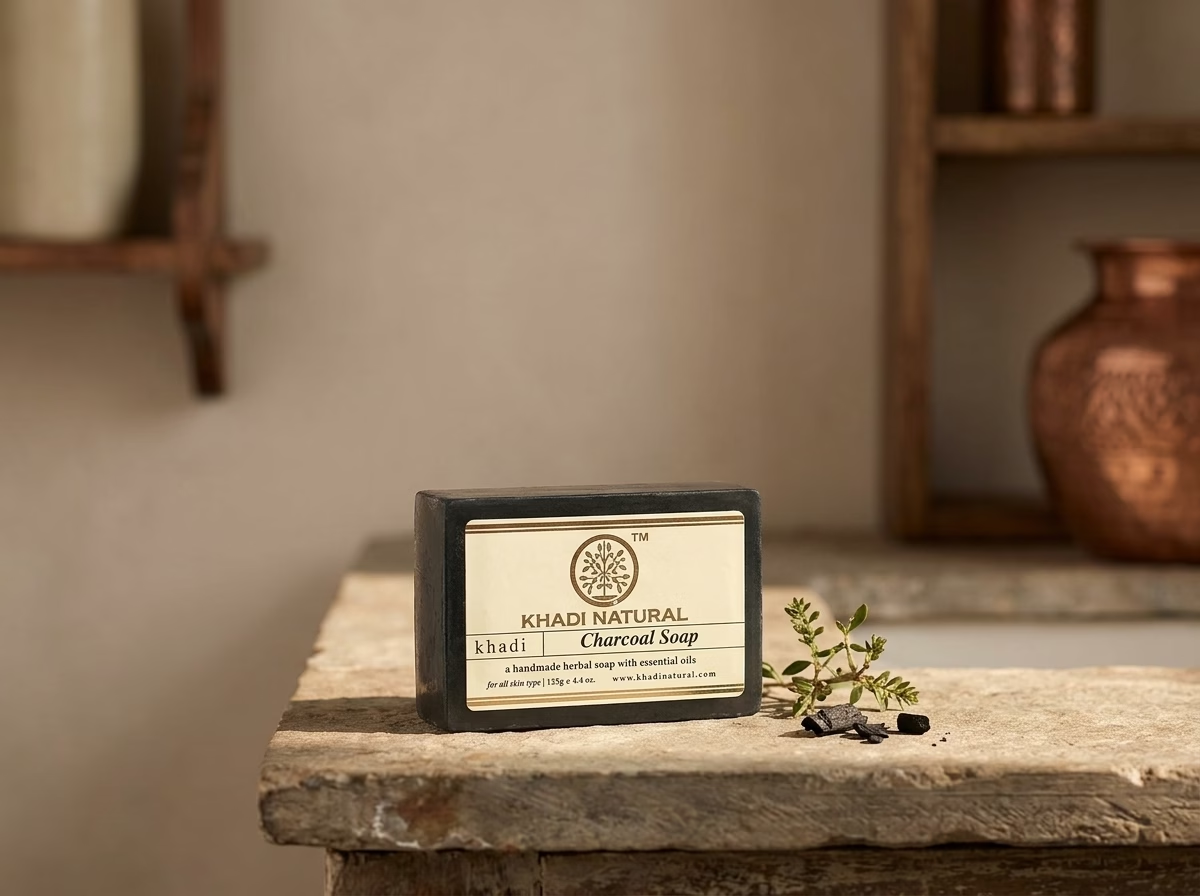
Khadi Natural — Best Budget Chemical Free Soap in India
The budget pick with real staying power — a well-established base of positive customer reviews and a price that makes switching easy for a whole household. PETA lists the brand as cruelty-free.
Where it falls short of the brands above is disclosure. Some listings describe an ingredient as “vegetable oil” without naming which oil, and the brand’s certification language leans on WHO, GMP and ISO standards — the first and third of which, as covered above, are not certifications that can be looked up. We are not suggesting anything is wrong with the soap; we are pointing out that the claim as published cannot be verified by a reader.
Best for: families switching several bars at once on a budget.
PETA cruelty-freewe checked the register
Khadi Natural
Families switching several bars at once on a budget.
No. 6
Earth Rhythm — Best Bar for Sensitive Skin (and It Is Not Actually Soap)
This is the most useful distinction in this entire article, and no competing roundup makes it.
Earth Rhythm publishes a full INCI list — and read properly, that list describes a syndet bar, not a soap. Sodium Cocoyl Isethionate is a synthetic detergent, not a saponified fat. Cocamidopropyl betaine is a co-surfactant. Phenoxyethanol is a preservative.
That is not a criticism. Syndet bars are frequently gentler on sensitive and eczema-prone skin than true soap, precisely because they can be formulated at skin pH — something genuine soap chemically cannot be, since saponification produces an alkaline product. Many dermatologists recommend syndet bars for exactly this reason.
But it is a genuinely different product from the other nine here, and if you are specifically seeking a traditional saponified bar, this isn’t one. The brand’s own packaging language describes “plastic neutral” and “plastic-conscious formats” rather than plastic-free.
Best for: sensitive, dry or eczema-prone skin — if you’re open to a syndet bar rather than traditional soap.
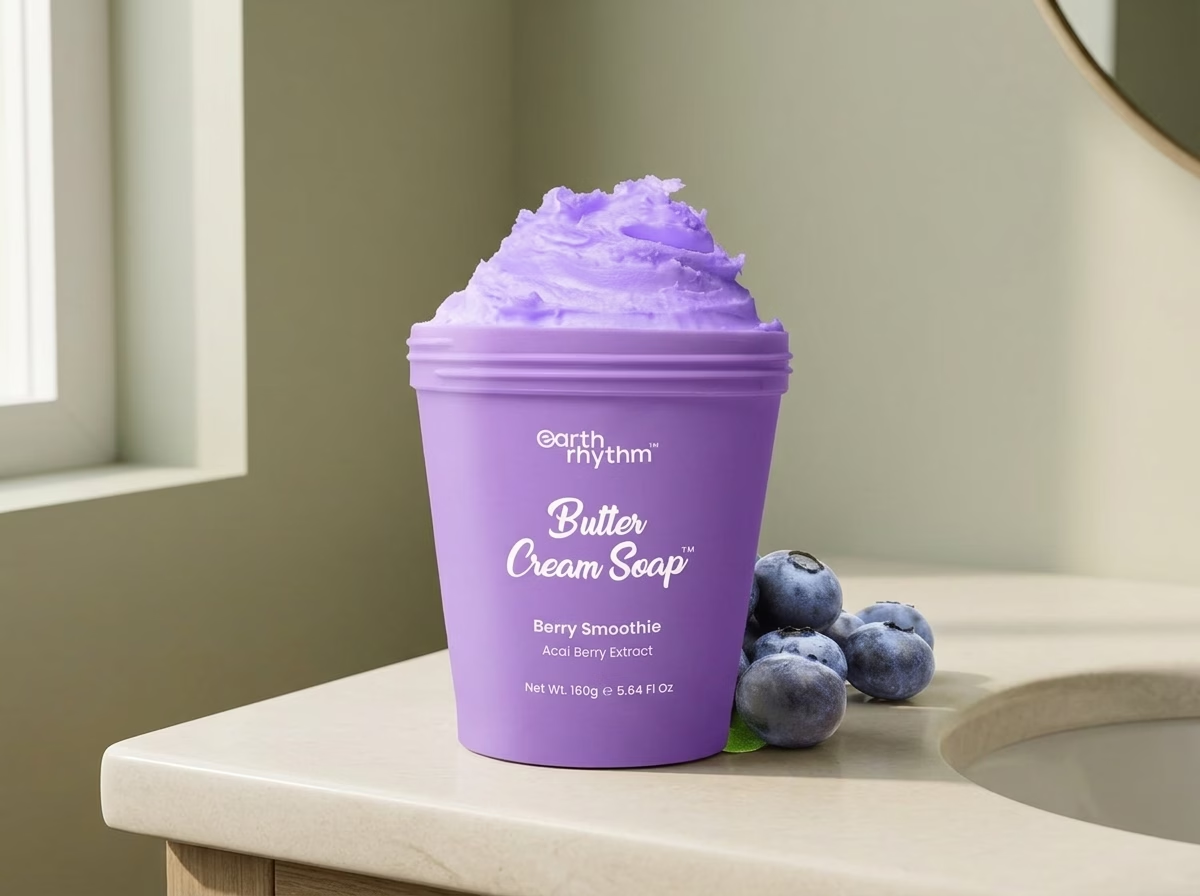
Earth Rhythm
Sensitive, dry or eczema-prone skin, if a syndet bar suits you better than traditional soap.
No. 7
Forest Essentials — Best Luxury Ayurvedic Handmade Soap in India
The luxury entry, with the strongest brand heritage in the roster and a well-established base of positive reviews. PETA lists it as cruelty-free under its registered entity, Mountain Valley Springs.
Its disclosure is where it lags: product pages list key ingredients rather than a full list, so a reader cannot see everything in the bar. The brand publishes GMP, AYUSH and ISO 9001:2015 certificates — the first two are manufacturing and regulatory licences rather than sustainability or organic certifications, and the third, per ISO’s own statement above, is issued by an external body whose name and certificate number would be needed to verify it.
Worth knowing as context: The Estée Lauder Companies announced in March 2026 that it will acquire the remaining interests in Forest Essentials, having held a stake since 2008.
Best for: gifting, and anyone who wants an Ayurvedic bar with real provenance.
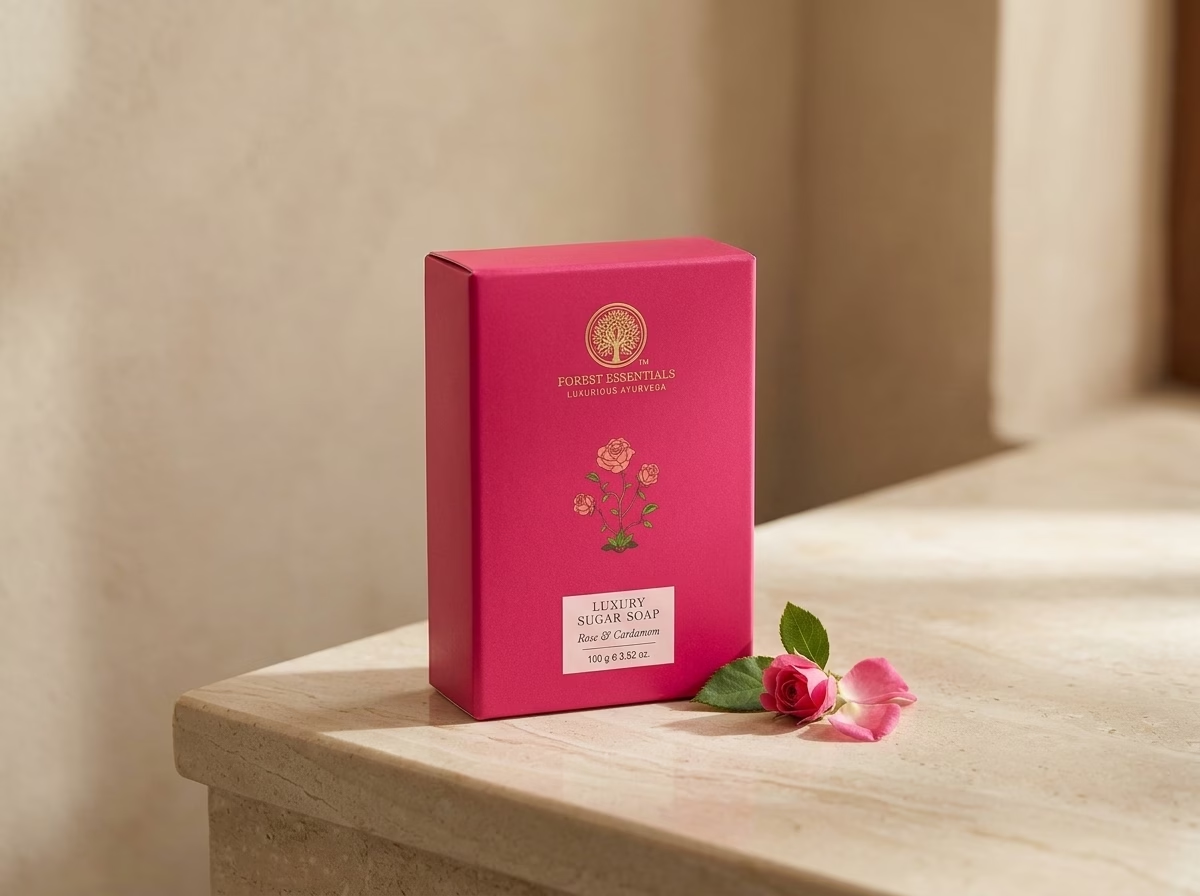
PETA cruelty-freewe checked the register
Forest Essentials
Gifting, and anyone who wants an Ayurvedic bar with real provenance.
No. 8
Vilvah — Best Natural Soap for Dry Skin
Vilvah’s goat milk bars are the dry-skin pick, and the brand generally publishes proper ingredient lists, naming the lye on its goat-milk range. One bar in the range — a cold-process tomato and pink clay soap — omits the lye from its published list, which is an inconsistency worth knowing about rather than a problem with the soap.
The specific listing we link to had no customer review history at the time we checked on 18 August 2026, so there is no crowd evidence yet to weigh — that is the only reason it sits here rather than higher. No certifying body is named on the brand’s about page.
Best for: dry, tight or winter-affected skin.
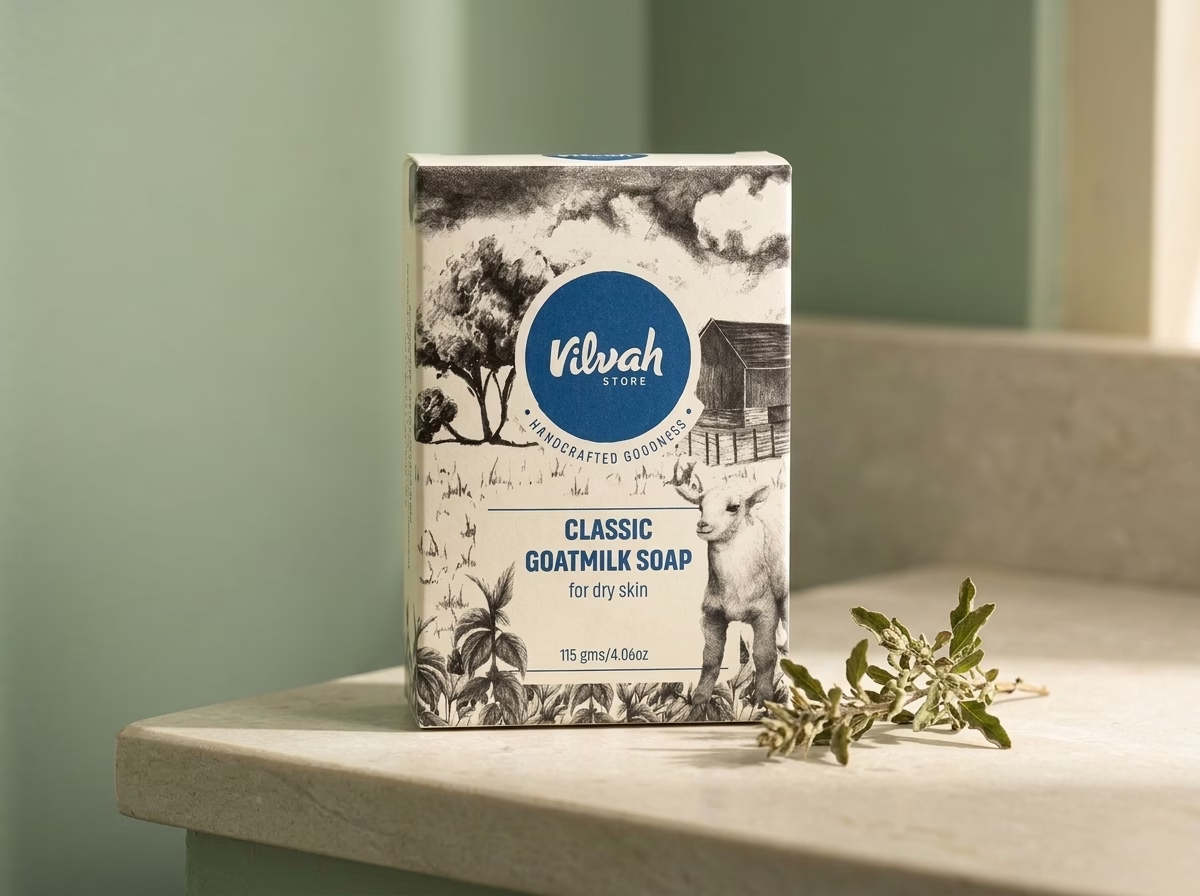
Vilvah
Dry, tight or winter-affected skin.
No. 9
Ancient Living — Best Everyday Ayurvedic Handmade Soap
Ancient Living has the largest volume of customer feedback of any brand in this roundup, which is real evidence of a product people keep buying. The bar we link to is its Neem & Lemon Luxury Handmade Soap, sold as a pack of two 100g bars — worth noting, because it makes the per-bar price one of the lowest here rather than the mid-range figure the pack price suggests. Neem is a genuine Ayurvedic antibacterial, which makes this a reasonable choice for oily or blemish-prone skin.
On transparency it sits in the lower half: the published ingredient information is partial rather than a complete list, and several soaps are sold as being made “with Organic Certified Ingredients” without naming the body that issued that certification. As of 18 August 2026 we could not find a certifying body named anywhere on the brand’s site, so there is nothing a reader can check.
Best for: everyday Ayurvedic bathing, and the best per-bar value of any multi-pack here.
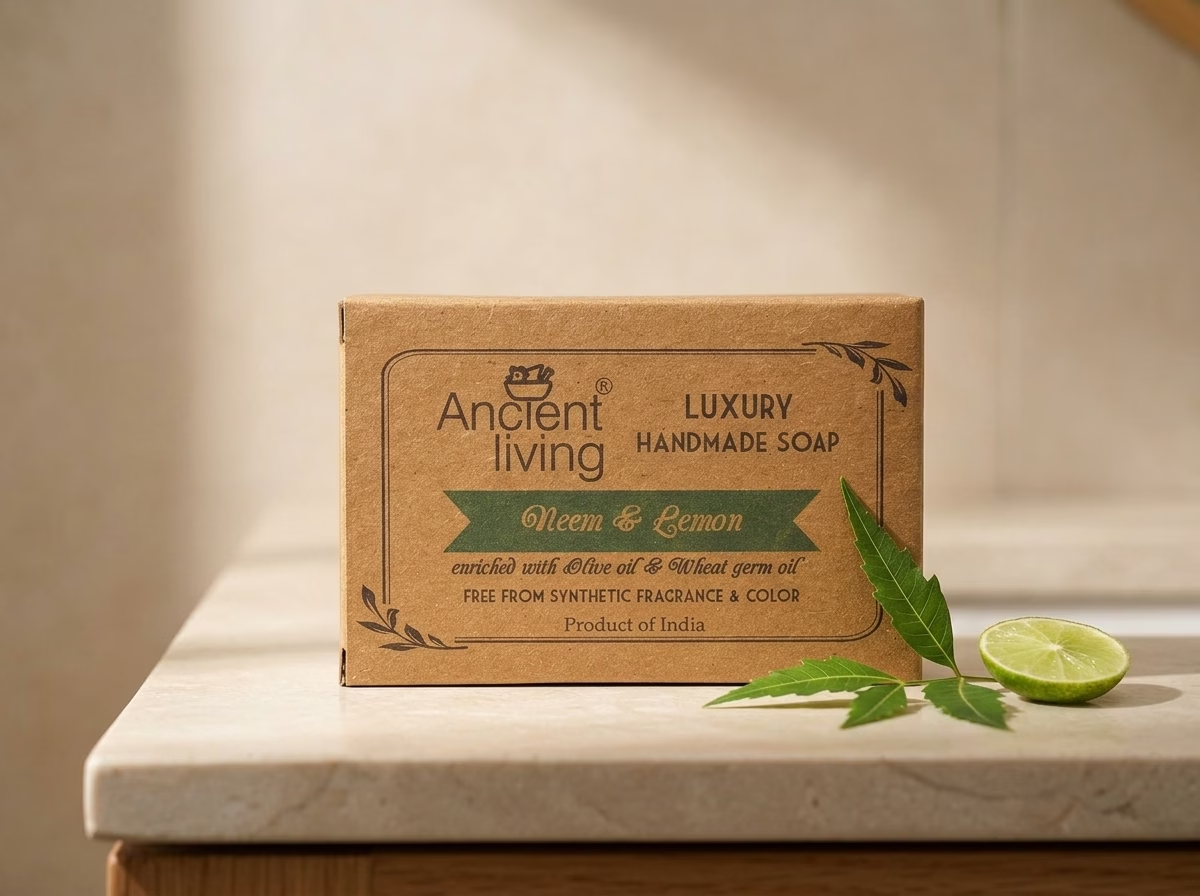
Ancient Living
Everyday Ayurvedic bathing, best per-bar value of any multi-pack here.
No. 10
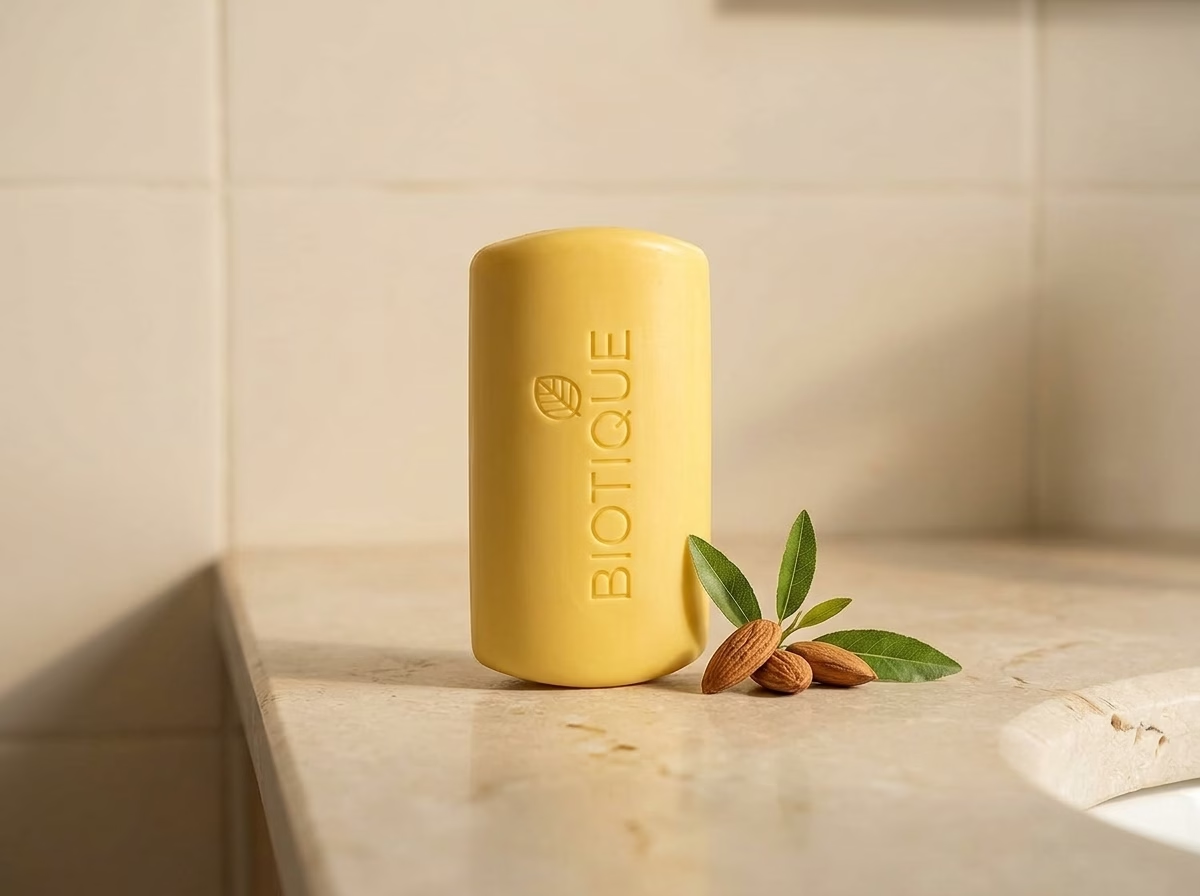
Biotique — Lowest Entry Price for Natural Soap in India
The cheapest way into this list by a comfortable margin, from one of India’s most recognisable Ayurvedic-positioned brands, with a solid base of positive customer reviews.
It publishes the least of any brand here. Product pages list key ingredients rather than a complete list, which means nothing about what is in the bar can be either confirmed or ruled out from the published information. Biotique’s own pages describe its products as cruelty free and dermatologically tested; neither claim names a certifying body or a testing laboratory as of 18 August 2026.
Best for: the lowest-cost entry point into natural bathing bars.
Biotique
The lowest-cost entry point into natural bathing bars.
Which Chemical Free Soap Suits Your Skin Type?
Dry or tight skin — Vilvah’s goat milk bars, or Earth Rhythm’s butter bar if you’re open to a syndet formulation. Look for shea or cocoa butter high in the list.
Oily or acne-prone skin — Rustic Art or Deyga. Charcoal, neem and tea tree formulations, and avoid heavy butters near the top of the list.
Sensitive or reactive skin — Juicy Chemistry for a true soap with a fully published INCI, or Earth Rhythm if a pH-balanced syndet bar suits you better. Both name their fragrance sources.
Normal skin, budget-conscious — Khadi Natural, Soulflower or Biotique.
Best Chemical Free Soap in India on a Budget
Real budget demand exists for this and most roundups ignore it. Three notes worth having:
Switching an entire household is where cost actually bites — one bar is cheap, six is a decision. Soulflower and Khadi Natural are the two that make a full-household switch straightforward, and Biotique is the lowest entry point of all if you want to try the category before committing.
Cold-process handmade bars generally cost more than mass-produced ones for a real reason: they cure for four to six weeks before sale, which is inventory sitting still. You are paying for time, not just ingredients.
Buy in multiples where a brand offers it. A hard, well-cured natural bar stored dry between uses lasts substantially longer than a soft one left sitting in water.
How to Read a Natural Soap Label in India
Six things worth doing in the shop or on the listing page:
Read the ingredient list, not the product title. “Natural handmade soap” in a title tells you nothing that the list won’t tell you better.
Look for the lye. Sodium hydroxide or potassium hydroxide in the list is a good sign, not a bad one. Its absence from a bar described as cold-process is worth a second look.
Check whether “fragrance” is named. Named essential oils beat the single word “parfum”.
Ask which products a certification covers, not just who issued it. As this roundup shows, a brand can hold entirely genuine certification that doesn’t extend to the bar in your hand.
Treat ISO, GMP, WHO, FDA, AYUSH and KVIC as what they are — manufacturing and regulatory licences, not organic or sustainability certifications.
Where a claim names an issuer, look the issuer up. COSMOS, Ecocert and PETA all publish searchable registers. It takes about ninety seconds.
Our Evidence, In Full
Every certification claim in this article was checked against the certifier’s own public register, and every check was screenshotted with its source URL and the date.
How we checked
Why a blank result isn’t proof on its own
A register search is only worth anything if the register itself is sound, so before trusting any result we tested each one. Ecocert’s directory lists 539 Indian companies; the COSMOS directory holds 560 Indian products out of 31,283 worldwide. Both match partial names, so a slightly different spelling won’t produce a false blank. We ran seven of these control searches in total.
Where this article says a certification is confirmed, it means we found the brand in that certifier’s own register and screenshotted it. Where it says “None named”, it means the brand does not name a certifying body for that claim — not that we searched and came up empty. Those are different statements and we have kept them apart.
Every screenshot behind this article (13)
Each capture carries its source URL and the date we took it. Brands: if anything here is out of date, send us the certificate number and we will update this page and say so.
Frequently Asked Questions
What is the best chemical-free soap in India?
On verifiable evidence rather than marketing, Soulflower and Juicy Chemistry are the two brands in this roundup whose organic certification appears in a searchable public register, and Rustic Art and Deyga publish the most complete ingredient lists. The best choice for you depends on skin type and budget — see the comparison table above.
Is any soap genuinely 100% chemical-free?
No, and any brand claiming it is using the phrase loosely. Water is a chemical. In practice, “chemical-free soap” means free of synthetic detergents, synthetic fragrance, artificial colourants and petrochemical preservatives.
Why do some natural soaps list sodium hydroxide? Is that safe?
Yes. All true soap is made by reacting fats with an alkali, and no sodium hydroxide remains in the finished bar — it is fully consumed during saponification. A brand that lists it is being transparent, not careless.
What does “IFRA Certified” mean on a soap?
Less than it appears. IFRA states on its own website that it does not certify compliance with its Standards; Certificates of Conformity are issued by fragrance suppliers for fragrance mixtures. There is no IFRA register of certified brands to check.
Can a soap be ISO certified?
Not by ISO. ISO’s own website states that it does not issue certificates and that an organisation cannot be certified by ISO. Genuine ISO 9001 certificates are issued by accredited external bodies and can be verified — but you need the certificate number and issuing body to do it.
How do I check if a brand’s organic certification is real?
If the claim names COSMOS or Ecocert, search the COSMOS Certified Products Directory or Ecocert’s own directory of certified companies. For cruelty-free claims, search PETA’s database. If a claim names no issuing body, there is nothing to check.
Why can’t I verify an India Organic claim?
Because as of 18 August 2026, there is no public register of India Organic certified brands. APEDA’s TraceNet offers per-shipment Transaction Certificate verification only, requiring a registration number a shopper won’t have.
What is a syndet bar, and is it worse than soap?
A syndet bar uses synthetic detergents rather than saponified fats. It isn’t worse — it is often gentler on sensitive skin, because it can be formulated at skin pH, which true soap cannot. It is simply a different product, and worth knowing which one you’re buying.
Is handmade soap better than machine-made soap?
Not automatically. Handmade cold-process bars usually retain natural glycerin, which mass-produced bars often have removed. But “handmade” is a production method, not a quality guarantee — the ingredient list tells you far more.
Which chemical-free soap is best for sensitive skin?
Juicy Chemistry for a true soap with a fully published INCI list, or Earth Rhythm if a pH-balanced syndet bar suits your skin better. Both name their fragrance sources rather than hiding behind “parfum”.
Do natural soaps expire?
They have a best-before rather than a hard expiry, typically a year or two. Bars with unrefined plant oils can develop orange spots over time — cosmetic, not harmful. Store dry and unwrapped.
Are these soaps vegan?
Some are, and some aren’t — several contain goat milk or honey. PETA’s database lists brands as cruelty-free and, separately, as vegan; the two badges are not the same thing, and a brand can hold one without the other. Check the specific bar’s ingredient list.
The Bottom Line
The most useful thing this research produced was not a ranking. It was a question worth carrying into every natural soap purchase you make: which products does that certificate actually cover?
Two brands in this list hold organic certification you can look up in a public register in ninety seconds — and neither certificate covers the soap bar. Five hold a cruelty-free listing you can verify just as quickly, which is the one claim in this category that reliably checks out. And four of the certification labels commonly printed on Indian personal care cannot be checked by a shopper at all, because the organisations named do not issue that kind of certificate.
None of that makes these bad soaps. It makes the labels much less informative than they look — which is exactly why the ingredient list, and whether a brand publishes a complete one, remains the single most reliable signal available to you.
Every claim on this page is dated, and every screenshot behind it carries the URL we took it from. If a brand publishes a certificate number, or anything here goes out of date, tell us — we will check it, update the page, and say what changed.
Last checked: 18 August 2026.
