In this article
- How to Choose the Right Dining Table for Your Indian Home
- Dining Table Size Guide: What Actually Fits Your Room
- Round, Rectangular, Oval or Square: Which Shape Fits Your Space
- Best Wood for a Dining Table: Sheesham vs Teak vs Mango vs Acacia
- Chairs, Bench, or Mixed Seating: What Actually Works for Everyday Indian Dining
- Dining Table Price Guide: What You Should Actually Spend
- Best Wooden Dining Tables in India by Budget & Brand
- Extendable & Space-Saving Dining Tables for Small Indian Homes
- How to Care for Your Wooden Dining Table (Daily Use, Spills, Monsoon)
- Common Dining Table Buying Mistakes to Avoid
- Frequently Asked Questions
How to Choose the Right Dining Table for Your Indian Home
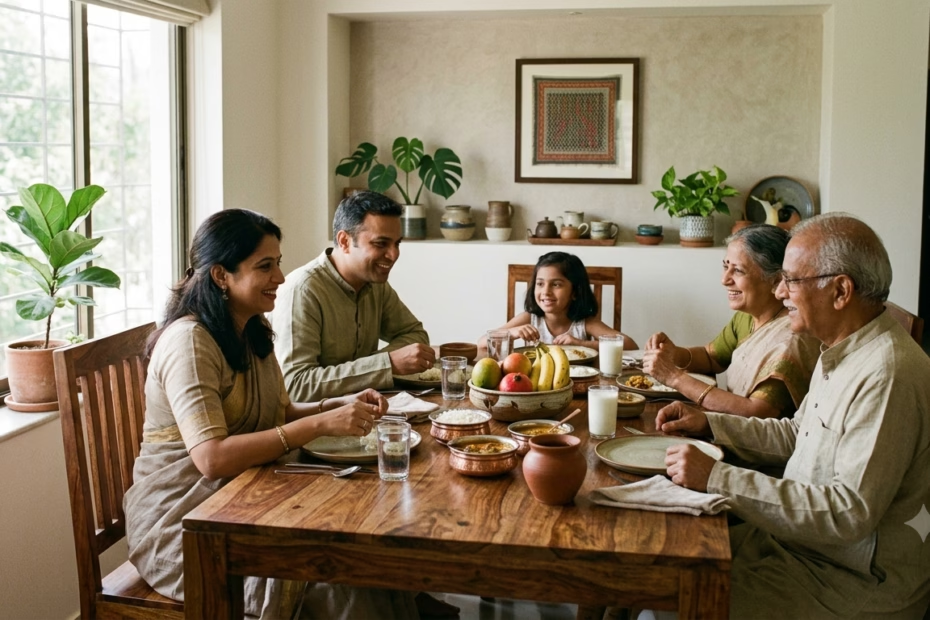
A dining table is one of the few pieces of furniture an Indian household actually gathers around every single day — for breakfast before school runs, for the one proper sit-down meal a working family manages, for the Sunday lunch that runs two hours longer than planned. That makes it a strange piece of furniture to buy in a hurry, and yet most people do exactly that: they walk into a showroom, like the first thing that looks “solid,” and take it home without ever measuring their dining space.
Choosing the right wooden dining table well means working through five decisions in the right order — size (what actually fits your room, not what looks good in a showroom), shape (round, rectangular, oval, or square, based on your room’s proportions), wood (sheesham, teak, mango, or acacia, each with real trade-offs for Indian humidity and daily wear), seating (chairs, a bench, or a mix — a decision most buying guides treat as an afterthought), and finally, brand and price (which specific, real, currently-available table is actually worth buying). This guide walks through all five, in that order, and then gets specific: real brands, real products, honest evidence on how well-reviewed each one is, and honest price ranges — not vague “starting from” numbers pulled from a catalog page that changed six months ago.
If you’re shopping for a full dining set — table plus chairs plus, in some homes, a bench — this guide focuses primarily on the table itself, since that’s the piece with the most genuine buying complexity around size, wood, and shape. We’ve included a dedicated section on the chairs-versus-bench decision below, because it’s a real, everyday-use question that most buying guides barely touch.
Dining Table Size Guide: What Actually Fits Your Room
The single most common dining table mistake in Indian homes isn’t picking the wrong wood or the wrong shape — it’s picking the wrong size.
The single most common dining table mistake in Indian homes isn’t picking the wrong wood or the wrong shape — it’s picking the wrong size. A table that looks perfectly proportioned in a 3,000-square-foot showroom can make a compact Indian dining nook feel unusable within a week, because nobody can push a chair back without hitting the wall.
The rule that actually matters here is clearance, not just tabletop dimensions. You need a minimum of 36 inches of clear walking space around every side of the table — enough for someone to pull out a chair and for another person to walk behind them at the same time. In a genuinely tight room, 42 inches is the more comfortable number, especially on the side where the kitchen or serving area is.
Once you know your room’s real usable footprint, seater count becomes a straightforward size lookup:
| Seater Count | Typical Table Size (L × W) | Best Suited For |
|---|---|---|
| 4-seater | 48″ × 30″ (approx. 122 × 76 cm) | Compact apartments, 1BHK/2BHK dining nooks |
| 6-seater | 66″–72″ × 36″ (approx. 168–183 × 91 cm) | The genuine Indian household standard — most 2BHK/3BHK homes |
| 8-seater | 84″–90″ × 40″ (approx. 213–229 × 102 cm) | Larger 3BHK/villa dining rooms, joint families |
| 10-seater | 96″–108″ × 42″ (approx. 244–274 × 107 cm) | Villas, independent houses, families that regularly host |
So, what is the standard size of an 8-seater dining table? In practice, most genuinely 8-seat-comfortable tables sold in India land somewhere between 84 and 90 inches long and around 40 inches wide — enough to seat three people per long side plus one at each end without anyone’s elbow overlapping their neighbor’s. A 10-seater dining table follows the same logic scaled up: 96 to 108 inches long, with width creeping up to 42 inches so the two end seats don’t feel cramped against the table’s short edges.
For apartment living — which describes most first-time dining table buyers in Indian metros — a 6-seater table sized around 66–72 inches is usually the realistic sweet spot: enough seating for a family of four with room for two guests, without eating into a living-cum-dining layout the way an 8-seater inevitably would. Villa and independent-house buyers have more freedom to go up to 8- or 10-seater, but even then, measuring the actual room before falling for a floor-model table is worth the ten minutes it takes.
Round, Rectangular, Oval or Square: Which Shape Fits Your Space
Shape is where a lot of buyers default to “whatever looks nice” instead of working backward from their room. A few practical rules make this decision much easier:
Rectangular tables are the default for a reason — they seat the most people per square foot of floor space and fit naturally against a wall, which matters in almost every Indian dining layout that shares space with a living room. If your dining area is a rectangle itself, a rectangular table almost always makes better use of it than any other shape.
Round tables work best in smaller, squarer rooms, and they have a real social advantage: everyone can see and talk to everyone else without craning around a long table’s ends. The tradeoff is seating efficiency — a round table seats fewer people for the same floor footprint than a rectangular one, which is why round tables rarely go above 6-seater in practice.
Oval tables split the difference — the seating capacity of a rectangle with the softer, no-sharp-corners feel of a round table. They’re a genuinely good pick for a dining area that doubles as a walkway, since there’s no hard corner for anyone to bump into.
Square tables are the least common choice for a reason: they only really work well at 4-seater, and beyond that the middle of the table becomes an awkward reach for serving dishes. They do suit very small, genuinely square dining nooks better than a rectangular table would, though.
The honest shortcut: measure your room’s actual proportions first, then pick the shape that echoes them. A long, narrow dining area wants a rectangular or oval table; a compact, roughly square nook is better served by round or square.
Best Wood for a Dining Table: Sheesham vs Teak vs Mango vs Acacia
Wood choice for a dining table is a different conversation than wood choice for, say, a bookshelf or a bed frame — a dining table takes daily spills, hot cookware, scraping cutlery, and constant wiping down, so durability and stain resistance matter more here than almost anywhere else in the house.
| Wood Type | Durability | Typical Price Band | Best For |
|---|---|---|---|
| Sheesham (Indian Rosewood) | Very high — dense grain, resists dents and scratches well | Mid-range | The most common genuine choice for Indian dining tables; strong daily-use durability at a realistic price |
| Teak | Excellent — naturally water- and pest-resistant, ages beautifully | Premium | Buyers prioritizing long-term durability and willing to pay more for it |
| Mango Wood | Good, softer than sheesham or teak | Budget to mid-range | Value-conscious buyers who accept slightly more careful daily-use handling |
| Acacia | Good — dense and attractively grained, close to mango wood in feel | Budget to mid-range | Buyers who like a distinctive natural-edge or live-edge look at an accessible price |
Sheesham is the workhorse of Indian dining furniture, and for good reason — it’s dense enough to resist the everyday abuse a dining table takes, widely available, and priced sensibly compared to teak. Teak sits a tier above on price but earns it: it’s genuinely more resistant to humidity swings and the monsoon-season moisture that warps lesser woods over a few years, which matters more in a dining table than in almost any other furniture piece, given how often it gets wiped down and how close it usually sits to a kitchen.
Mango wood and acacia are often discussed together because they’re priced similarly and both have a lighter, more casual grain than sheesham or teak — but they aren’t the same species, and worth knowing the difference before you buy: acacia tends to be somewhat denser and holds up marginally better to scratches, while mango wood is a shade softer but still perfectly serviceable for a household that isn’t especially hard on furniture. One practical note worth flagging honestly: it’s not unheard of for a “mango wood”-branded product line to actually feature an acacia piece within the same catalog — always check the specific product’s own material description rather than assuming the brand name tells you the wood species.
Key takeaway
For genuinely humid coastal cities or homes without much daily air-conditioning, teak’s moisture resistance is worth the price premium. For most other Indian households, sheesham offers the best balance of durability and price, with mango wood and acacia both reasonable budget alternatives if the lighter look suits your space.
Chairs, Bench, or Mixed Seating: What Actually Works for Everyday Indian Dining
This is a decision almost every dining table buying guide treats as an afterthought — a single line about “matching chairs” — even though it genuinely changes how a table works for daily Indian family life, not just how it looks.
All chairs is the default, and for good reason: chairs are the most flexible option, since each one can be pulled out, moved to another room for extra seating, or replaced individually if one breaks, without needing to replace the whole set. For households with older family members or anyone who needs back support at meals, individual chairs with proper backrests are usually the more comfortable everyday choice.
A bench on one side — typically the side against a wall — is a genuinely practical option for Indian homes with kids, since a bench lets two or three children budge up together without needing an exact chair-per-person count, and it tucks fully under the table when not in use, which chairs on that same side generally can’t do as cleanly. The tradeoff is back support: a bench without a backrest isn’t a comfortable long-sit option for adults, which is why most Indian households that use a bench put it on the side where quick, casual seating (kids, or a fourth guest at a squeeze) matters more than lingering comfort.
Mixed seating — chairs on three sides, a bench on the wall side — is, in practice, the setup that best matches how most Indian families actually eat: adults and elders get proper chairs with back support where they’ll spend the most time, while the wall-side bench absorbs the flexible, changeable seating that kids and occasional guests need. It’s also a genuinely space-efficient compromise, since the bench-side clearance requirement is lower than a chair’s (nobody needs to pull a bench “out” the way they pull a chair out).
Editorial note
This connects directly to a real, commonly-asked sizing question: the so-called “4-inch rule” for dining seating. The idea is that each seated diner needs roughly 24 inches of table-edge width to sit comfortably without their elbow touching their neighbor’s, and roughly 4 inches of clearance between the edge of a chair or bench seat and the underside of the tabletop, so knees have somewhere to go without being wedged against the table’s apron. In Indian dining rooms — where a table is often shared by more people per side than its “official” seater rating assumes, especially at festivals or family gatherings — that 4-inch clearance is worth checking against your actual chairs before buying, since a chair with unusually thick arms or a high seat can eat into that margin fast.
If you’re weighing dining chairs specifically — styles, materials, and how they hold up to the same daily wear a dining table takes — we’re covering that in a dedicated companion guide to wooden dining chairs and benches, which we’ll link here once it’s live. For now, the practical takeaway is this: match your seating choice to how your household actually eats, not to how a showroom floor display happens to be arranged.
Dining Table Price Guide: What You Should Actually Spend
Dining table prices in India vary enormously by wood, size, and brand — but a few honest price bands help set expectations before you start comparing specific products.
A genuinely solid-wood 6-seater table in sheesham, mango wood, or acacia typically lands somewhere around ₹25,000 to ₹35,000 for a table-only purchase, and a bit higher — often up to around ₹45,000 — when it comes bundled with matching chairs. Teak tables, or larger 8-seater sheesham tables, tend to sit in a broader mid-to-upper range, roughly ₹45,000 to ₹85,000, depending on design complexity (a live-edge or hand-finished top costs meaningfully more than a plain rectangular slab). At the premium end — solid teak or elaborately carved/finished designer tables, often sold through curated furniture platforms rather than mass retailers — prices can run well past ₹1,00,000, occasionally into the ₹1,80,000-plus range for a statement piece.
Watch for
A genuinely useful rule of thumb: if a 6-seater solid-wood dining table is priced dramatically below ₹20,000, it’s worth double-checking the actual material — that price point is far more common for engineered wood or veneer construction than real solid wood, regardless of how the listing describes it.
Best Wooden Dining Tables in India by Budget & Brand
This is the section every other section has been building toward: real, currently-available wooden dining tables from brands that actually sell in India today, compared honestly — including where the rating evidence is genuinely strong, and where it’s thinner than we’d like.
How we picked
A quick note on how we picked these: every table below is a specific, real, current product listing — not a brand’s general catalog — and we’ve weighed customer rating alongside review count wherever both are available, since a rating built on a single review is a very different kind of evidence than a strong rating built on hundreds. Where a pick’s review evidence is thin, we’ve said so directly rather than letting a high rating stand in for it unqualified.
| Brand | Product | Price (approx.) | Review Evidence | Platform | |
|---|---|---|---|---|---|
| Driftingwood | Maharaja Solid Sheesham Wood Dining Table (6-Seater, with Cushion Chairs) | Around ₹26,000–₹28,000 | Strong — extensively reviewed | Amazon.in | View the Maharaja Dining Table |
| Wooden Space | 6-Seater Dining Set — Marble-Look Top on Solid Wood Base | Around ₹79,000–₹81,000 | Strong — solidly reviewed | Amazon.in | View the Marble-Top Dining Set |
| Furnisquare | Solid Sheesham Wood Dining Table, 57-Inch (6-Seater) | Around ₹28,000–₹30,000 | Thin evidence — very few reviews yet | Amazon.in | View the 57-Inch Sheesham Table |
| Aprodz | Sheesham Wood Durque 6-Seater Dining Table Set | Around ₹29,000–₹30,000 | Thin evidence — very few reviews yet | Amazon.in | View the Durque Dining Set |
| Freedom Tree | Palisaded Live Edge Dining Table, Natural Finish | Roughly ₹65,000–₹82,000 (live-edge design, confirm exact current price at checkout) | Not rated | Pepperfry | View the Palisaded Live Edge Table |
| Urban Ladder | Arabia Solid Wood 6-Seater Dining Table, Teak Finish | Around ₹20,000–₹21,000 | Thin evidence — very few reviews yet | Amazon.in | View the Arabia Dining Table |
| Mango Trunk | Acacia Live Edge Wooden Dining Table, Natural Finish | Check current listing for live pricing | Not rated | Amazon.in | View the Acacia Live Edge Table |
| Orange Tree | Anish Solid Wood 6-Seater Dining Set, Walnut Finish | Upwards of ₹1,80,000 | Positively reviewed | Pepperfry | View the Anish Dining Set |

Best Reviewed
Most-reviewed pick in this roster
Strongest all-round evidence — Driftingwood
Maharaja Solid Sheesham Wood Dining Table
The Maharaja is solid sheesham wood, sold as a 6-seater set with cushioned chairs, and it’s genuinely the best-reviewed pick here by a wide margin — a large, substantial volume of positive customer reviews, not just a handful of early ratings, is real, well-tested evidence rather than an unproven guess. It sits at a genuinely accessible price for a solid-wood 6-seater set, which is a big part of why it’s such a commonly recommended starting point for first-time dining table buyers.

Wooden Space — 6-Seater Marble-Look Dining Set
Strong — solidly reviewed
This 6-seater pairs a nano-composite marble-effect top with a genuinely solid wood base, at a mid-premium price point backed by a solid base of positive reviews — a meaningfully more substantial sample than most of the other picks in this roster besides Driftingwood.

Furnisquare — Solid Sheesham 57-Inch Dining Table
Thin evidence — very few reviews
At 57 inches, this is a comfortable 6-seater in classic solid sheesham, priced close to Driftingwood’s. We’re including it because the product and price genuinely earn a look, but we want to be upfront that a strong early rating built on just a single review isn’t strong evidence either way — treat it as a promising, currently under-reviewed option rather than a proven crowd favorite.

Aprodz — Sheesham Wood Durque 6-Seater Set
Thin evidence — very few reviews
The Durque brings a slightly more contemporary silhouette than the more traditional Maharaja or Furnisquare designs, at a similar price point, but with only a handful of reviews on record, there simply isn’t enough evidence yet to call it a strongly proven choice — a reasonable option if the design speaks to you, worth pairing with your own research before buying.

Freedom Tree — Palisaded Live Edge Dining Table
Not rated
The Palisaded moves away from a conventional rectangular slab toward a natural live-edge profile, which puts it in a different design category than most of the other picks here — expect the price to sit meaningfully higher than a standard sheesham 6-seater, and worth confirming the exact current figure on Pepperfry before buying, since live-edge/design pieces tend to see more price movement than mass-manufactured tables.

Urban Ladder — Arabia Solid Wood Dining Table, Teak Finish
Thin evidence — very few reviews
The Arabia, in a teak finish over solid wood construction, comes in as the lowest-priced 6-seater on this list — a real value option if your budget is the primary constraint. Its strong early rating is currently backed by only a single review, so treat that rating as encouraging rather than conclusive, and lean on the product’s design and construction details as much as the review evidence when deciding.

Mango Trunk — Acacia Live Edge Dining Table
Not rated
This is a live-edge design finished in a natural tone with black powder-coated metal legs, and it’s a genuinely striking option for a contemporary dining space. One thing worth knowing upfront: despite the brand’s name, the actual material on this specific listing is acacia wood, not mango wood — a distinction worth understanding given the wood-comparison section above, since acacia and mango wood have real, if modest, differences in density and wear characteristics. It’s a fine pick either way, but buy it knowing which wood you’re actually getting. Pricing on this one moves enough that it’s worth checking the live listing directly rather than relying on a fixed figure here.

Orange Tree — Anish Solid Wood Dining Set, Walnut Finish
Well-reviewed · Premium anchor
The Anish, in solid wood with a rich walnut finish, sits well above every other pick here on price — genuinely a “if budget isn’t the primary constraint” table rather than a mid-range option. It carries a genuinely strong rating and is sold through Pepperfry rather than Amazon, which is worth knowing if you’re comparing checkout experiences across brands. If you want a dining table that reads as a genuine statement piece rather than a functional purchase, this is the pick in this lineup built for that brief.
Extendable & Space-Saving Dining Tables for Small Indian Homes
Extendable dining tables solve a real, specific problem: everyday meals for a small household don’t need an 8-seater’s footprint, but festivals, birthdays, and visiting family occasionally do. An extendable table — typically built with a folding leaf or a pull-apart center leaf that adds 12 to 24 inches of length — lets a compact apartment run a genuinely small-footprint 4-seater table day to day and open it up to 6- or occasionally 8-seater capacity for the handful of days a year that actually need it.
The tradeoff is mechanical: an extension mechanism is one more moving part that can loosen or stick over years of use, so it’s worth actually testing the extension action in a showroom (or reading reviews that specifically mention long-term extension durability) rather than assuming every extendable table handles the mechanism equally well. Folding or drop-leaf tables — where one or both sides fold down flat against a wall — are a second space-saving option worth considering for genuinely tight studio or 1BHK layouts, though they generally suit lighter, more casual daily use than a full extendable dining table built for regular family meals.
Key takeaway
For most small Indian homes, the realistic answer is: buy the size you use daily, and treat “occasional bigger gathering” as a problem solved by extra folding chairs or a temporary table rental, rather than paying a premium for extension mechanics that get used a handful of days a year. But if hosting genuinely happens often enough to matter, an extendable table is a legitimately worthwhile investment — just budget for it as a distinct category, since extension mechanisms typically add a real premium over an equivalent fixed-size table.
How to Care for Your Wooden Dining Table (Daily Use, Spills, Monsoon)
A dining table takes more daily abuse than almost any other furniture piece in an Indian home, so a little routine care goes a long way toward protecting the investment.
Wipe spills immediately, especially anything acidic (citrus, tomato-based curries, vinegar-based pickles) or hot, since both can dull or discolor a wood finish faster than plain water. A slightly damp cloth followed immediately by a dry one is the safest daily-cleaning combination — avoid leaving any liquid to sit and air-dry on the surface.
During monsoon months, humidity is the real enemy of solid wood furniture — even a well-sealed table can absorb ambient moisture over weeks of high humidity, leading to slight swelling, sticking drawers (on tables with storage), or a tacky-feeling finish. Running a dehumidifier or air conditioner in the dining area on the most humid days, and keeping the table away from direct exposure to an open window during heavy rain, both meaningfully reduce this risk.
Avoid placing hot cookware, serving dishes straight from the stove, or hot vessels directly on the tabletop — always use a trivet or heat-resistant mat, since even a well-finished wood surface can develop a permanent heat ring from repeated direct contact. Similarly, avoid dragging chairs, serving trays, or heavy vessels across the surface; lifting rather than sliding protects both the finish and, on a table with any inlay or veneer detailing, the surface material itself.
A light coat of furniture wax or wood-safe polish every few months keeps the finish resilient and helps the wood resist moisture absorption — check what the specific brand or manufacturer recommends, since a polish formulated for teak isn’t always the right choice for sheesham or mango wood, and vice versa.
Common Dining Table Buying Mistakes to Avoid
The mistakes that come up again and again when Indian households buy a dining table are rarely about picking the “wrong” brand — they’re about skipping a step that seems minor in the showroom and turns out to matter enormously at home.
Mistake
Not measuring the room before falling for a floor-model table. A table that looks proportionate in an open showroom can dominate a compact dining nook once it’s actually delivered — always measure your available floor space and subtract real walking clearance (see the size guide above) before shortlisting anything.
Mistake
Assuming a listed “6-seater” or “8-seater” rating means comfortable seating for that many people. Seater ratings are a manufacturer’s estimate, not a guarantee — cross-check the actual table length against the per-person width the “4-inch rule” section above lays out, especially if your household regularly seats more people per meal than the official rating assumes.
Mistake
Choosing wood purely on look, without considering your home’s humidity and daily wear. A beautifully finished mango wood table in a home with minimal air-conditioning and heavy daily use may need more careful handling than a household expects going in — match the wood to your actual living conditions, not just the showroom lighting.
Mistake
Treating chairs or a bench as an unimportant afterthought. As the seating section above covers, chairs-versus-bench-versus-mixed is a real daily-use decision, not a styling footnote — buying a table first and figuring out seating later often means settling for whatever happens to match, rather than what actually suits how the household eats.
Mistake
Trusting a single high rating without checking the review count behind it. A product with a strong rating built on just one or two reviews is not the same evidence as one with a strong rating built on hundreds — several genuinely good tables in the comparison above carry excellent ratings that are still worth treating as early, encouraging signals rather than settled proof, simply because not enough buyers have reviewed them yet.
Mistake
Buying on price alone without confirming the actual material. A dramatically low price on a “solid wood” listing is the single most common way buyers end up with engineered wood or veneer construction they didn’t intend to buy — when a deal looks unusually good relative to the price bands in the guide above, it’s worth reading the full product description and, where available, real buyer photos before trusting the listing title alone.
Frequently Asked Questions
What is the standard size of a dining table in India for 6 people?
A genuinely comfortable 6-seater dining table in most Indian homes measures roughly 66 to 72 inches long and around 36 inches wide — enough for two people per long side plus one at each end, with the walking clearance a real dining room needs on every side.
What is the “4-inch rule” for dining table seating, and does it apply in Indian homes?
The 4-inch rule refers to the clearance needed between the top of a chair or bench seat and the underside of the tabletop, so a seated diner’s knees have somewhere to go without hitting the table’s apron. It applies just as much in Indian homes as anywhere else, though it’s worth checking against your actual chairs — thicker cushioned seats or chairs with arms can eat into that margin more than a standard dining chair would.
What is the standard size of an 8-seater dining table?
Most genuinely 8-seat-comfortable tables sold in India run 84 to 90 inches long and around 40 inches wide, giving three seats per long side plus one at each end without crowding.
What is the standard size of a 10-seater dining table?
A true 10-seater table typically measures 96 to 108 inches long and around 42 inches wide — a size that generally only fits comfortably in a villa or independent-house dining room rather than a standard apartment layout.
Which wood is best for a dining table — sheesham, teak, mango, or acacia?
Teak offers the best long-term durability and moisture resistance, at a real price premium. Sheesham is the most common genuine middle ground for Indian households — strong daily-use durability at a realistic price. Mango wood and acacia sit a tier below on price and are perfectly serviceable choices, with acacia typically holding up marginally better to daily scratches than mango wood.
Round or rectangular — which dining table shape is better for small Indian homes?
It depends on your room’s actual proportions more than its size alone — a long, narrow dining area is usually better served by a rectangular table, while a compact, roughly square nook often works better with a round table, since round shapes avoid wasted corner space in a tight, squared-off layout.
How much does a good wooden dining table cost in India?
A genuinely solid-wood 6-seater table typically runs around ₹25,000 to ₹35,000 table-only, with larger or teak tables commonly landing in the ₹45,000 to ₹85,000 range, and premium designer or curated-platform pieces sometimes exceeding ₹1,00,000.
Are extendable dining tables worth it for small Indian homes?
They’re worth it specifically for households that host larger gatherings often enough to justify the extra mechanism and cost — for daily use alone, most small Indian homes are better served by buying the size they actually use every day and handling occasional larger gatherings with extra folding chairs instead.
Dining chairs, bench, or both — what actually works best for everyday Indian dining?
All-chair seating gives the most flexibility and back support, a wall-side bench suits households with kids who need flexible, squeeze-in seating, and a mixed setup — chairs on three sides with a bench against the wall — tends to match how most Indian families actually use a dining table day to day.
How do I stop my wooden dining table from getting stained or scratched?
Wipe spills immediately (especially acidic or hot liquids), always use a trivet under hot cookware, lift rather than drag chairs and serving trays across the surface, and apply a wood-appropriate wax or polish every few months to keep the finish resilient.
How do I know if a dining table is genuinely solid wood and not engineered wood or veneer?
Read the full product description rather than trusting the listing title alone, check for a specifically named wood species (sheesham, teak, mango, acacia) rather than a vague “wood” or “wooden” descriptor, and be skeptical of a price dramatically below the bands in this guide’s price section — that’s the single most common sign of engineered wood or veneer construction being sold as solid wood.
Can I check real reviews before buying a dining table on Amazon or Pepperfry?
Yes — both platforms show a star rating and review count on every product listing, and it’s worth reading a handful of the actual written reviews, not just the star average, since review count matters as much as the rating itself. A high rating built on only one or two reviews is genuinely weaker evidence than a slightly lower rating backed by hundreds, as several picks in this guide’s comparison table illustrate.
This article contains affiliate links. We may earn a commission on qualifying purchases, at no extra cost to you.
Related reading


Best Wooden Dining Chairs in India (coming soon)
Strongest pick: Driftingwood Maharaja
