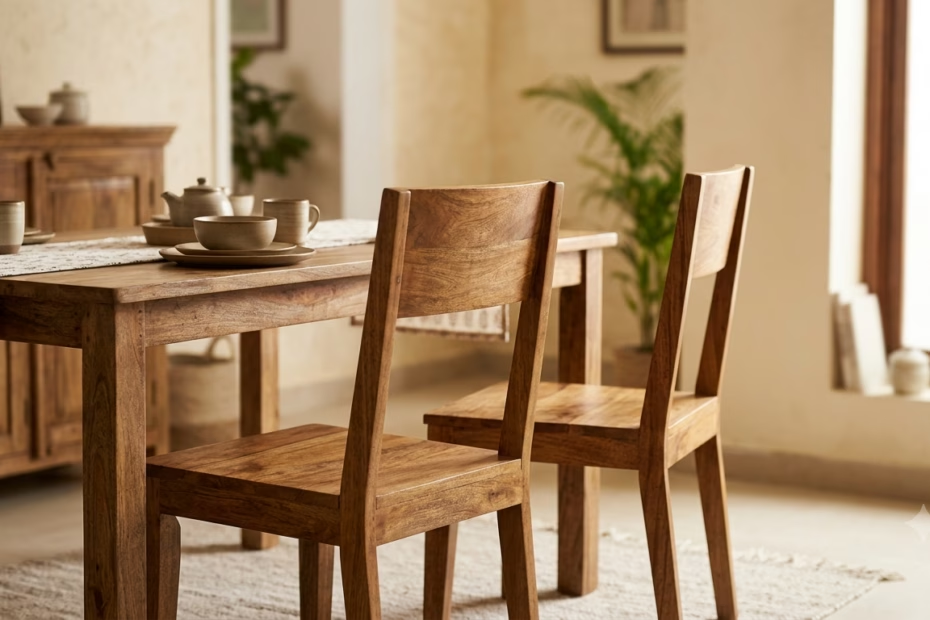
The best wooden dining chairs in India right now come from Freedom Tree and Orange Tree (via Pepperfry) and Wooden Space, Aprodz, and Urban Ladder (via Amazon) — between them covering solid teak, mango wood, and upholstered-seat designs, from a set of two to a full 6-chair suite. Not everyone shopping for chairs wants the same thing: a young family wants something sturdy and affordable, a joint family upgrading an old set wants chairs built to outlast it, and someone finishing a new apartment wants chairs that photograph well. This guide is built around that split — real chair styles, real wood types, and five brands checked SKU by SKU.
Every furniture retailer in India sells wooden chairs. What most don’t do is tell you honestly how their chairs stack up against the next brand’s — that’s the gap this guide fills.
QUICK ANSWER
The best wooden dining chairs in India right now come from Freedom Tree and Orange Tree (via Pepperfry) and Wooden Space, Aprodz, and Urban Ladder (via Amazon) — between them covering solid teak, mango wood, and upholstered-seat designs, from a set of two to a full 6-chair suite.
In this article
- What Makes a Dining Chair Genuinely “Wooden”?
- Wooden Dining Chair Styles in India: Ladder-Back, Cane, Upholstered & Bench-Style
- Sheesham, Teak, Mango & Acacia: Choosing the Right Wood for Your Dining Table Chairs
- Best Wooden Dining Chairs in India: Full Brand & Price Comparison
- Table and Chairs Sets vs. Buying Dining Chairs Separately
- The 4-Inch Rule: Getting Dining Chair Height Right for Your Table
- Dining Chairs vs. a Dining Bench: What Works Best for Indian Homes?
- How Much Do Dining Table Chairs Cost in India?
- Complete the Set: Matching Dining Table Chairs to Your Dining Table
- Wooden Dining Chairs — Frequently Asked Questions
- Conclusion
What Makes a Dining Chair Genuinely “Wooden”?
Here’s the first thing worth clearing up: a huge share of what gets sold as a “wooden dining chair” in India isn’t solid wood at all. The word “wooden” does a lot of quiet work — sometimes the whole frame is solid sheesham or teak, sometimes only the legs are wood while the rest is engineered board or metal, and sometimes it just means the finish looks wood-toned.
Three real categories show up across Indian chair listings:
Solid wood chairs — the entire frame (legs, seat rails, backrest) is a single hardwood species, usually sheesham (Indian rosewood), teak, or mango wood — the only category that genuinely lasts decades with normal use.
Wood-frame, upholstered-seat chairs — a solid wood frame with a fabric or leatherette-covered cushioned seat on top. An enormously popular style in India, pairing the durability of real wood with comfort a bare seat doesn’t offer — several picks below fall into this category, and there’s nothing wrong with it as long as the listing is upfront about which parts are wood.
Wood-look or wood-accent chairs — metal or engineered-wood frames with a wood-toned finish. Usually the cheapest option, but not what most people mean when they search for chairs like these, and won’t hold up the way genuine sheesham or teak will.
EDITORIAL NOTE
None of this is obvious from a photo. The only reliable way to tell them apart is the listing’s own “Primary Material” or “Frame Material” field — every brand here was checked at that level, not just judged by title.
Wooden Dining Chair Styles in India: Ladder-Back, Cane, Upholstered & Bench-Style
Once you’ve settled on genuine wood, the next decision is style — and buyers often default to whatever’s in the showroom window rather than thinking about how their household actually eats.
Ladder-back and slat-back chairs are the classic silhouette — horizontal wood slats across the backrest, usually with a bare or lightly cushioned seat. They’re easy to clean, space-efficient (they slide fully under the table), and generally the cheapest genuine-wood option — the practical default if you’re feeding kids daily.
Cane-back and cane-seat chairs weave natural rattan or cane into the backrest or seat. They read as lighter and more design-forward, and work well in smaller dining nooks — though cane can dry out and crack in very low humidity, rarely an issue across most of India’s climate.
Upholstered chairs pair a wood frame with a cushioned, fabric- or leatherette-covered seat. This is the comfort-first choice, nicer to sit in through a long meal, and it’s the style most brands in this comparison lean toward, since it’s where current demand sits.
Bench-style seating swaps one or both long sides of the table for a shared wooden bench — practical for smaller homes or households whose headcount flexes meal to meal, since a bench seats more people per linear foot than individual chairs. It trades away individual backrests, so it suits growing kids better than elderly guests who need firm back support.
Sheesham, Teak, Mango & Acacia: Choosing the Right Wood for Your Dining Table Chairs
The four wood species that dominate Indian dining chair listings each have a different durability and price profile — and picking the right one matters more for chairs than almost any other dining piece, since chairs get pulled, scraped, and leaned on in a way a table never does.
Sheesham (Indian rosewood) is the most common solid wood used across Indian chairs — dense, scratch-resistant, and widely available, which keeps prices reasonable relative to teak. It’s the safe, well-tested default for most households.
Teak is the most durable and weather-resistant of the four, historically prized for exactly this reason (it was originally a shipbuilding wood). Teak chairs carry a real price premium over sheesham, but earn it by staying structurally sound for decades with zero special care.
Mango wood is a fast-growing, more sustainable hardwood popular because it regenerates faster than teak or sheesham — it also carries more visible natural grain variation, which some buyers prefer for a handcrafted look. It’s a notch below teak on pure hardness, but well within normal daily-use durability.
Acacia is another dense, durable hardwood, often finished in a way that reads similar to mango wood or lighter sheesham — worth checking the listing’s material field rather than assuming from the finish name, since “natural finish” and “honey finish” get used loosely across all four species.
The wood-type trade-offs that matter most for chairs specifically deserve a fuller comparison if you’re weighing this across your whole dining setup; we’re building a dedicated wood-types guide covering that in more depth.
Best Wooden Dining Chairs in India: Full Brand & Price Comparison
We checked five roster brands SKU by SKU rather than trusting brand reputation — a brand’s overall positioning doesn’t guarantee every product line matches it.
| Brand | Chair | Wood / Material | Style | Approx. Price | Review Evidence | |
|---|---|---|---|---|---|---|
| Freedom Tree | Andaman Natural Teak Wood Dining Chair | Solid teak wood | Slat-back, bare wood seat | Starting from around ₹26,000 | No rating shown on Pepperfry | View Freedom Tree’s pick |
| Orange Tree | Utsaah Saanra Dining Chair | Solid mango wood | Upholstered seat, wood frame | Around ₹23,900–₹24,000 | No rating shown on Pepperfry | View Orange Tree’s pick |
| Wooden Space | Soft Serenity Velvet Dining Chairs | Rosewood legs + velvet upholstery | Fully upholstered, wood legs | Around ₹6,600–₹13,800 (varies by colour) | Strong — best-reviewed in this roster | View Wooden Space’s pick |
| Urban Ladder | Diner Set of 2 Dining Chairs | Solid wood frame + upholstery | Upholstered seat, wood frame | Starting from around ₹10,900 | Newly listed, not yet rated | View Urban Ladder’s pick |
| Aprodz | Mango Wood Dining Chairs Only | Solid mango wood | Bare wood seat | Around ₹12,400–₹12,500 | Thin — early reviews only | View Aprodz’s pick |
Freedom Tree — The Widest Genuine Wood Selection
Freedom Tree carries the deepest dining chair catalog we checked for this guide — over 40 distinct designs, spanning several style lines (Andaman, Malabar, Spindle, Ay’s Retro, Spine) across multiple colours and finishes. The standout is the Andaman in natural teak — its listing confirms solid teak wood as the primary material, not just a teak-toned stain, which matters given how loosely “teak finish” gets used elsewhere. Across the brand’s wider teak-finish range, prices run roughly ₹17,000 up to around ₹28,500 for heavier pieces. There’s no star-rating display here, so we can’t offer a review-based signal — but the SKU depth and confirmed solid-teak material make this a safe anchor pick for a wide range of matching styles.
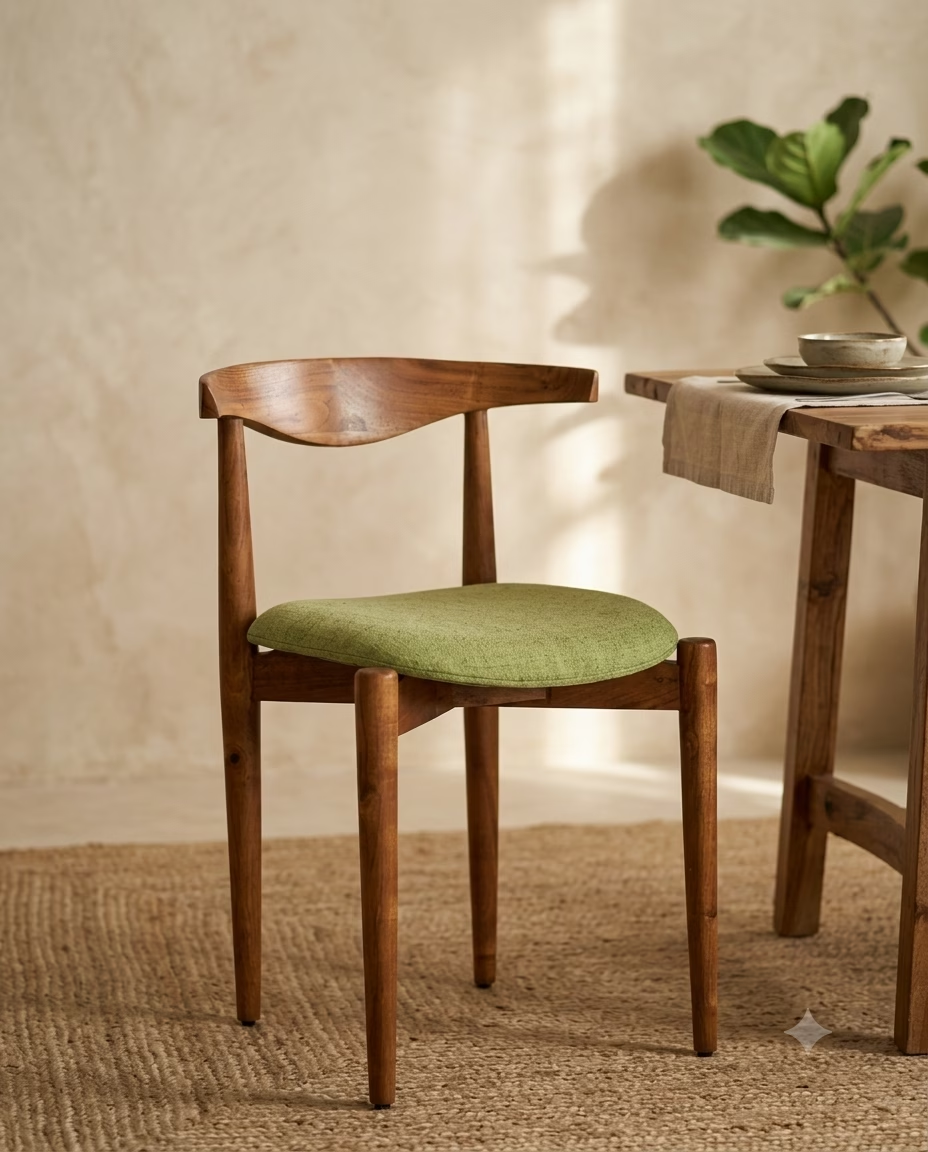
Andaman Natural Teak Wood Dining Chair
40+ styles across the brand; confirmed solid teak
A safe anchor pick for a wide range of matching styles.
Wooden Space — The Best-Reviewed Pick, With a Material Caveat
Wooden Space‘s Soft Serenity Velvet chairs carry the strongest review evidence in this comparison — a large, well-established base of positive customer reviews, genuinely the best-reviewed pick in this roster. Worth being precise, though: these pair solid rosewood legs with a fully upholstered velvet seat and backrest, not a bare-wood chair. If your priority is a plush, comfortable chair with a real wood base, this is a strong, well-proven pick — price moves noticeably by colour, so compare a couple of variants before buying.
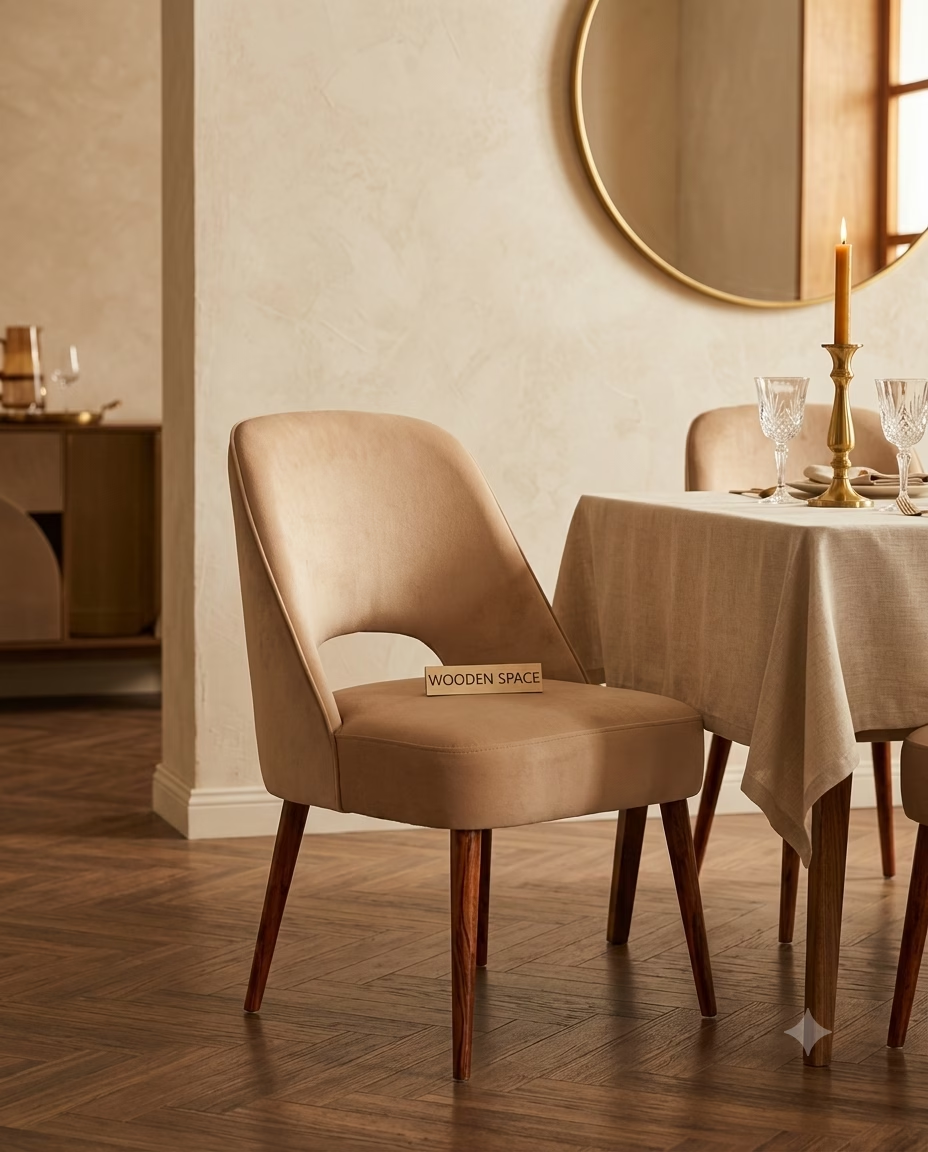
Best-Reviewed Pick
Strong review evidence in this roster
BEST-REVIEWED — WOODEN SPACE
Soft Serenity Velvet Dining Chairs
Pairs solid rosewood legs with a fully upholstered velvet seat and backrest — a plush, comfortable chair with a real wood base, and the strongest review evidence of any pick in this comparison.
Orange Tree — Confirmed Solid Wood, Despite the Ambiguous Name
Orange Tree‘s Utsaah Saanra chair is sold in a “Black Finish” — a name that, on its own, tells you nothing about the wood underneath. We’ve flagged this exact issue with Orange Tree before (finish names have described acacia in other lines despite sounding like a species), so we checked the Saanra’s own specification directly: its Primary Material field confirms genuine solid mango wood. At around ₹23,900–₹24,000, it sits in the mid-upper range of this comparison, with an upholstered seat over a solid wood frame.
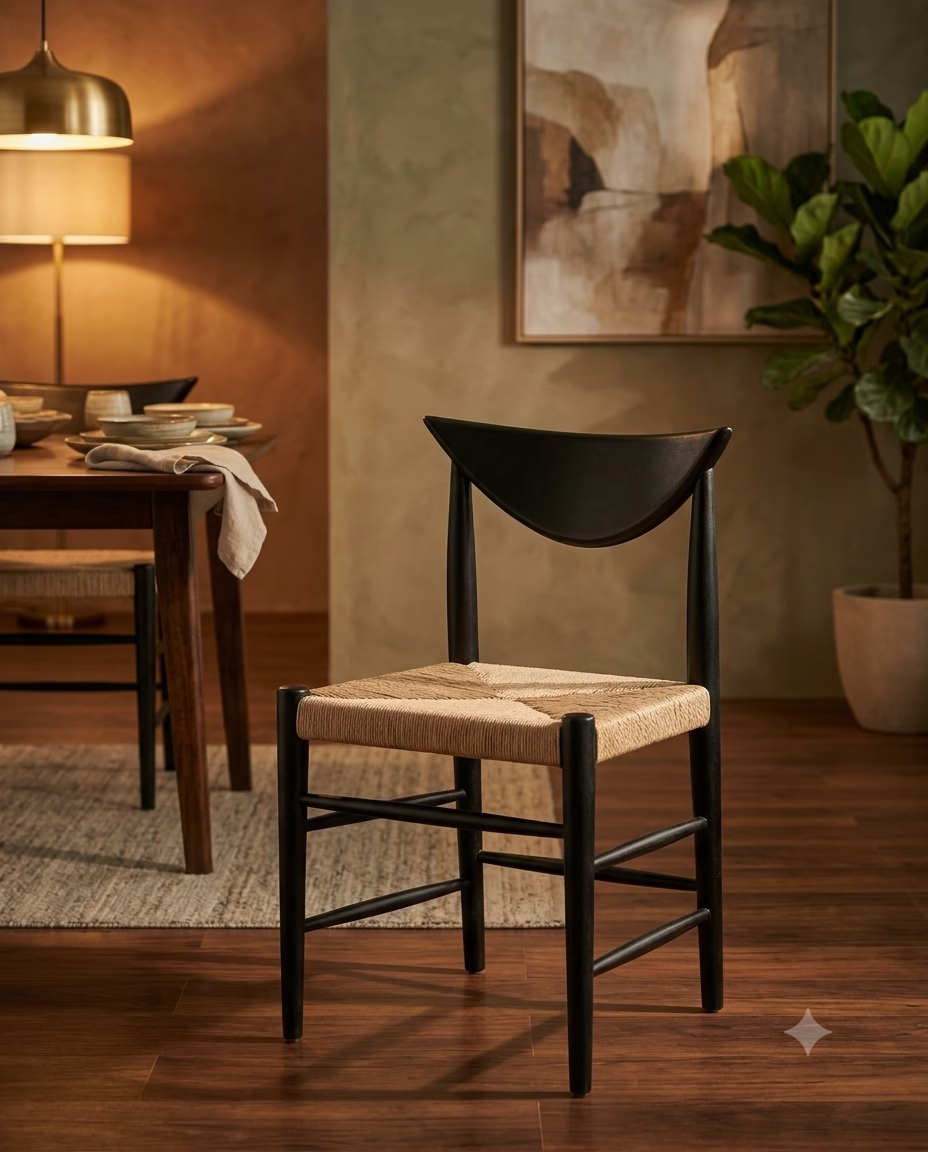
Utsaah Saanra Dining Chair, Black Finish
Confirmed solid mango wood; upholstered seat
Material field confirms genuine solid wood, despite the ambiguous finish name.
Urban Ladder — The Most Established Retail Name, on a Newer Listing
Urban Ladder is one of India’s longest-running furniture retailers, with genuine “Top Brand” status and a long, well-established track record on the platform. The chair we’re featuring, the Diner Set of 2 Chairs with Upholstery in dark walnut, is a newer listing without any review history of its own yet — its material field confirms a genuine solid wood frame under the upholstered seat, priced around ₹10,900 (up to roughly ₹13,100 depending on configuration). If you’d rather lean on a brand’s long track record than one product’s own review history, this is the pick that does that.
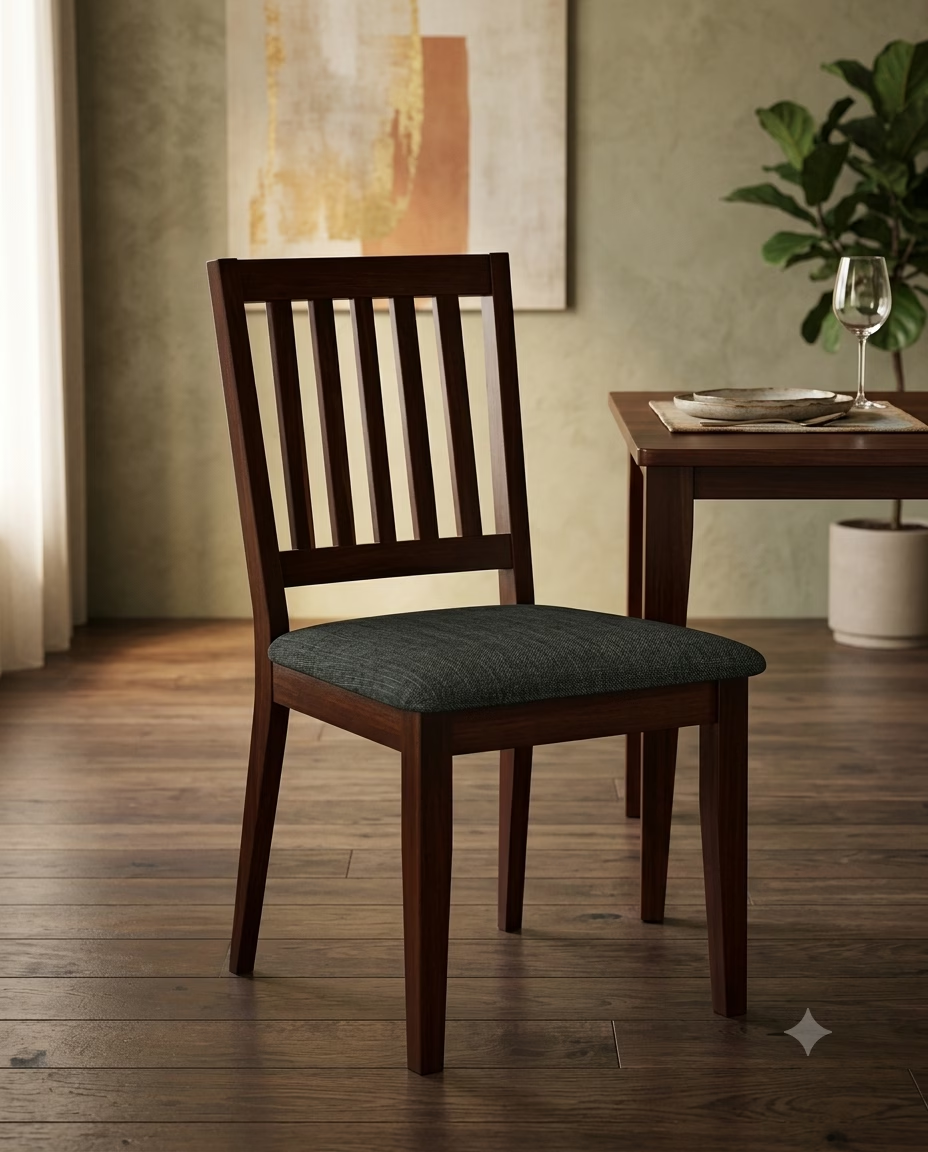
Diner Set of 2 Dining Chairs, Dark Walnut
Long-established brand. Newly listed, not yet rated
Genuine solid wood frame under the upholstered seat.
Aprodz — Genuine Solid Mango Wood, Still Building Review History
Aprodz‘s Mango Wood Chair is a genuinely solid-wood, bare-seat design at around ₹12,400–₹12,500 — a real mid-range price for a fully solid chair. Its review evidence is thin — an early, encouraging rating, but not yet backed by enough reviews to call it a settled crowd favorite the way Wooden Space’s pick is. We checked several other standalone Aprodz chairs and found the same pattern: real reviews cluster around the brand’s dining sets, not chairs sold alone, so this listing is still finding its footing — promising, but not yet proven.
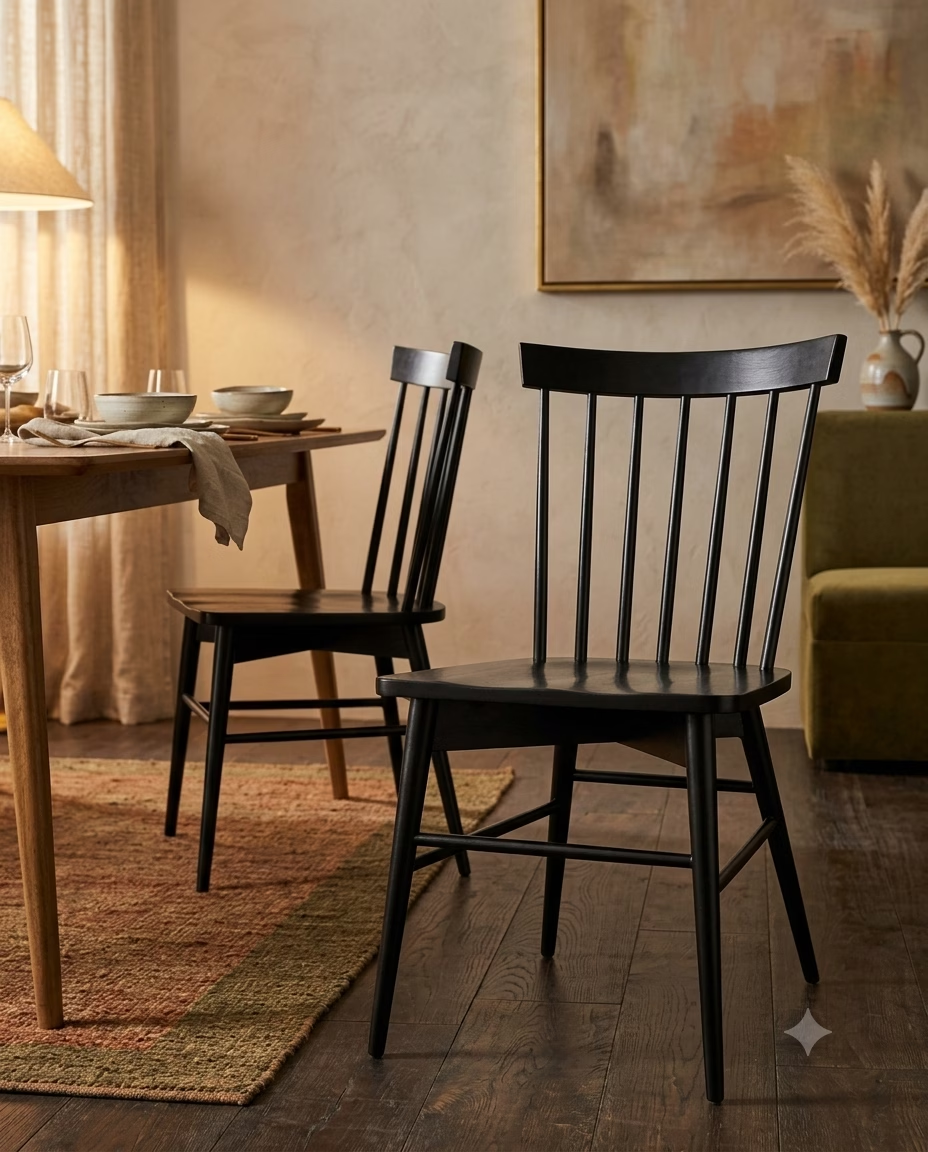
Mango Wood Dining Chairs, Set of 2
Fully solid mango wood. Thin — early reviews only
Promising early evidence, still building a longer review history.
Table and Chairs Sets vs. Buying Dining Chairs Separately
A common decision point most buying guides skip: buy a matched “table and chairs” set, or source table and chairs separately, possibly from different brands?
Buying a matched set
A matched set is simpler and usually better value if you’re furnishing from scratch — the proportions are designed together, delivery and assembly are bundled, and you skip the guesswork of whether a chair you like sits right under a table you like. It’s also generally cheaper per chair, since sets are priced as a bundle.
Buying separately
Buying chairs separately makes more sense in two situations: you already own a table you’re happy with and just need to replace worn chairs, or you want a mixed-and-matched look — a plain wood table paired with upholstered chairs, an increasingly common styling choice. All five chairs in this guide are sold standalone (or as sets of chairs only), specifically for this second scenario.
The 4-Inch Rule: Getting Dining Chair Height Right for Your Table
One measurement question comes up more than any other once people start actually shopping for chairs: will this one fit comfortably under my table?
~4 in
roughly 4 inches (about 10 cm) of clearance between the top of the chair seat and the underside of the tabletop
The rule furniture designers use is simple: leave roughly 4 inches (about 10 cm) of clearance between the top of the chair seat and the underside of the tabletop, so a seated adult’s knees clear the table’s apron (the frame under the tabletop edge) without banging into it. Too little clearance and even a comfortable chair feels cramped; too much and you’re eating with your plate at an awkward height.
This is worth actually measuring — a chair that looks standard-sized in a photo can vary by a couple of centimetres in seat height between brands, and upholstered chairs can sit slightly higher once a cushion compresses under weight. Check the table’s underside clearance against the chair’s stated seat height before ordering — a five-minute check that avoids an annoying return.
This math also shifts once arms or thick cushioning enter the picture: a chair with armrests needs to clear the apron with the arms included, so an armchair-style chair often needs a lower seat or a table with a higher apron than a standard armless chair.
Dining Chairs vs. a Dining Bench: What Works Best for Indian Homes?
For smaller apartments or joint families where headcount varies meal to meal, the real question isn’t which chair to buy, it’s whether chairs are the right seating at all.
Individual chairs give every diner a defined seat with a backrest, which matters more for elderly family members or anyone who needs real back support through a longer meal.
A dining bench along one or both sides of the table trades that individual definition for flexibility — it seats more people per linear foot than the same length in chairs, since diners can shift closer together without needing extra furniture. It suits households that regularly host beyond their everyday headcount, or smaller nooks where chair frames eat into walking space.
Most buyers don’t need to pick one exclusively — a common setup is chairs on the shorter ends of the table and a bench along one longer side.
How Much Do Dining Table Chairs Cost in India?
Based on the five brands checked for this guide, genuine solid-wood or wood-frame chairs in India span roughly three price bands:
Budget tier (around ₹6,600 to ₹11,000): accessible upholstered options like Wooden Space’s lower-priced colour variants and the entry point of Urban Ladder’s Diner set — a reasonable starting point without dropping to non-wood alternatives.
Mid tier (around ₹12,000 to ₹18,000): where Aprodz’s bare-wood mango chair and Freedom Tree’s lower-priced teak-finish lines sit — genuine solid wood at a price most households can plan around for a set of 4 or 6.
Upper tier (around ₹23,000 and up): where Orange Tree’s upholstered mango wood chair and Freedom Tree’s higher-design teak pieces land — where you’re paying for a more elevated finish, a more design-forward silhouette, or both.
Key takeaway
Two things worth keeping in mind: a full set of 4 or 6 almost always comes at a better per-chair rate than buying single chairs, and prices shift often enough that any figure here is a snapshot — check the live listing before you commit.
Complete the Set: Matching Dining Table Chairs to Your Dining Table
If you’re furnishing a dining space from the ground up, the chairs in this guide are only half the decision. For the table itself, our complete guide to Indian dining, coffee, and side tables covers table types and sizes. For a deeper dive into wooden dining tables specifically — seater count, wood type, brand comparison — we’re finishing a companion guide to the best wooden dining tables in India, which we’ll link here once it’s live.
Whichever order you shop in, keep the 4-inch clearance rule above in mind before pairing a table and chairs from two different brands — it’s the single most common fit mistake.
Wooden Dining Chairs — Frequently Asked Questions
Which dining table is best for home?
It depends more on household size and room dimensions than any single “best” answer — a solid wood 6-seater in sheesham or mango wood covers most Indian family homes, while smaller apartments suit a 4-seater or extendable design better. Our Indian tables guide breaks this down brand by brand.
What is the 4-inch rule for dining seating?
The standard clearance designers leave between a chair’s seat and the tabletop underside — roughly 4 inches (10 cm) — so a seated diner’s knees clear the table’s apron. See the section above for how this shifts with armrests or thick cushioning.
What chair styles are trending in 2026?
Upholstered wood-frame chairs remain dominant — three of the five chairs in this comparison pair a solid wood frame with a cushioned seat. Cane-back chairs are trending for smaller spaces, while slat-back chairs remain the practical default for households with young kids.
How much does a table and chairs set cost?
A full matched set generally runs a better per-chair rate than buying pieces separately, though cost depends on seater count, wood type, and finish. Based on the standalone chair prices here, budget roughly ₹6,600 to ₹13,000 per chair at the accessible end and ₹23,000-plus at the upper end.
Can I buy dining table chairs separately from the table?
Yes — all five chairs in this guide are sold standalone, or as sets of chairs only, without a table, for buyers replacing worn chairs or mixing a table from one brand with chairs from another.
Is sheesham or teak better for chairs?
Both are genuinely durable; teak carries a real price premium but is more weather- and moisture-resistant long-term, while sheesham offers most of that durability more affordably. Sheesham suits everyday indoor use fine — teak earns its premium for the longest lifespan with the least maintenance.
Are upholstered chairs harder to maintain than bare wood chairs?
Somewhat — a fabric or leatherette seat needs occasional spot-cleaning and is more vulnerable to spills than bare wood, which just needs a wipe-down. Leatherette is generally easier to maintain than fabric if spill resistance matters.
What’s the difference between a dining chair and a dining bench?
A chair gives one diner an individual seat with its own backrest; a bench is a single long seat (usually backless) shared along one side, seating more people per linear foot. See the comparison section above for which fits your setup.
Do chairs need armrests?
Not by default — armless chairs are more space-efficient and easier to tuck under the table, and what most picks here are. Armrests add comfort for longer meals but need extra clearance (see the 4-inch rule above) and more floor space.
How many chairs do I need for a 6-seater table?
Six, matched to your table’s actual seating capacity — though check a table’s stated “seater” count against its real usable width, since seater counts on Indian listings can run optimistic.
Conclusion
Wooden dining chairs in India span a genuinely wide range — from bare slat-back sheesham chairs built to survive a busy kitchen, to fully upholstered wood-frame chairs designed for comfort through a long meal. The right pick depends less on any single “best” brand and more on matching wood type, style, and price band to how your household actually uses its dining space. Whether you’re prioritizing Freedom Tree’s sheer selection, Wooden Space’s proven review track record, or a genuinely solid mango wood chair from Orange Tree or Aprodz, checking the real material field — not just the listing title — is the one step worth never skipping.
This article contains affiliate links. We may earn a commission on qualifying purchases, at no extra cost to you.
Related reading

Best-reviewed pickWooden Space — Soft Serenity chairs
