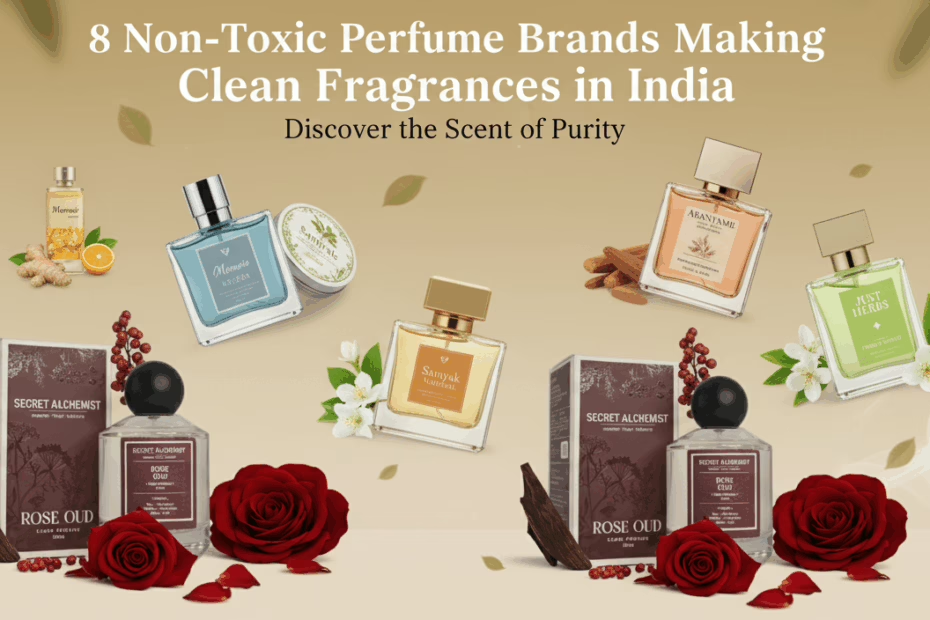
If you are looking for clean perfume brands in India, the honest starting point is this: almost every bottle on the shelf says something reassuring, and almost none of it can be checked. “Chemical-free.” “100% natural.” “Dermatologically tested.” Some of those phrases point at a real certifier with a real public register. Some point at an organisation that does not issue that kind of certificate at all. And a few point at nothing.
So we did the boring thing. We took every certification and credential claim made by the eight brands below, went to the register that would actually contain it, and wrote down what was there — with the date, and with a screenshot. Six of the eight turn up in a register. Only one is certified for the exact bottle we are recommending, which is rarer than it sounds.
A note on what this is
We did not wear these fragrances. Naatural.in does not lab-test, and we are not going to imply we spent a month wearing eight perfumes. What follows is a verification piece, not a wear test — every scent description below comes from the brand’s own published notes, attributed, and every longevity note is reasoned from format and concentration rather than from our own skin. What you get instead is the thing nobody else in this category bothers to do.
This guide covers non-toxic perfume in India across all three formats — alcohol-based eau de parfum, oil-based attar, and solid balm — with paraben-free, phthalate-free and alcohol-free options for men and women, and a plain explanation of which of those words mean anything.
This article contains affiliate links. We may earn a commission on qualifying purchases, at no extra cost to you.
Our full research methodology explains how we check a claim, what controls we run first, and what we refuse to print.
On this page
- At a glance: 8 clean perfume brands in India
- How we checked these brands’ claims
- What perfumes are natural and without chemicals?
- What the words mean on an Indian label
- Harmful substances in commercial perfumes
- The 8 brands
- Natural perfume for men
- Natural and organic perfume for women
- Alcohol-free clean perfume in India
- Attar, eau de parfum or solid?
- How long does natural perfume last in Indian heat?
- Are clean perfumes actually better for you?
- Why India has no certified natural spray perfume
- The claim we nearly got wrong
- Frequently asked questions
- How we verified these claims
- Final thoughts
At a glance: 8 clean perfume brands in India
Format matters more than most roundups admit, so it is the first column. “Verified” means we found the claim in the certifier’s own public register and captured it — not that the brand says so.
Scroll the table sideways — the brand column stays put.
| Brand & product | Format | Size | Rough price | What verified, and on what date |
|---|---|---|---|---|
| Phool Petrichor | Attar, spray applicator, alcohol-free | 10 ml | around ₹1,150 | COSMOS NATURAL — this exact product, certified by Ecocert Greenlife. Also cruelty-free in PETA’s register. Checked August 2026 |
| Soulflower Premium Attar Set | Attar roll-on, alcohol-free | 4 × 5 ml | around ₹625 | Cruelty-free in PETA’s register. COSMOS ORGANIC covers 14 Soulflower products — all of them oils, not these attars. Checked August 2026 |
| Just Herbs Cin & Tonic | Eau de parfum, spray | 50 ml | around ₹500 | Cruelty-free in PETA’s register. Checked August 2026 |
| The Bare Bar Colors of Autumn | Solid balm, alcohol-free | 20 g | around ₹290 | Cruelty-free in PETA’s register. Checked August 2026 |
| Secret Alchemist Rose Oud | Eau de parfum, spray | 100 ml | around ₹1,450 | Cruelty-free in PETA’s register, listed under the company name. Its own IFRA and FDA claims have no register behind them — see its entry. Checked August 2026 |
| Aranyam Nargis Floral | Eau de parfum, spray | 2 × 50 ml | around ₹2,830 | Brand’s own statements only, attributed below |
| NASO Gardenia Marigold | Attar-based, spray | 20 ml | around ₹2,500 | Brand’s own statements only, attributed below |
| Forest Essentials Intense Kesari | Perfume, spray | 50 ml | around ₹6,200 | Cruelty-free in PETA’s register, listed under the company name Mountain Valley Springs. Checked August 2026 |
What that last column does and does not mean
A note on that last column, because it matters: “no third-party register found” is not the same as “we searched a register and the brand was absent.” Aranyam’s and NASO’s claims — “100% natural,” “free from chemicals” — name no certifying body at all, so there is nothing to search. That is a statement about what those brands publish, not a finding about them. Our methodology page explains the distinction in full.
How we checked these clean perfume brands’ claims
This is the part most perfume roundups skip, so here it is first, dated and plain.
Where this guide stops
What we did not do. We did not wear these perfumes, test them, or send anything to a laboratory. No first-person longevity claim appears anywhere in this article, because we have not earned one.
The process, step by step
What we did instead, in August 2026:
- Wrote down every claim, word for word, from each brand’s own site and its live product listing. The two frequently differ.
- Asked whether the named body issues that kind of certificate at all. Several do not, and that turns out to be one of the most useful things in this guide.
- Found the register that would actually contain the entry — which is not always the obvious one. We nearly got this wrong, and we have written up how, further down.
- Ran controls before recording any blank. A null result means nothing until you have shown the register works, covers India, and matches partial names. We ran seven controls across four registers. All seven passed.
- Captured every check full-width, with the source URL and the date burned into the image.
Registers searched: the COSMOS certified products directory, Ecocert’s directory of certified customers, PETA’s Beauty Without Bunnies, Cruelty Free International’s approved brands, the Leaping Bunny shopping guide, and the Government of India’s Geographical Indications register.
What perfumes are natural and without chemicals?
The short answer is that no perfume is without chemicals, and any bottle promising otherwise is using a word that does not describe anything testable. Water is a chemical. So is the linalool in lavender oil and the limonene in bergamot. A perfume marketed as chemical-free is, at best, telling you it avoids a specific list of synthetic ingredients — and at worst telling you nothing at all.
What people usually mean when they search for natural perfumes without chemicals is narrower and more sensible: a fragrance built mostly from botanical materials — essential oils, absolutes, resins, distilled attars — rather than from petroleum-derived aroma chemicals, and one that leaves out a short list of ingredients they would rather avoid. Parabens. Phthalates. Synthetic musks. Undisclosed “fragrance” blends.
That is a reasonable thing to want. It is also, in India, surprisingly hard to verify, because there is no legal definition of “natural” or “organic” for a cosmetic sold here, and no public register of approved cosmetic products to check against. Cosmetics fall under the Drugs and Cosmetics Rules; imports are registered centrally through the CDSCO, while anything manufactured in India is licensed state by state. None of that produces a database a shopper can search.
So the practical test is not the word on the front of the box. It is whether the brand publishes a full ingredient list, whether it names a certifier, and whether that certifier’s register actually contains the product.
What “clean perfume”, “natural” and “organic” actually mean on an Indian label
Four findings from the verification pass, in order of how much they should change what you look for.
1. “IFRA Certified” is not a thing IFRA does
This one appears on Indian fragrance packaging often enough to be worth stating plainly, and it comes straight from the International Fragrance Association’s own website: IFRA does not create the certificates. It says so directly, and adds that no company issues them on IFRA’s behalf.
What does exist is a Certificate of Conformity — and its scope is the interesting part. It applies to a fragrance mixture supplied to a manufacturer, not to the bottled perfume you buy, and it is issued by the fragrance supplier to its customer. IFRA’s page lists ten independent companies that help prepare these. We checked whether any of them publishes a searchable register. None does.
So “IFRA certified” on a retail perfume is not something you can look up. It may well reflect a real document held somewhere in the supply chain — but there is no register, and the certificate it refers to covers the concentrate rather than the finished bottle.
2. “FDA Approved” cannot apply to a perfume
The US Food and Drug Administration is equally blunt on its own site: it does not have the legal authority to approve cosmetics before they go on the market, and it draws the distinction in so many words — FDA-regulated does not mean FDA-approved.
A perfume is a cosmetic. The 2022 Modernization of Cosmetics Regulation Act added facility registration, product listing, safety substantiation and recall powers, but it created no pre-market approval pathway. And a fragrance made and sold in India has no FDA relationship at all.
3. In India, “cruelty-free” is the law, not a distinction
This is the finding we would most like you to take away, because it reframes a badge that appears on almost every clean beauty product in the country.
India banned animal testing of cosmetics in 2014. The Drugs and Cosmetics Rules were amended effective 23 May 2014 to prohibit testing cosmetics on animals in India, and Rule 135-B, in force from November 2014, bars importing any cosmetic that has been tested on animals.
For a cosmetic manufactured and sold in India, then, not testing on animals is compliance with the law. It is not a choice the brand made and it does not distinguish one Indian brand from another.
A cruelty-free claim only carries extra information when a named third party has verified it and published the result — which is exactly why we went looking. Six of the eight brands here are in PETA’s Beauty Without Bunnies register, two of them filed under a registered company name rather than the name on the bottle. That is a real, checkable distinction. The badge on its own is not.
4. A Geographical Indication certifies a place, not a company
You will see “GI Tagged” on perfume from Kannauj, the Uttar Pradesh town that has been distilling attar for centuries. The Kannauj Perfume GI is real and it resolves in the Government of India’s own register — application 157, certificate 203, issued 31 March 2014 and valid to 2029.
Read what it covers, though. It is a regional indication held by the Uttar Pradesh Export Promotion Bureau, and it certifies that perfume made in Kannauj by traditional methods is what it says it is. It is not an audit of any particular company, and whether a given house is registered as an authorised user under it is a separate question. A Kannauj GI tells you where and how something was made. It does not tell you that a brand has been inspected.
The pattern across all four: the question worth asking of any certificate is not whether it exists. It is what does it actually cover — which product, which company, which place.
What are the harmful substances in popular commercial perfumes?
Worth being careful here, because this is where clean-beauty writing usually overreaches. The ingredients below are avoided by the brands in this guide, and there are real reasons people avoid them — but “avoided by clean brands” and “proven harmful at the doses in perfume” are different statements, and we are only making the first.
Parabens, and why every clean perfume label mentions them
Paraben-free is the single most searched thing about clean perfume in India, so it deserves a straight answer rather than a scare paragraph.
Parabens — methylparaben, propylparaben and relatives — are preservatives. They stop mould and bacteria growing in water-containing cosmetics, and they have been used for the best part of a century because they are cheap and they work. The concern that made paraben free perfume a mainstream search term is that some parabens show weak oestrogen-like activity in laboratory studies, and that they are absorbed through skin. Regulators have responded differently: the European Union has restricted or banned several of the longer-chain parabens in cosmetics, while others remain permitted within concentration limits.
The part specific to fragrance is worth knowing. An alcohol-based eau de parfum has very little for a preservative to do — high-proof alcohol is itself hostile to microbial growth. So a paraben-free perfume is a much less demanding claim than a paraben-free moisturiser, and most fine fragrance, clean-positioned or not, contains no parabens to begin with. If a brand is making a lot of noise about being paraben-free in a spray perfume, it is advertising something close to the category default.
Where it genuinely matters is in the water-containing and balm formats — solid perfumes, creams, mists. There, a preservative has real work to do, and a paraben-free formula has to solve that problem another way.
Phthalates
Diethyl phthalate, DEP, is the one that turns up in fragrance. It is not there for scent — it is used as a denaturant and a fixative, helping a fragrance last longer on skin. Phthalate free perfume is a more meaningful claim than paraben-free in this category, because unlike parabens, DEP genuinely is common in conventional perfumery, and it can sit inside the word “fragrance” on an ingredient list without being named.
“Fragrance” or “parfum” as a single ingredient
This is the structural problem underneath all of it. A perfume’s scent formula is treated as a trade secret, so a label can lawfully compress dozens of individual materials into one word. That is why an ingredient list can be short, accurate and still tell you almost nothing — and it is why a brand that publishes an actual breakdown is doing something unusual.
Synthetic musks and aroma chemicals
Not all synthetics are equal, and this is where honest clean-fragrance writing has to be careful. Some aroma chemicals replaced genuinely problematic naturals; some replaced materials that came from endangered plants or animals. Others — certain nitro musks — have been restricted over persistence and accumulation concerns. A blanket “synthetics bad, naturals good” framing does not survive contact with the detail. Several essential oils are among the more common contact allergens in cosmetics.
Which is the honest note to end this section on: natural does not automatically mean gentler, and we say more about that below.
8 Best Organic Perfume Brands in India Making Clean, Natural Fragrances
Eight picks, three formats — the clean perfume brands in India we could stand behind after checking. Each entry says what the format is first, because a spray, an attar and a solid behave completely differently on skin and cost wildly different amounts per millilitre. Scent notes are the brand’s own published descriptions, attributed. Longevity is reasoned from format and concentration, not measured by us.
Certified for this bottle
COSMOS NATURAL
Our top pick
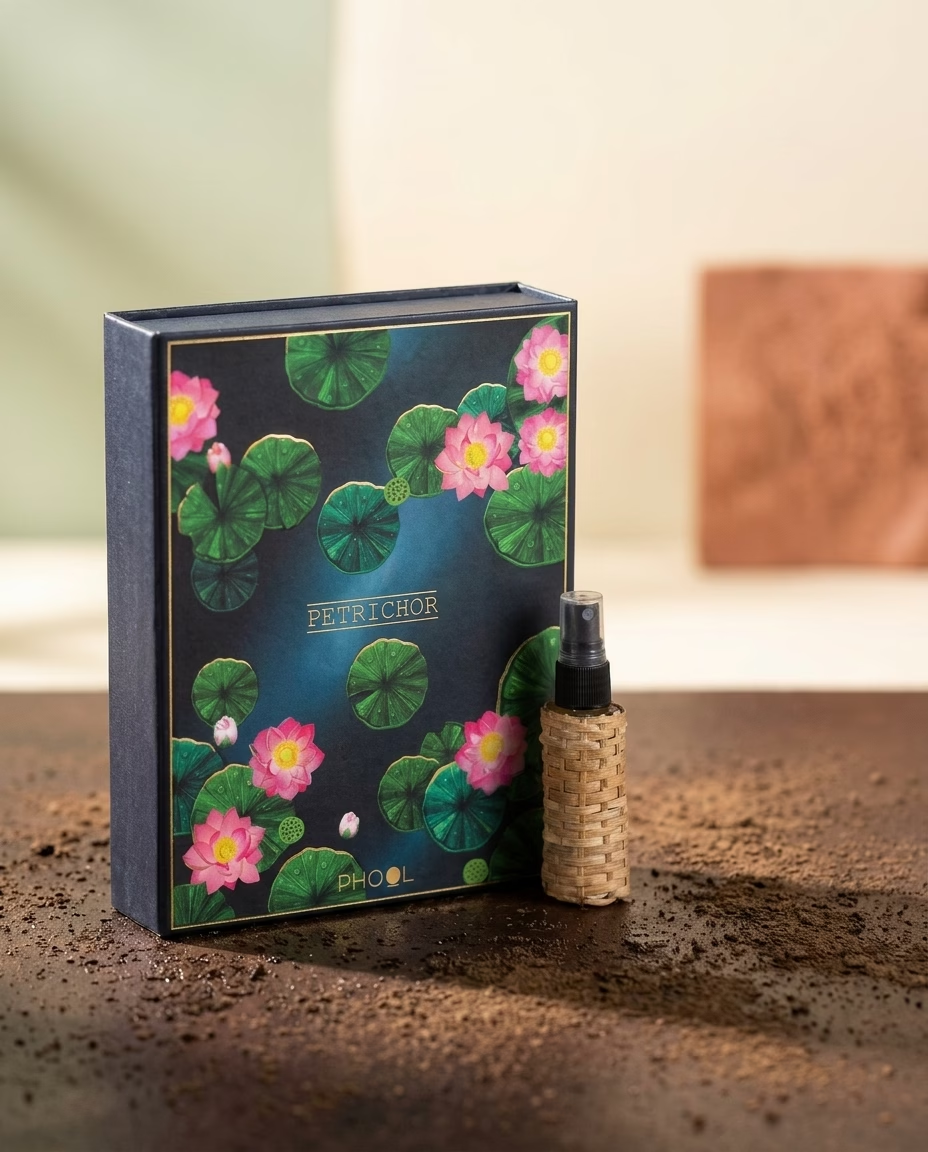
1. Phool Petrichor — the only pick certified for the exact bottle
PETA · cruelty-free brand COSMOS NATURAL this product
What it is. A mitti attar — the scent of first rain on dry earth — distilled in Kannauj by the traditional deg-and-bhapka copper-vessel method into a pure sandalwood oil base. Alcohol-free, in a spray applicator. 10 ml, around ₹1,150.
Attar · alcohol-free 10 ml
What it smells like. Phool describes it as petrichor itself: wet earth, with sandalwood underneath. Earthy and unisex rather than sweet or floral.
What to expect on longevity. Attars are oil-based and concentrated, so they sit close to the skin rather than projecting across a room, and they generally outlast an equivalent spray. The brand suggests one or two sprays is enough, which is consistent with that.
What the brand says. Phool describes the product as “pure, concentrated, alcohol-free” and “Made with love in India.”
What we could check — and this is the strongest result in the guide. The COSMOS certified products directory lists “Phool Oil Petrichor (Mitti Attar)” by name, with a COSMOS NATURAL signature, certified by Ecocert Greenlife, under company Kanpur Flowercyling Pvt. Ltd. Checked August 2026. Note the signature carefully: COSMOS runs two, ORGANIC and NATURAL, and this product carries NATURAL. Phool holds both across its range — its essential oils are ORGANIC. Separately, Phool appears in PETA’s Beauty Without Bunnies register.
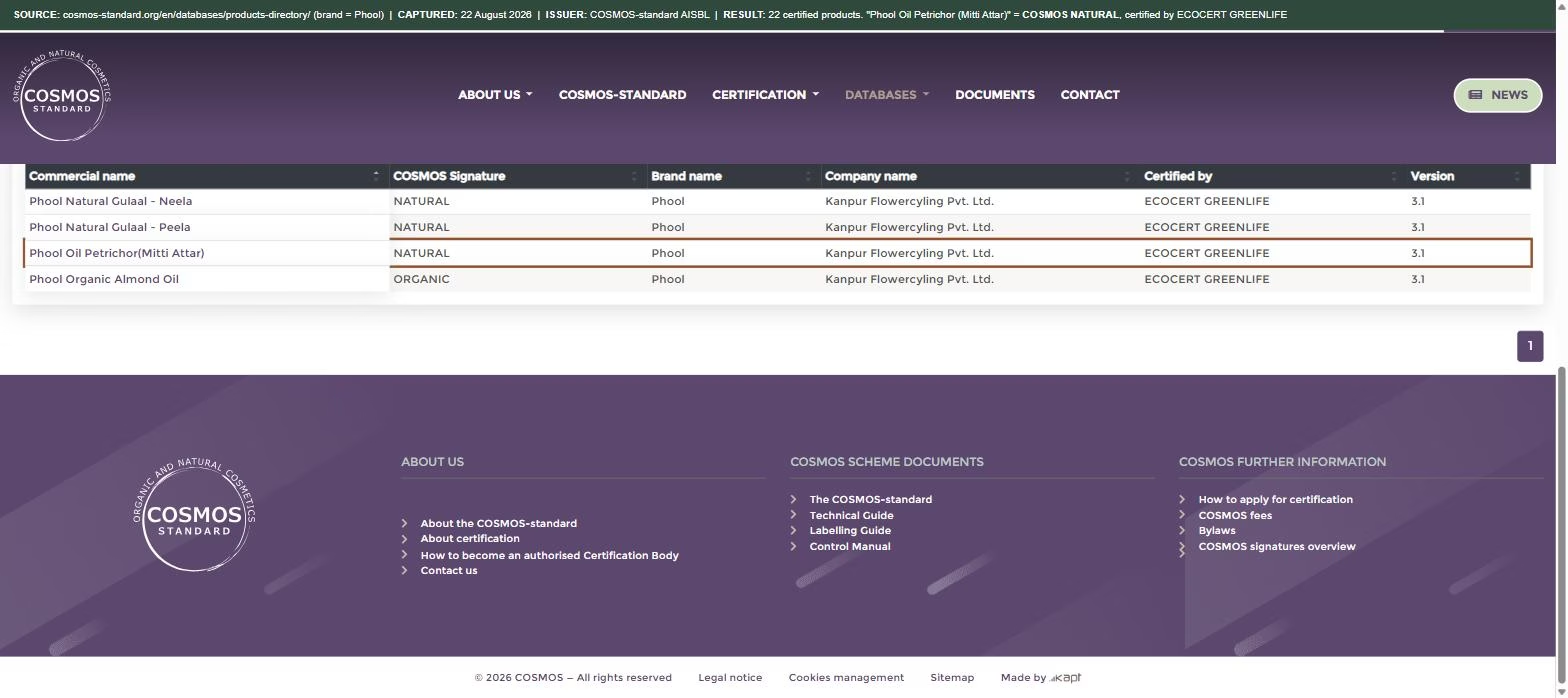
“Phool Oil Petrichor (Mitti Attar)” listed by name in the COSMOS certified products directory — signature COSMOS NATURAL, standard version 3.1, certifier Ecocert Greenlife, company Kanpur Flowercyling Pvt. Ltd.
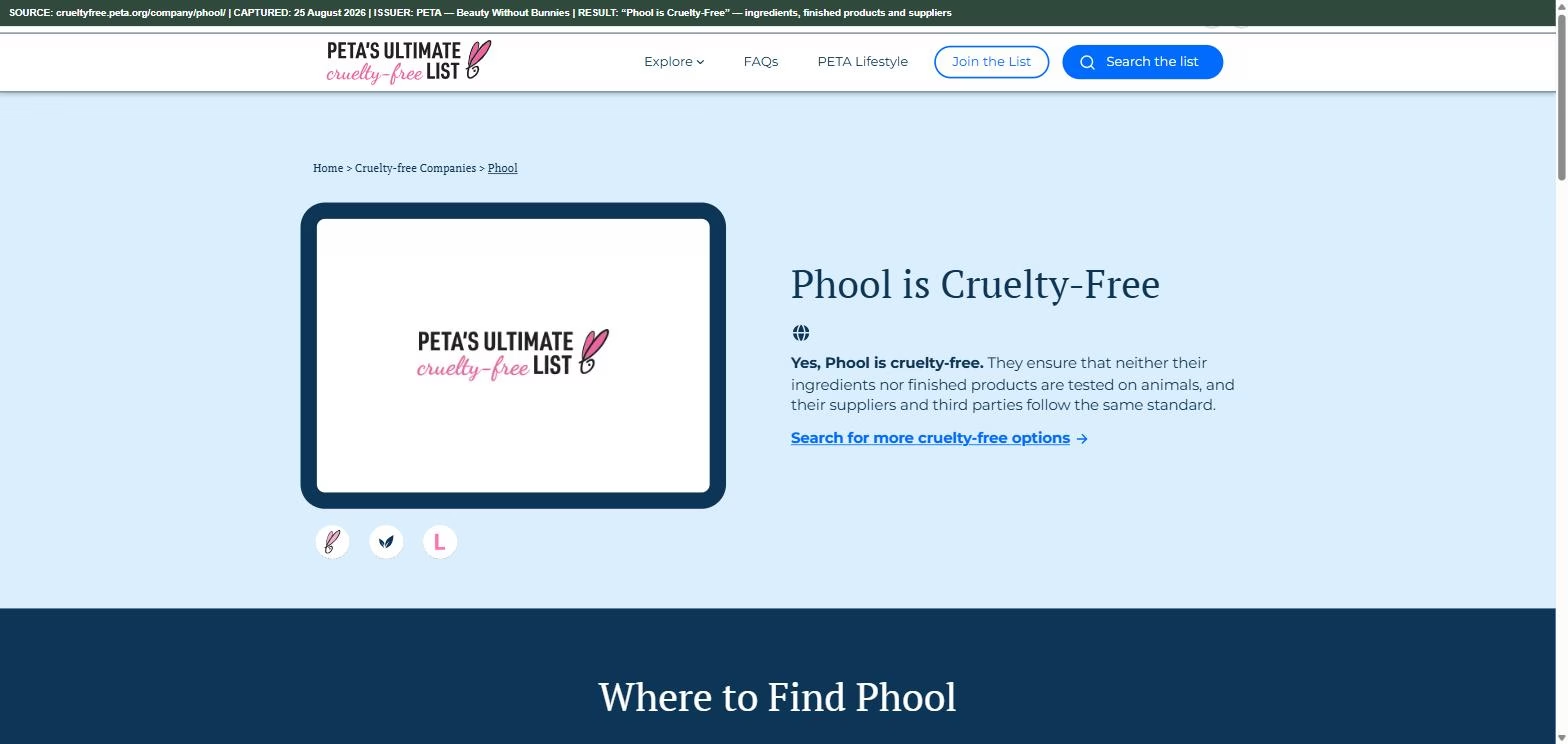
“Phool is Cruelty-Free” — PETA’s own company page. Read the scope: it covers ingredients, finished products and suppliers, which is an assurance about the whole business rather than about one bottle. That is why this badge sits on the product photo and a COSMOS product certificate does not.
Why that matters more than it sounds. Almost every certification you meet in this category covers something else the brand makes. This one covers the bottle in the photograph.
Who it suits. Anyone who finds conventional perfume too loud, and anyone drawn to the idea of a fragrance that smells of place rather than of a marketing brief. Alcohol-free, so a reasonable starting point if alcohol-based sprays irritate your skin.
One thing to know. Phool is a flower-recycling business — it makes fragrance and incense from temple flowers that would otherwise end up in the Ganges. And unlike everything else here, its fragrance is not sold through the marketplaces we normally link to, so the link below goes to the brand’s own shop and earns us nothing.
2. Soulflower Premium Attar Set — four alcohol-free attars for the price of one perfume
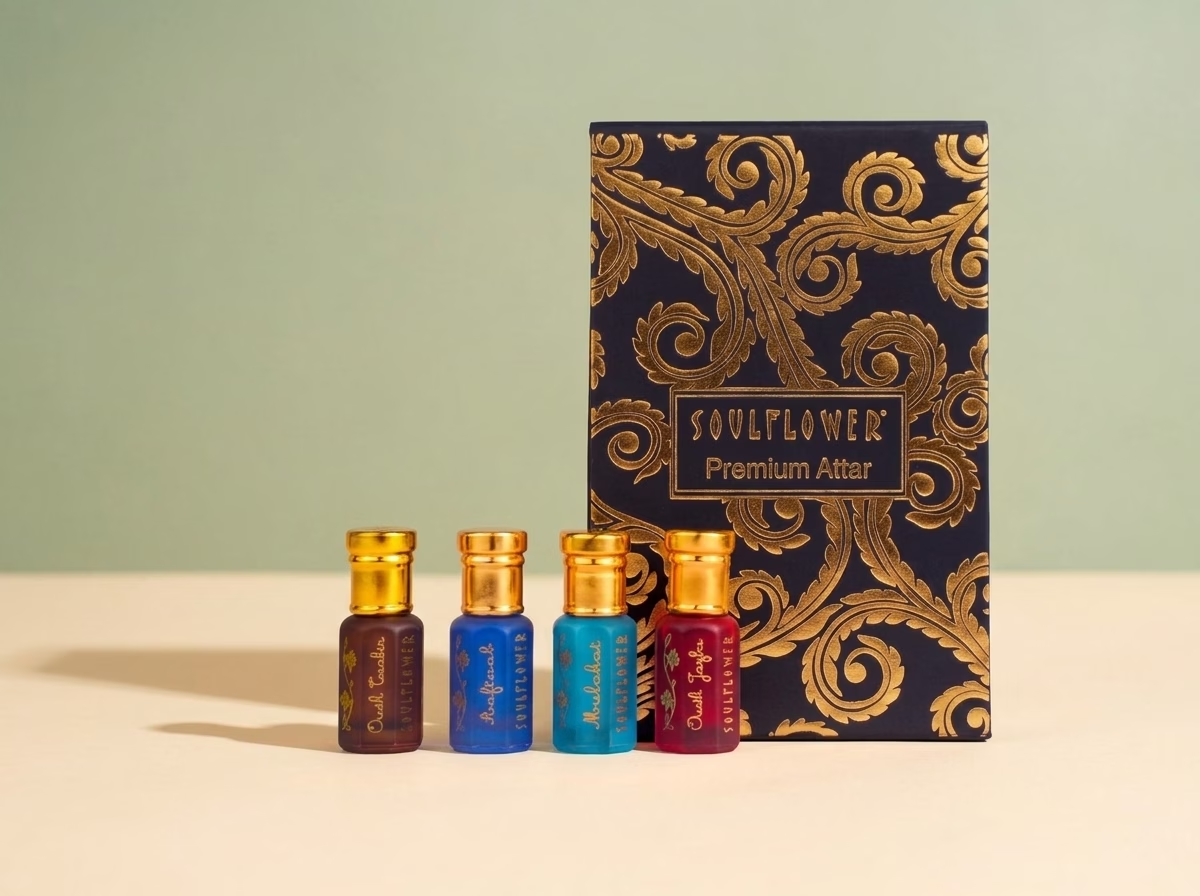
Attar roll-on · alcohol-free 4 × 5 ml
What it is. A set of four alcohol-free roll-on attars, 5 ml each, from a Mumbai brand that has been in natural skincare since long before it was fashionable. Around ₹625 for all four — the cheapest way into oil-based fragrance in this guide, and the only pick that lets you try four directions at once rather than committing to one.
What it smells like. Four separate compositions, described by the brand as: Aaftaab, a floral built on amber and oudh; Mulakat, florals over musk and wood; Oudh Jazba, oudh-led and smoky with balsamic sweetness over amber; and Oudh Tabir, oudh again but with fresh, spicy notes on top. Two florals and two oudhs, marketed unisex.
What to expect on longevity. These are oil-based and applied by roll-on, so they behave like attars rather than sprays — close to the skin, little projection, and generally longer-wearing than an alcohol spray. At 5 ml each they are sample-sized: enough to learn whether a direction suits you, not enough to be a signature.
What the brand says. Soulflower describes the set as “Alcohol Free” and as “premium attars,” and describes its range as “100% vegan cruelty-free and phthalate-free.”
What we could check, and the caveat that has to travel with it. Soulflower is in PETA’s Beauty Without Bunnies register. The brand also states it is Ecocert certified, and that checks out — but not where you would first look, and not for these attars. The COSMOS certified products directory lists 14 Soulflower products with a COSMOS ORGANIC signature, all certified by Ecocert Greenlife — and every one of them is a carrier oil or an essential oil. Coldpressed castor, coconut, jojoba, olive, sesame, grapeseed, neem; tea tree, lavender, rosemary, peppermint, ylang ylang, geranium. The attar set is not among them. Checked August 2026.
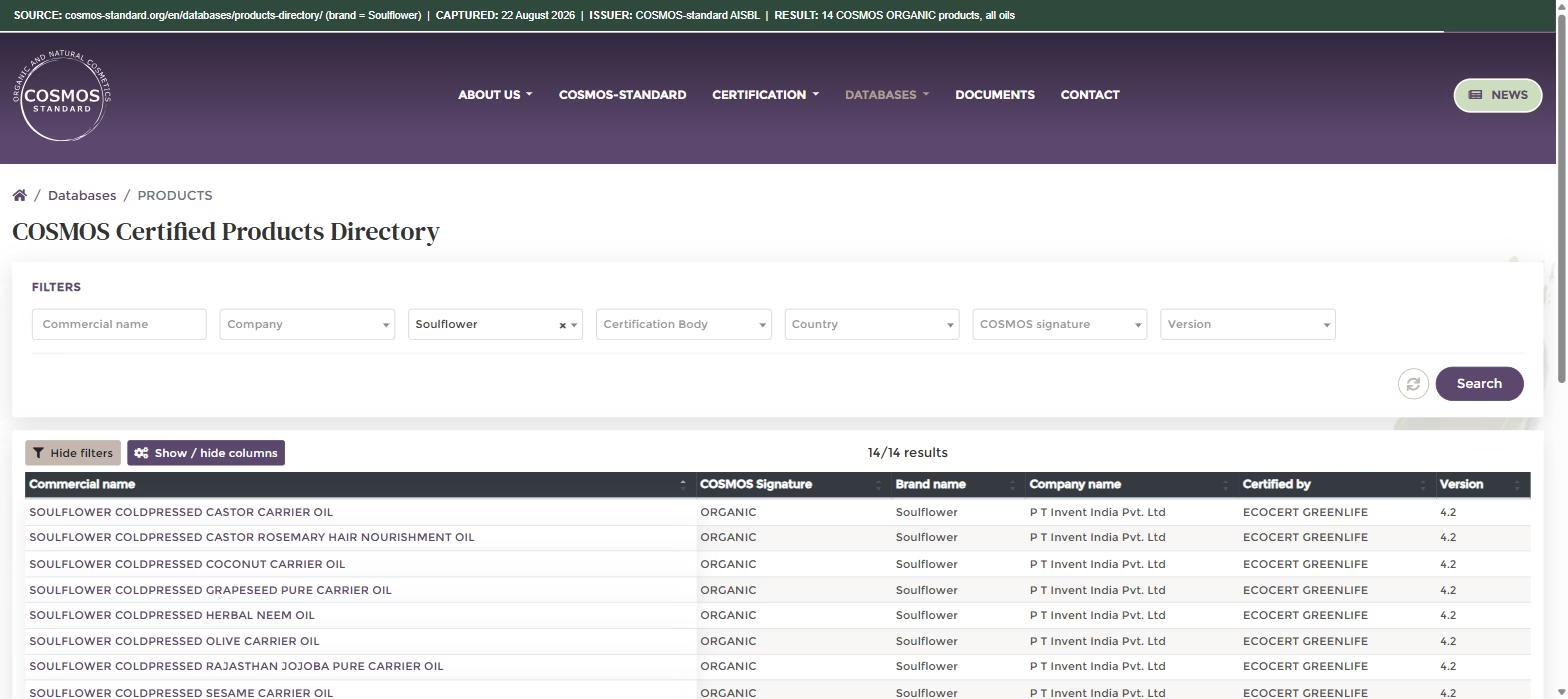
Fourteen certified Soulflower products in the COSMOS directory, every one of them a carrier oil or an essential oil — castor, coconut, jojoba, olive, sesame, grapeseed, neem, tea tree, lavender, rosemary, peppermint, ylang ylang, geranium. Signature COSMOS ORGANIC, certifier Ecocert Greenlife. The attar set is not among them.
The certification is real. The brand’s claim is true. It does not cover these attars — and that distinction is the single most useful habit you can take into your next purchase in any category.
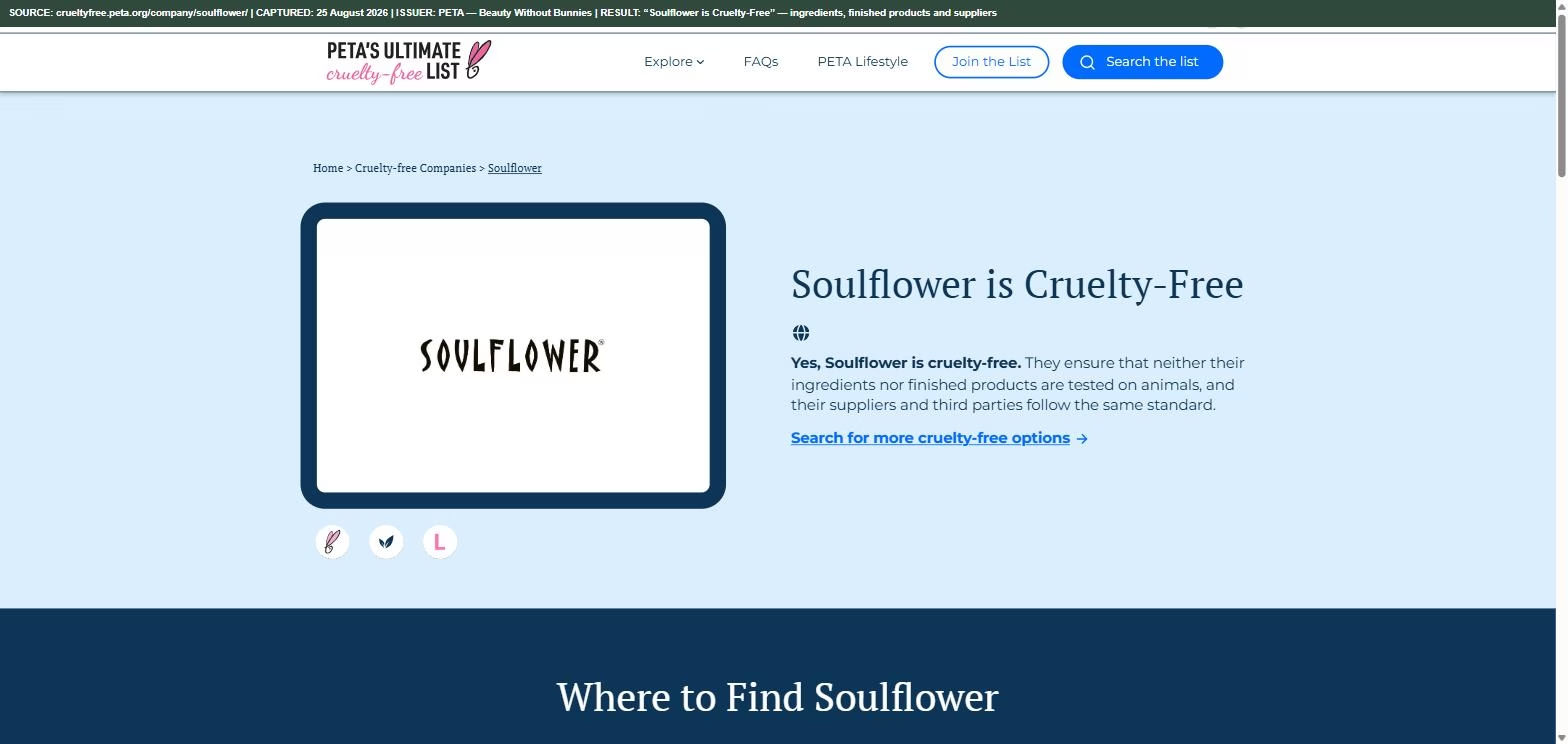
“Soulflower is Cruelty-Free” — PETA’s own company page. Read the scope: it covers ingredients, finished products and suppliers, which is an assurance about the whole business rather than about one bottle. That is why this badge sits on the product photo and a COSMOS product certificate does not.
Who it suits. Anyone who wants to find out whether oil-based fragrance suits them before paying attar prices, and anyone who would rather own four small bottles than one large one. Alcohol-free, so it is also a reasonable starting point if alcohol-based sprays irritate your skin.
3. Just Herbs Cin & Tonic — clean spray perfume at the lowest price here
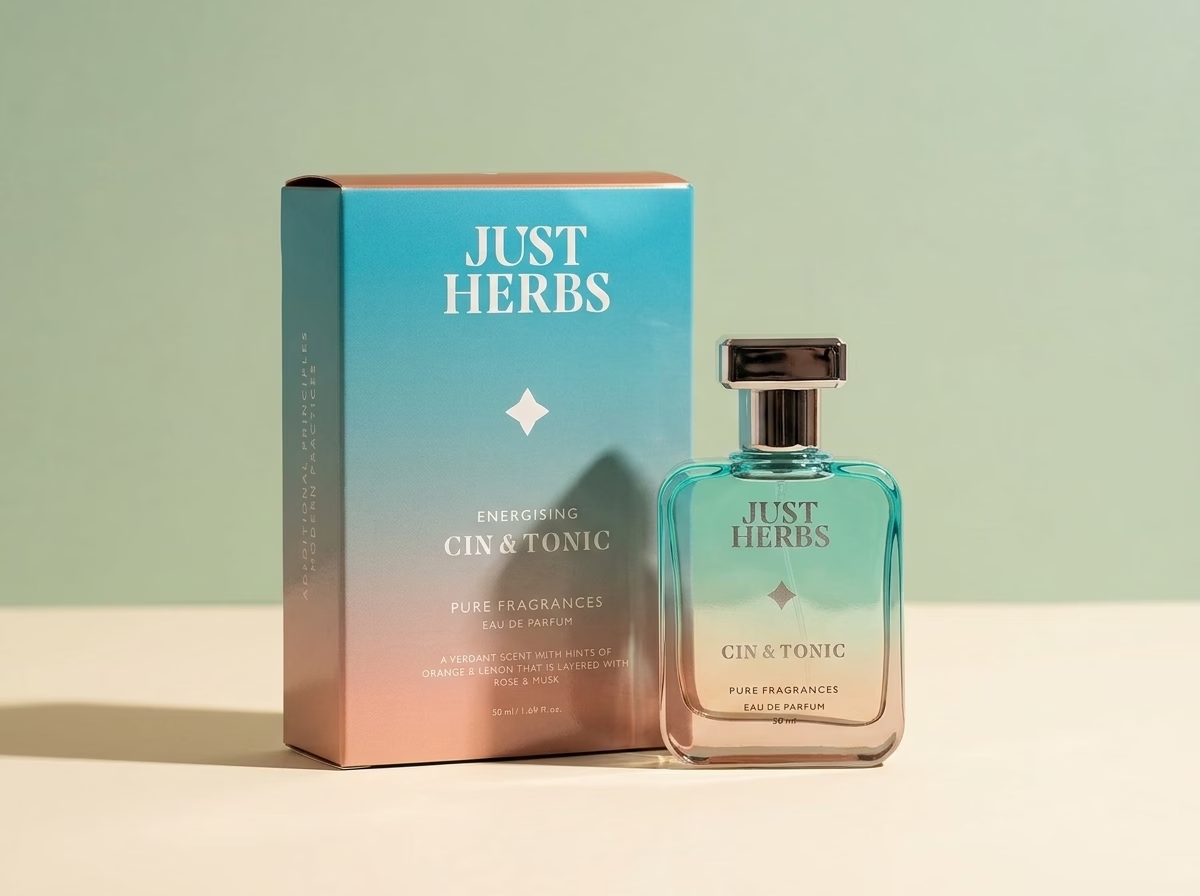
Eau de parfum · spray 50 ml
What it is. A 50 ml alcohol-based eau de parfum, around ₹500 — comfortably the cheapest spray in this guide.
What it smells like. Just Herbs positions it as an energising citrus-forward scent, marketed for men though the brand describes its fragrances as suiting all genders.
What to expect on longevity. The brand states up to eight hours. Citrus-led openings are typically the fastest-fading part of any composition, so expect the woody base to be what remains later in the day.
What the brand says. Just Herbs states it uses “grain derived alcohol” rather than petrochemical-derived alcohol, and describes the formulation as free from petrochemicals, parabens, SLS and SLES, PEG and PPG, and GMOs.
What we could check. Just Herbs is confirmed in PETA’s Beauty Without Bunnies register, with a profile stating that neither its ingredients nor its finished products are tested on animals, and that the same standard applies to its suppliers. Checked August 2026.
“Just Herbs is Cruelty-Free” — PETA’s own company page. Read the scope: it covers ingredients, finished products and suppliers, which is an assurance about the whole business rather than about one bottle. That is why this badge sits on the product photo and a COSMOS product certificate does not.
Who it suits. The obvious first purchase if you want to try a clean perfume without committing much. Worth knowing that this brand rotates its fragrance line fairly often — the scent we previously recommended here has since been discontinued.
4. The Bare Bar Colors of Autumn — alcohol-free solid perfume
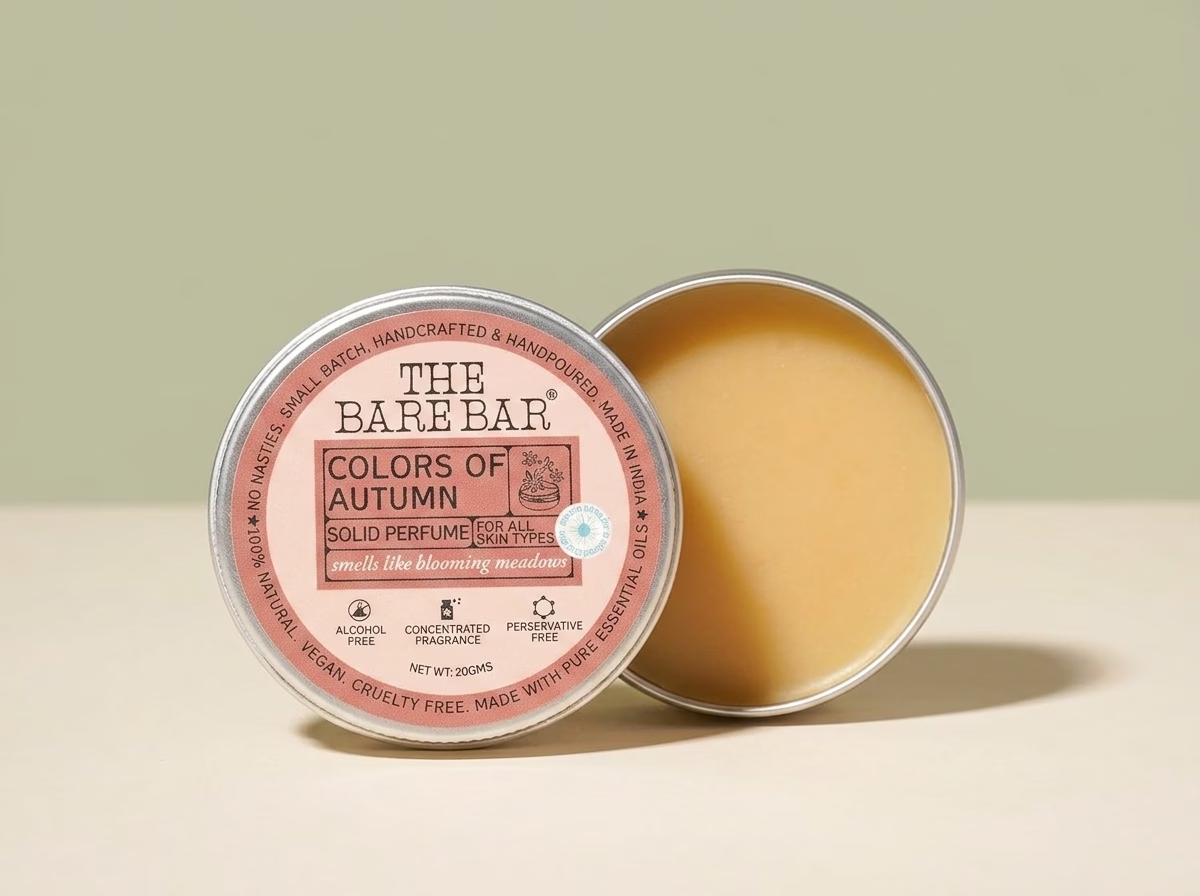
Solid balm · alcohol-free 20 g
What it is. A solid balm perfume in a 20 g tin, around ₹290. No alcohol, no spray — you warm it with a fingertip and press it onto pulse points.
What it smells like. The brand describes a warm, cosy woody-spiced accord, built on rose and geranium essential oils in a base of coconut and almond oils with mango butter.
What to expect on longevity. Solid perfumes stay close to the skin and generally need reapplying through the day. What they trade for that is control — no cloud, no spray drift, and nothing to leak in a bag.
What the brand says. The Bare Bar describes the product as “100% Natural & Organic” and free from alcohol, parabens, sulfates and synthetic fragrances. Worth noting that “organic” carries no statutory definition for a cosmetic in India and no register attaches to the phrase on its own.
What we could check. The Bare Bar is confirmed in PETA’s Beauty Without Bunnies, identity matched to thebarebar.in. Checked August 2026.
“The Bare Bar is Cruelty-Free” — PETA’s own company page. Read the scope: it covers ingredients, finished products and suppliers, which is an assurance about the whole business rather than about one bottle. That is why this badge sits on the product photo and a COSMOS product certificate does not.
Who it suits. Travel, offices with fragrance-sensitive colleagues, and anyone who wants scent without alcohol on skin. Also the cheapest way into this list.
5. Secret Alchemist Rose Oud — the most transparent ingredient list here
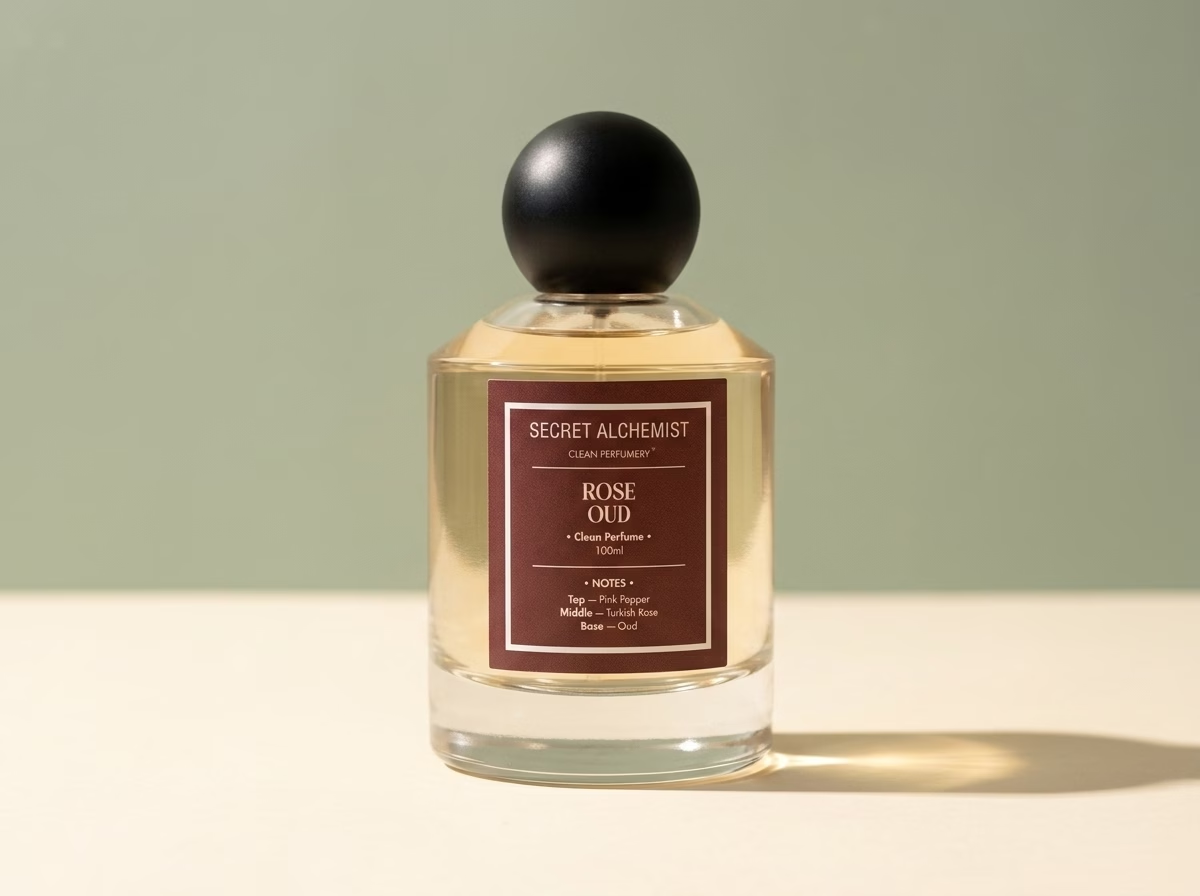
Eau de parfum · spray 100 ml
What it is. A 100 ml alcohol-based eau de parfum, around ₹1,450 — the largest bottle in this guide, and second only to Just Herbs on price per millilitre.
What it smells like. A published note pyramid, which is rarer than it should be: pink pepper at the top, Turkish rose at the heart, oud in the base.
What to expect on longevity. Oud and rose are both persistent materials, and a 100 ml EDP at this concentration should hold longer than the lighter citrus-led compositions here.
What the brand says. The published ingredient list is blended essential oils, grain-derived alcohol and water — genuinely short, and genuinely informative. The brand states the fragrance is free from phthalates and parabens, and describes it as vegan and IFRA-compliant.
What we could check — and where the reading gets careful. The brand’s marketing has described the fragrance as IFRA Certified and FDA Approved. As set out above, IFRA states on its own site that it does not create such certificates, and the FDA states it has no legal authority to approve cosmetics before they go on the market. Neither of those is a statement about Secret Alchemist — they are statements about what those two organisations do, taken from their own published pages. There is no register in which either claim could be looked up.
The IFRA-compliant framing is different and more defensible: it describes formulating within IFRA’s usage standards, which is ordinary good practice in the industry. It is simply not a certification with a public record behind it.
One thing we found that the brand does not claim. Searching PETA’s register under the company behind the brand — 24Carat Remedies Private Limited, the entity named on Secret Alchemist’s own site — returns Secret Alchemist, listed as cruelty-free, with the same company-level wording as the other listings in this guide. Checked August 2026. Secret Alchemist makes no cruelty-free claim in its own marketing, so this is not a claim we verified so much as one we found. We are reporting it because a verified fact belongs to the reader whether or not the brand thought to mention it.
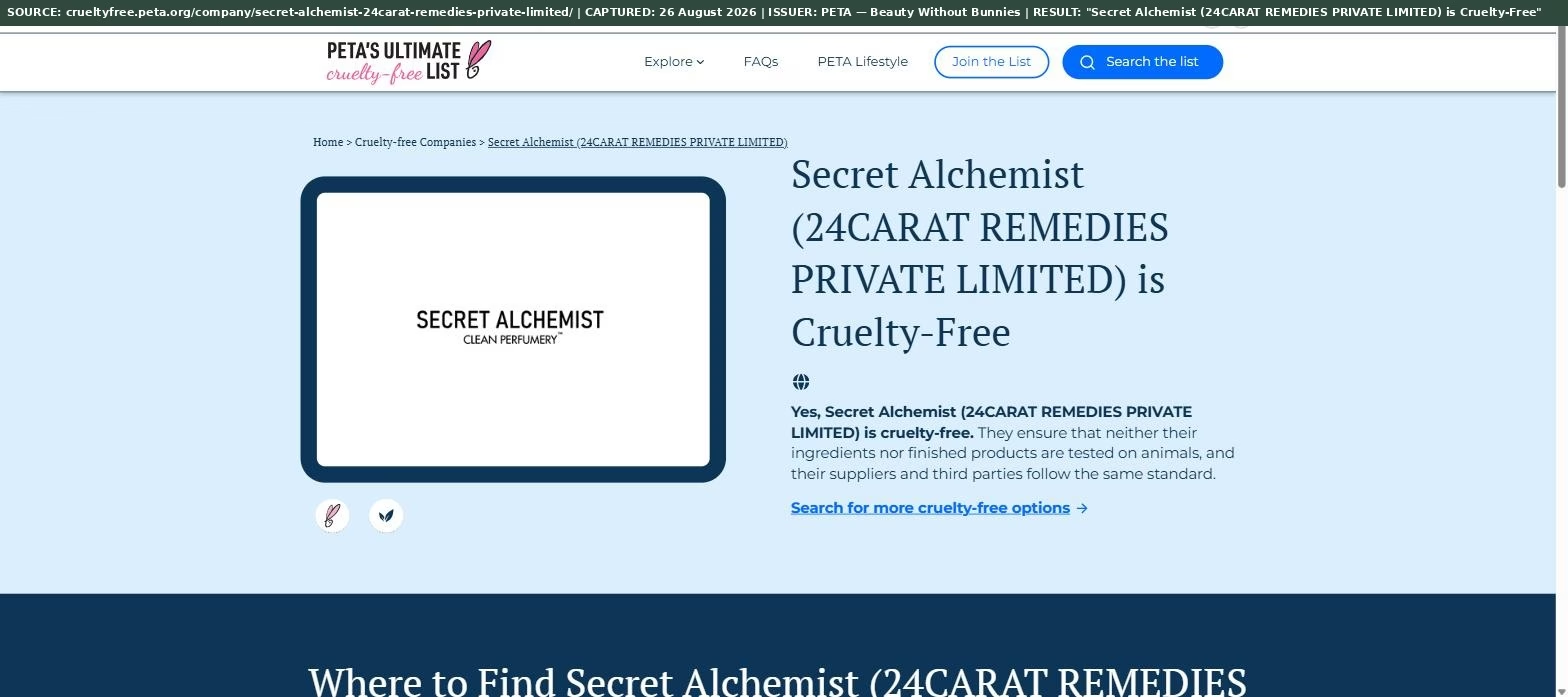
“Secret Alchemist (24CARAT REMEDIES PRIVATE LIMITED) is Cruelty-Free” — PETA’s own company page, filed under the company named on Secret Alchemist’s own site. Scope: ingredients, finished products and suppliers. The brand makes no cruelty-free claim of its own anywhere in its marketing; this one belongs to the register.
Who it suits. Anyone who wants a full-size clean spray perfume and cares more about a published ingredient list than about a badge.
6. Aranyam Nargis Floral — a narcissus-led floral, sold in pairs
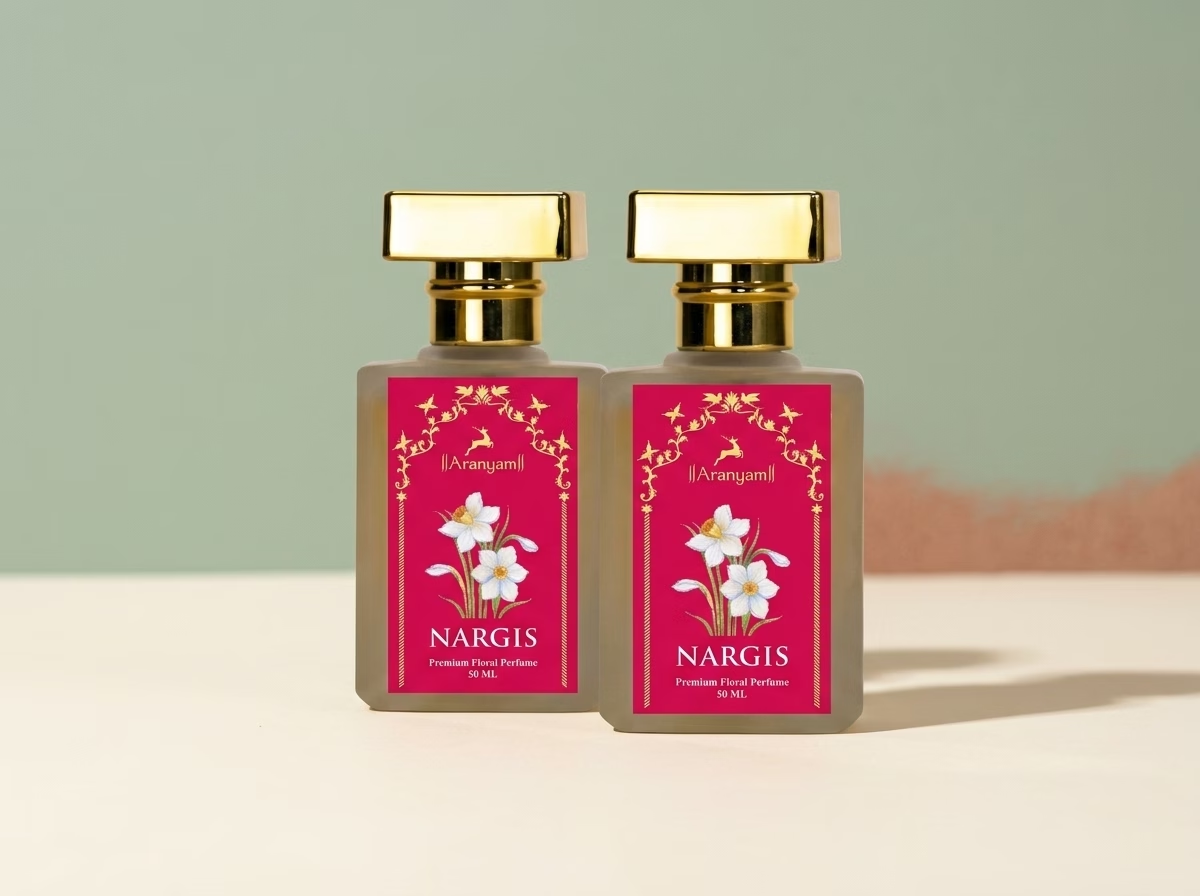
Eau de parfum · spray 2 × 50 ml
No certifier named
What it is. A 50 ml alcohol-based eau de parfum built around nargis — narcissus — sold as a two-bottle pack. Around ₹2,830 for the pair, which works out near ₹28 per millilitre.
What it smells like. Aranyam does not publish a formal note pyramid. It describes the composition as florals over warm woods, with musky facets underneath, and positions it as an office-wear fragrance rather than an evening one.
What to expect on longevity. Musk and wood base notes are among the more tenacious materials, so this should hold better through a working day than the citrus-led compositions here. The brand claims all-day wear; treat that as a brand claim rather than a measurement.
What the brand says. Aranyam describes it as an eau de parfum “crafted with 100% Natural ingredients and natural essential oils.” Worth noting that “100% natural” carries no statutory definition for a cosmetic in India and no register attaches to the phrase on its own.
What we could check. No third-party certifier is named for these claims, so there is no register to search. That is a statement about what the brand publishes — not a finding that we looked somewhere and came up empty.
Sold in pairs
One thing to know. It is sold as a pack of two rather than singly, so the entry price is higher than the per-bottle price suggests. If you only want one bottle, this is not the pick.
Who it suits. Anyone after a floral that leans warm and woody rather than sweet, and who does not mind buying two at once — or who wants the second as a gift.
7. NASO Gardenia Marigold — an attar in eau de parfum clothing
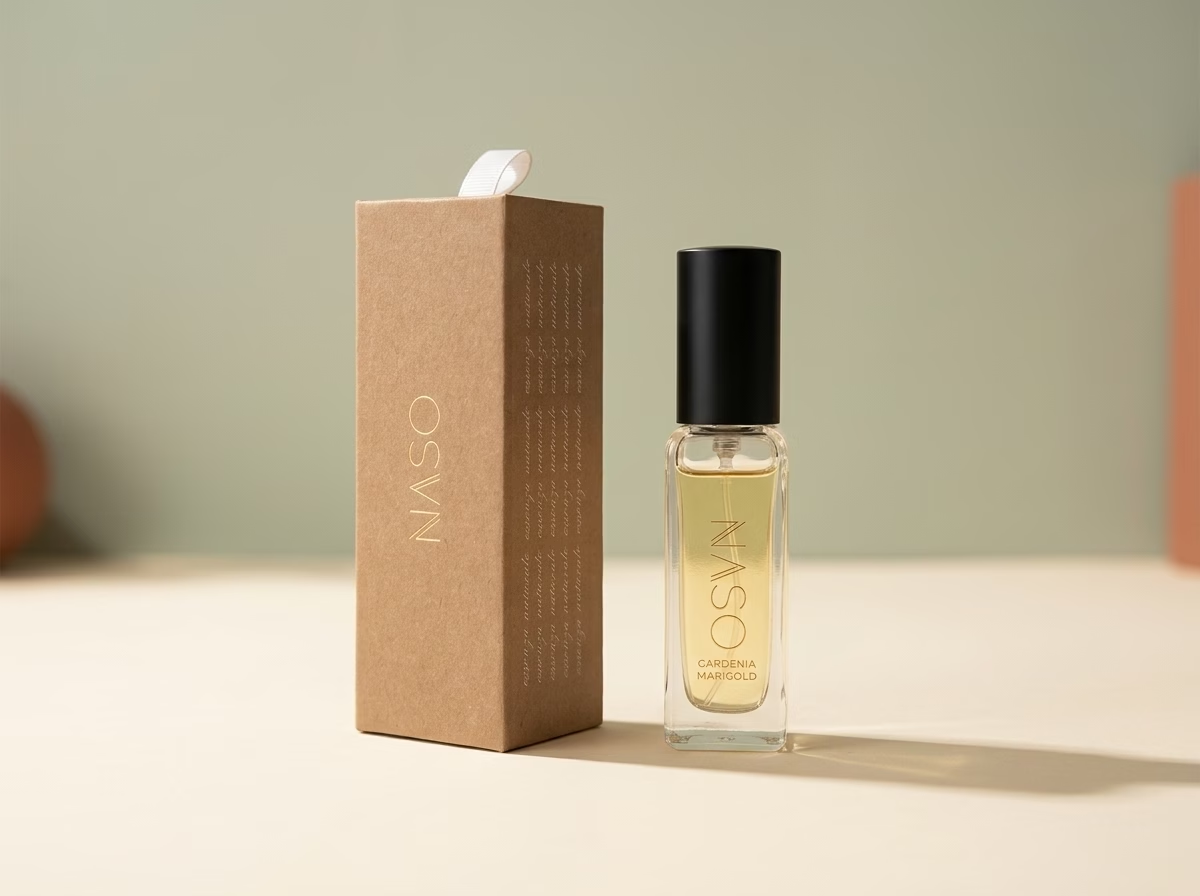
Attar-based · spray 20 ml
No certifier named
What it is. This one needs its format read carefully. NASO calls it a modern attar, made by deg and bhapka distillation and crafted from a pure attar base — while the retail listing calls it an eau de parfum. Both descriptions come from the same product. 20 ml, around ₹2,500.
What it smells like. A published pyramid: Indian marigold and orange blossom at the top, gardenia at the heart, sandalwood, yellow musk and a touch of cardamom in the base. Genuinely unusual — marigold is a temple flower in India and almost never a fine-fragrance note.
What to expect on longevity. If it behaves as its attar base suggests, expect close wear and good persistence rather than a big opening.
What the brand says. The listing states “Free From Chemicals and Synthetic Flavors” and “Crafted From 100% Pure Attar Base.” The first of those is seller listing copy rather than a certification, and as covered above, “free from chemicals” is not a claim that can be tested as written.
What we could check. No certifying body is named, so there is no register to search.
Worth knowing before you buy
One honest note. At around ₹125 per millilitre this is among the most expensive things in this guide by volume — Forest Essentials and Phool sit close behind — and roughly double what the same fragrance worked out to in its larger bottle, which is no longer available. Worth knowing before you buy the small one.
Who it suits. Someone who wants a genuinely Indian floral built on marigold and gardenia and is willing to pay for the distillation method.
8. Forest Essentials Intense Kesari — the luxury end
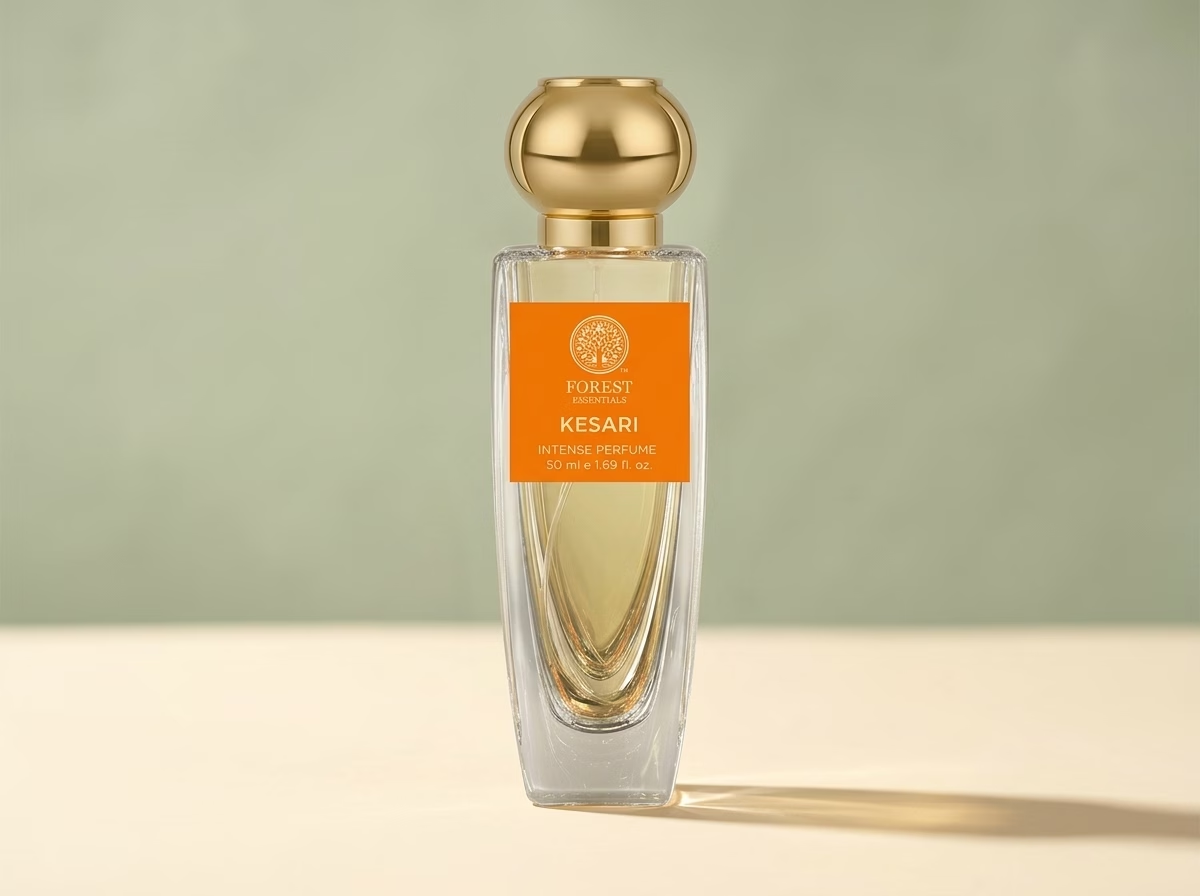
Perfume · spray 50 ml
What it is. A 50 ml spray perfume from India’s best-known luxury Ayurvedic house, around ₹6,200 — the most expensive bottle here.
What it smells like. Forest Essentials describes a blend of Kashmiri saffron, lime and oudh — warm and resinous, lifted by citrus.
What to expect on longevity. Oudh and saffron are both persistent; this should wear long.
What the brand says. Forest Essentials states the perfume is free from chemicals, parabens and petrochemicals. Its certifications page goes further and names a body: “PETA: All our products are certified Animal Cruelty Free by PETA.” The same page cites a Good Manufacturing Practice certificate, an Ayush certificate, ISO 9001:2015 and Make in India.
What we could check. Of those five, the PETA claim is the one with a public register behind it, and it holds. Forest Essentials is listed in PETA’s Beauty Without Bunnies register as cruelty-free — under its registered company name, Mountain Valley Springs, which is why a search for the brand name on its own can come up empty. PETA’s wording is that neither ingredients nor finished products are tested on animals, and that suppliers and third parties follow the same standard: a company-level assurance, so it covers this bottle along with everything else the house sells. Checked August 2026. The other four are a different kind of claim. GMP describes how a factory is run rather than what is in a bottle; ISO states on its own site that it does not issue certificates, accredited external bodies do; Ayush is a traditional-medicine licence; Make in India is an origin mark. None of the four speaks to the composition of a fragrance, and none maintains a searchable public register of certified cosmetics.
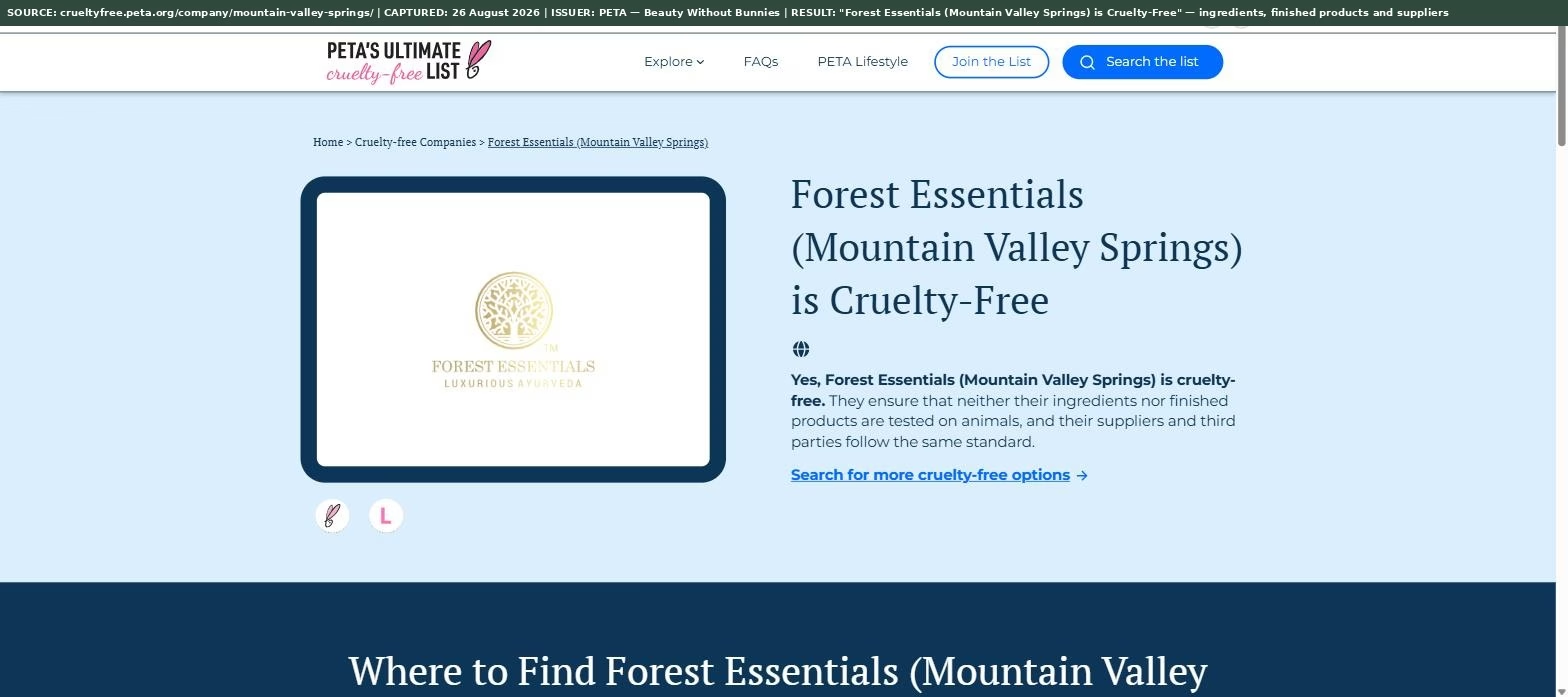
“Forest Essentials (Mountain Valley Springs) is Cruelty-Free” — PETA’s own company page. The listing is filed under the registered company name rather than the name on the bottle, which is why a search for the brand alone returns nothing. Read the scope: it covers ingredients, finished products and suppliers, an assurance about the whole business rather than about one bottle, which is what allows this badge on the product photo.
Who it suits. Gifting, and anyone who already knows they like the house style. On verification it now sits level with the cheaper sprays above rather than beneath them — the same company-level cruelty-free listing, no product-level certificate, at roughly twelve times the price of the cheapest bottle in this guide. That is a judgment about what the money is buying, not about the perfume.
Natural perfume for men — what actually works
Searches for natural perfume for men and organic perfume for men run well ahead of every other gendered term in non toxic perfume India, and the answers on offer are usually just the same roundup with a different photograph. So, specifically.
The scent families that read masculine in the Indian market are woody, resinous and spiced rather than fresh-aquatic — sandalwood, oud, vetiver, saffron, tobacco, cardamom. That is partly cultural: attar traditions here have centred on exactly those materials for centuries, so they read as familiar rather than as a fragrance statement.
In heat and humidity, heavier bases behave better than light ones. Citrus and green top notes evaporate faster when it is hot, which is why a fresh natural perfume can seem to disappear within an hour of stepping outside in May, while a sandalwood or oud base is still there in the evening. If you have tried natural fragrance and concluded it does not last, the composition may have been the problem rather than the category.
From this list, the one men’s-marketed pick is Just Herbs Cin & Tonic, which is also the cheapest way to try a clean spray at all. Forest Essentials’ saffron-oudh reads masculine without being marketed that way, Soulflower’s two oudh attars sit squarely in the woody-resinous register described above, and Phool’s earthy petrichor is genuinely unisex. Worth saying plainly: this guide is light on men’s-marketed sprays, because the Indian natural fragrance market is light on them — see the market split further down.
For fragrances chosen specifically for staying power through an Indian working day, we have a separate guide to luxury natural perfumes for men that last all day.
Natural and organic perfume for women
Almost as much search volume as the men’s terms, and even less well served — most results are simply whatever the site ranked for the ungendered query, relabelled.
What actually differs is less about the fragrance and more about what is being asked of it. Searches for safe perfume for women and safest perfumes for women cluster around skin sensitivity and around pregnancy, which is a real and reasonable concern, and one worth taking to a doctor rather than a perfume blog. What we can say usefully: the alcohol-free formats here — Phool’s attar and The Bare Bar’s solid balm — put nothing on skin except oils and waxes, and both stay close to the body rather than dispersing.
From this list, The Bare Bar’s warm rose-geranium solid, Phool’s petrichor and Soulflower’s two floral attars are the ones that suit close-wear best. Secret Alchemist’s rose and oud is the most conventionally feminine of the sprays, Aranyam’s nargis is the warmest, and NASO’s marigold-gardenia is the most distinctive floral here by a distance.
Our companion guide covers long-lasting luxury natural perfumes for women.
Alcohol-free clean perfume in India — attar, solid, and who it is for
This is the least-served corner of the whole category, judging by what people search and what actually answers them — and none of the clean perfume brands in India ranking for it seem to have noticed.
Why go alcohol-free. Three real reasons. Denatured alcohol can sting and dry sensitive or eczema-prone skin. Alcohol-based sprays project outward, which is unwelcome in a shared office or a car. And for many people in India it is a religious or personal preference, which needs no further justification.
The two alcohol-free formats, and how they differ:
Attar — botanical material distilled into a carrier oil, traditionally sandalwood. Concentrated, close-wearing, long-lasting, applied by dab, roll-on or a light spray. Phool Petrichor and Soulflower’s four-attar set are the ones here.
Solid perfume — fragrance suspended in a wax and butter balm. Lower intensity, very controllable, travel-proof. The Bare Bar’s Colors of Autumn is the one here.
What alcohol-free is not. It is not automatically more natural. A solid perfume can be built on a synthetic fragrance oil in a petroleum-derived wax, and an attar can be diluted with something other than what its marketing implies. Format and composition are separate questions — which is exactly why the format column exists in the table above.
Attar, eau de parfum or solid — which clean perfume format are you actually buying?
Worth 200 words, because this is where the category gets genuinely confusing and where a listing title can quietly mislead.
Eau de parfum is fragrance concentrate dissolved in alcohol and sprayed. The alcohol flashes off and carries the scent outward as it goes, which is what produces the recognisable “cloud” of a spray perfume. It projects, it fades from the top down, and it is what most people mean by perfume.
An attar is not a weaker or stronger version of that — it is a different product. Botanical material is distilled directly into a carrier oil, classically sandalwood, by the deg-and-bhapka method. There is no alcohol, so there is no projection: an attar sits on the skin and reveals itself to people close to you. It typically outlasts a spray.
A solid perfume is fragrance carried in wax and butter. The gentlest of the three, the most controllable, and the shortest-lived.
A listing title can mislead
The thing to watch. A product can be labelled “Eau de Parfum” on its retail listing and described by its own maker as an alcohol-free attar. That is not a trick, exactly — “eau de parfum” is doing duty as a category rather than a formulation — but it does mean you can order what you think is a spray perfume and receive a concentrated oil. NASO’s Gardenia Marigold in this guide is precisely that case, and we have labelled it accordingly. If a bottle’s format matters to you, check the maker’s own description rather than the listing title.
How long does natural perfume last in Indian heat?
The most common disappointment with natural fragrance in India, and it is mostly physics rather than quality.
Heat speeds evaporation. Humidity changes how molecules leave the skin and how you perceive them. Both work against the light, volatile materials — citrus, green notes, delicate florals — that make up the opening of most compositions. A perfume that performs beautifully in a Bengaluru winter can seem to vanish in a Chennai May.
What tends to hold: oil-based attars, sandalwood and oud bases, resins, and anything applied to skin rather than clothing. What tends not to: citrus-led openings, alcohol sprays applied to already-warm skin, and anything applied straight after a hot shower.
Two things that genuinely help. Apply to moisturised skin — dry skin holds fragrance poorly, and a plain unscented moisturiser under a perfume measurably extends it. And apply to pulse points that stay relatively cool rather than to the neck and chest in high summer.
The limits of what we can tell you
We should be straight about the limits of what we can tell you here: these are the mechanisms, not our own measurements. We have not worn these eight perfumes through an Indian summer, and we are not going to pretend otherwise.
Are natural and clean perfumes actually better for you?
Honestly? Sometimes, in specific ways, and not for the reasons the marketing suggests.
Where the case is reasonable. If you want to avoid a specific ingredient — phthalates, synthetic musks, a preservative you react to — then a brand that publishes a full ingredient list lets you do that, and a conventional perfume hiding forty materials inside the word “fragrance” does not. That is a genuine, practical advantage, and it has nothing to do with natural being inherently safer.
Where it breaks down. Natural does not mean hypoallergenic. Several of the most common fragrance allergens in cosmetics are naturally occurring constituents of essential oils — linalool, limonene, citral, eugenol, geraniol. A botanical perfume can contain more of them than a synthetic one. If you have reacted to fragrance before, “all natural” is not a reason to relax.
The honest summary. A clean or natural perfume is a reasonable choice if you want fewer synthetic materials, a shorter and more legible ingredient list, and a brand that will tell you what is in the bottle. It is not a health product, and any page telling you conventional perfume is poisoning you is selling something.
If your skin is reactive, patch-test on the inside of your forearm and leave it a day — the same advice that applies to any cosmetic, natural or not.
Why India has no certified natural perfume in a spray bottle — yet
We went looking for one, and the search itself turned out to be the most interesting thing we found.
Wanting an anchor for this guide — an Indian brand making a genuinely natural spray perfume with a certification you could actually look up — we screened 34 brands. Here is what that produced.
Nine had a spray perfume at all. Of those, two publish a full ingredient list — and both list a conventional formulation: denatured alcohol with a glycol or a phthalate carrier. Neither claims to be natural, which is to their credit.
None of the well-known Indian natural brands makes one. We checked more than twenty — the names you would expect in any clean beauty conversation here. Their fragrance shelf stops at deodorant or solid balm. Not one makes a spray perfume.
So the market has split into two halves that barely touch. On the natural side, the format is almost never a spray: it is attar — oil-based, alcohol-free, distilled the old way, mostly in and around Kannauj. That is where the botanical craft, the ingredient specificity and the certifications live. On the spray side sit competent Indian perfumery businesses that are not natural brands and mostly do not claim to be. Two of the ones we looked at are even filled by the same contract manufacturer in Gujarat, which tells you how concentrated the actual production base is.
And searching PETA’s register for the shortlisted names turned up cruelty-free listings — which is a statement about animal testing, not about what is in the bottle. Not one of the spray brands we screened holds a certification that speaks to whether its formula is natural. The only certification we found anywhere in this category that covers a fragrance itself belongs to Phool. Which makes attar.
That is why this guide covers three formats instead of one.
A spray-only roundup would answer what is the most natural fragrance I can buy in India by leaving out the most natural fragrances you can buy in India.
The clean perfume claim we nearly got wrong
Worth telling, because it is the most useful thing in this piece for anyone who wants to check a claim themselves.
Soulflower’s site states the brand is Ecocert certified. We went to Ecocert’s own directory of certified customers, searched Soulflower, and got nothing. We searched the company’s registered legal name, and got nothing. We ran the controls — the register covers India with 539 companies listed, and partial-name matching works — and they passed. On the face of it, an unverifiable claim.
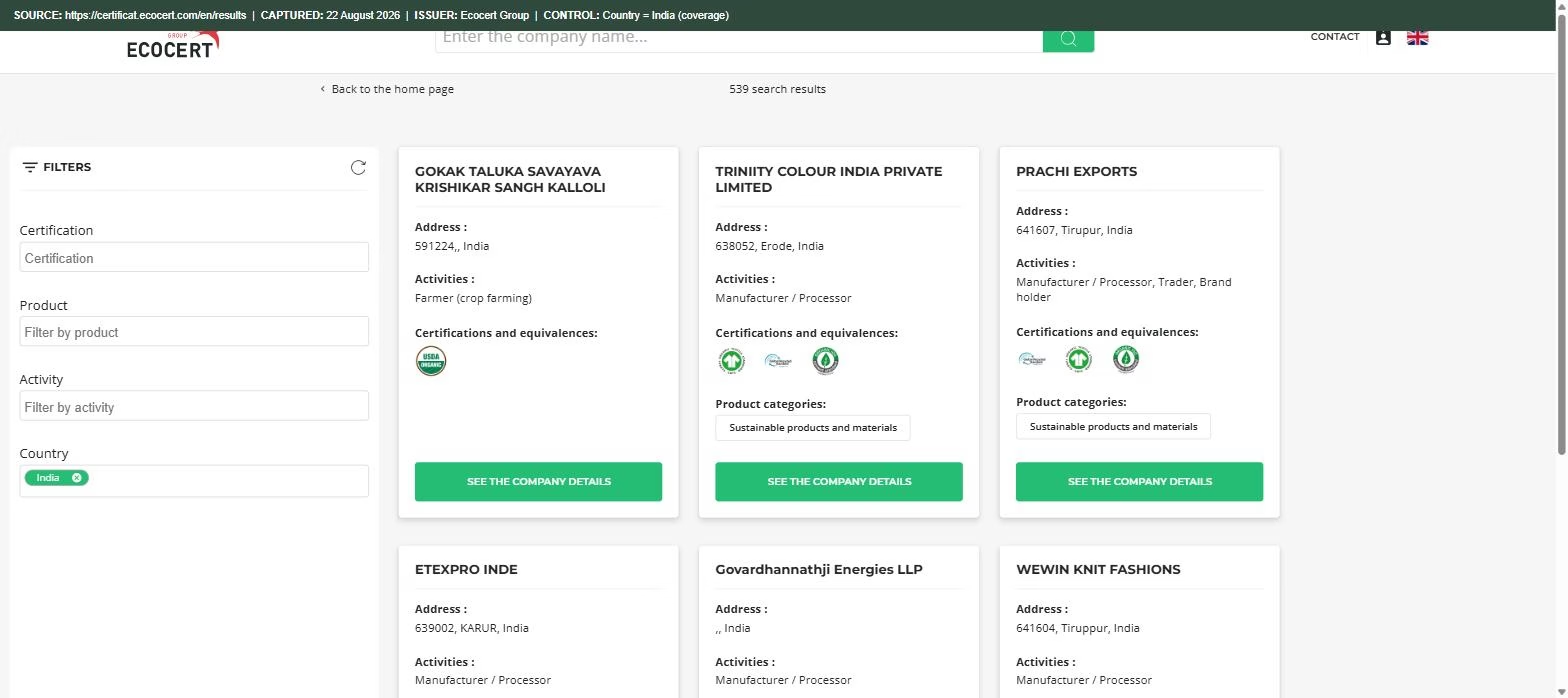
The control we ran before recording any blank: Ecocert’s certified-customers directory filtered to India returns 539 companies. The register works and it covers India — which is what makes a blank result worth reading at all.
It was the wrong register.
Ecocert is one of several certification bodies approved to certify against the COSMOS standard, and finished cosmetics are listed in the COSMOS certified products directory, not in Ecocert’s own customer directory. Searching there returned 14 certified Soulflower products, every one of them certified by Ecocert Greenlife. The claim was true all along — and, as set out in that brand’s entry above, every one of those 14 is a carrier oil or an essential oil rather than a fragrance. Being wrong about whether a certificate exists and being wrong about what it covers are two separate errors, and this pass came close to making both.
The habit worth stealing
We came within one edit of publishing a blank as if it were a finding — and this is the second time this particular trap has caught us. So: if you go looking for a brand and come up empty, check that you are searching the register that would actually contain it. Certifiers often run more than one, and a company directory and a product directory can give opposite answers about the same brand.
Clean perfume in India: frequently asked questions
What are the best non-toxic perfume brands available in India?
On the evidence we could verify, six of the eight appear in a certifier’s own public register: Phool, Soulflower, Just Herbs, The Bare Bar, Forest Essentials and Secret Alchemist are all listed by PETA as cruelty-free, at company level. Phool is the only one where a certification covers the exact product recommended — COSMOS NATURAL, for that bottle. Aranyam and NASO name no certifying body, so there is nothing to look up.
What is paraben-free perfume and why should I use it?
Parabens are preservatives that stop microbial growth in cosmetics containing water. In an alcohol-based spray perfume there is very little for them to do, so most fine fragrance contains none regardless of how it is marketed — meaning paraben-free is close to the category default for sprays. It is a more meaningful claim on a solid perfume, balm or mist, where a preservative genuinely has work to do.
Are phthalate-free perfumes available in India?
Yes, and it is a more substantive claim than paraben-free. Diethyl phthalate is used in conventional perfumery as a denaturant and fixative and can sit unnamed inside the word “fragrance” on a label. Several brands in this guide state their fragrances are phthalate-free.
What chemicals should I avoid when buying perfume in India?
The list most clean brands work to: parabens, phthalates, synthetic musks, and undisclosed “fragrance” blends. Worth keeping in proportion — these are ingredients people choose to avoid, which is not the same as ingredients proven harmful at the levels used in perfume.
Do natural perfumes without chemicals last as long as synthetic ones?
Generally not in the same way. Natural compositions tend to fade faster at the top and wear closer to the skin, and Indian heat accelerates that. Oil-based attars are the exception and often outlast sprays. No perfume is without chemicals, whatever the label says.
Which perfume is 100% natural?
Treat any 100% claim with care — it has no legal definition for a cosmetic in India and no register attaches to it. What you can check is whether a brand publishes a complete ingredient list and whether a named certifier’s register contains the product. In this guide, Phool’s Petrichor is the one whose exact product appears in the COSMOS directory.
What is clean perfume?
An informal term, not a regulated one. In practice it means a fragrance formulated without a specific list of ingredients the brand has chosen to exclude — commonly parabens, phthalates and synthetic musks — and usually with more ingredient transparency than conventional perfumery offers.
What is the healthiest perfume to use?
No perfume is a health product. If your concern is skin sensitivity, alcohol-free formats put less on the skin, and brands publishing a full ingredient list let you avoid a specific trigger. Natural does not mean hypoallergenic — several common fragrance allergens occur naturally in essential oils.
Is “cruelty-free” meaningful for an Indian perfume brand?
Only when a named third party has verified it. India banned animal testing of cosmetics in 2014, so for a cosmetic made and sold here it describes compliance with the law rather than a choice. Six brands in this guide are listed in PETA’s register, two of them under a registered company name rather than the name on the bottle — worth knowing if you go looking yourself.
What is an attar, and how is it different from an eau de parfum?
An attar is botanical material distilled into a carrier oil, usually sandalwood, with no alcohol. It sits close to the skin and typically lasts longer. An eau de parfum is concentrate in alcohol, sprayed, and projects outward. Some products labelled eau de parfum on their listing are described by their own maker as attars — check the maker’s own description.
Are there good alcohol-free perfumes in India?
Yes, in two formats — attars and solid balms. Both avoid alcohol on the skin and both wear close to the body rather than projecting. This guide includes one of each.
Does “organic” mean anything on an Indian perfume?
Only if a certifier is named and its register contains the product. There is no statutory definition of organic for cosmetics in India, and the national organic programme covers agriculture rather than cosmetics. The COSMOS certified products directory is the register worth checking.
What is the best natural perfume for men?
Depends what you want from it. For the lowest price of entry in a spray, Just Herbs Cin & Tonic. For the woody-resinous register that reads masculine in India, Soulflower’s two oudh attars, or Forest Essentials’ saffron-oudh at the luxury end. For something that reads as neither conventionally masculine nor feminine, Phool’s petrichor.
How do I read an ingredient list on a perfume?
Ingredients appear in descending order by weight until you reach the 1% threshold. In a spray perfume alcohol is usually first and water often second. Look for “parfum” or “fragrance” — a single word that can legally stand in for dozens of materials. Named allergens such as linalool, limonene and citral must be listed separately in many markets, and their presence is normal rather than alarming.
How we verified these non-toxic perfume claims
The standard we hold ourselves to
What “verified” means here. We searched the certifier’s own public register and found the entry, on the date stated. It does not mean we tested the product or inspected the brand.
What our controls established. Seven controls across four registers, all passed: a known-present brand returned correctly from Cruelty Free International’s directory; that register’s Asia coverage returned 82 brands; Ecocert’s directory returned 539 Indian companies; partial-name matching in that directory returned 29 results for a fragment; the COSMOS directory’s own company and brand indexes were enumerated directly rather than scanned from a rendered page; every brand already known to be in PETA’s register returned there by name; and a partial-name search of that register returned matches on a fragment. A blank result means nothing until the register itself has been shown to work.
Known-present brand · passed Asia coverage · 82 brands India coverage · 539 companies Partial-name match · 29 results Index integrity · enumerated directly
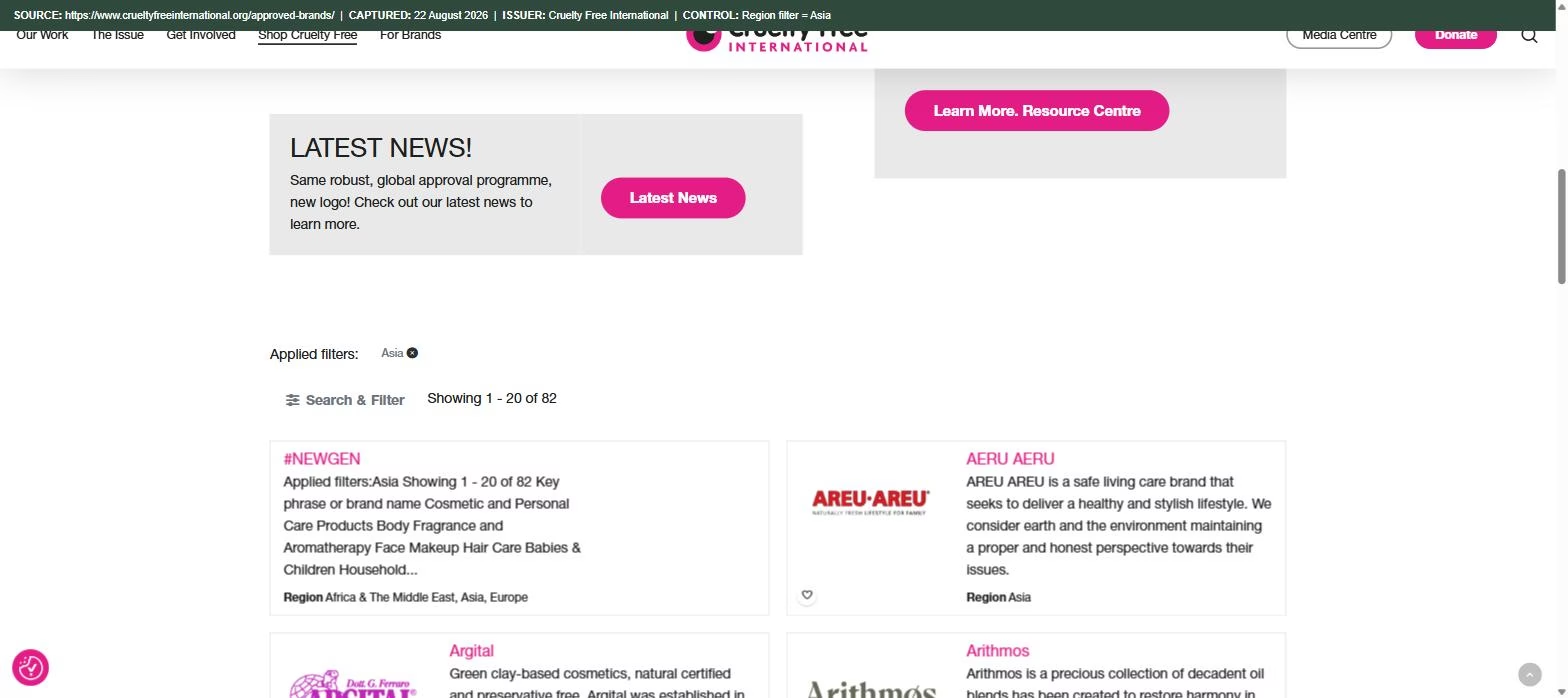
Cruelty Free International’s approved-brands directory, region set to Asia: 82 brands. This establishes regional coverage — and only regional coverage.
One precision note. Cruelty Free International’s register has no India-specific filter, so what we established there is regional coverage, not India coverage.
What we could not check. The Vegan Society’s trademark search blocks automated access, so vegan claims in this guide are reported as brand statements only, unverified. Leaping Bunny’s standard is open only to companies based in the US and Canada, so absence from it carries no meaning for an Indian brand and we have not treated it as a finding.
“None named” versus “not found”. Where this guide says no certifier is named, it means the brand does not name one — a statement about what is published, not a finding that we searched a register and came up empty. The two are different and we have kept them apart throughout.
Evidence. Every check, positive and negative, was captured full width with its source URL, the date of the check and the issuing body burned into the image. If you believe something here is wrong or out of date — particularly a certification claim — send us the certificate or registration number and we will re-check it and publish the result.
Evidence appendixEvery capture behind this article — eight confirmations and two register controls, each stamped with its source, issuer and capture date
Our full research methodology sets out the process, the controls and what we refuse to print.
Choosing a clean perfume brand in India: final thoughts
The most useful thing in a guide to clean perfume brands in India is not the ranking. It is a question you can take to any shelf, in any category, for the rest of your life: what does that certificate actually cover?
Two brands in this guide are certified by the same body, Ecocert Greenlife, against the same standard family. For one of them, the certificate covers the exact bottle we have recommended. For the other, it covers fourteen products, every one an oil, and not the fragrance at all. Both brands are telling the truth. Only one of them is telling you something about the thing you were about to buy.
Once you have seen that distinction, you cannot unsee it — and it will save you more money and more disappointment than any list of eight products ever will.
Keep reading


Interesting read! While it’s not a natural fragrance brand, I’ve personally enjoyed Armaf Tres Nuit for everyday wear.
Vilvah is good. I have tried it.
That’s great to hear! 😊 Vilvah is definitely one of those brands that gets the balance right between natural ingredients and effective results. Which of their products have you tried?