Choosing the right Avvatar protein supplement shouldn’t feel like decoding a chemistry book. If you’re stuck between Avvatar Whey, Avvatar Isorich, or Avvatar Muscle Gainer, this guide breaks it down simply — based on your goal, your digestion, and India’s unique need for fresh, vegetarian protein powder for muscle gain.
Backed by Parag Milk Foods (yes, the dairy giant), Avvatar has built a reputation as India’s freshest protein with its famous Farm-to-Shaker model and Trustified lab testing.
Let’s pick the right tub for you.
What you need before you start
- A clear goal: bulk / lean muscle / recovery
- Your body weight
- Access to Avvatar’s nutrition label or product page
- A kitchen scale or scoop
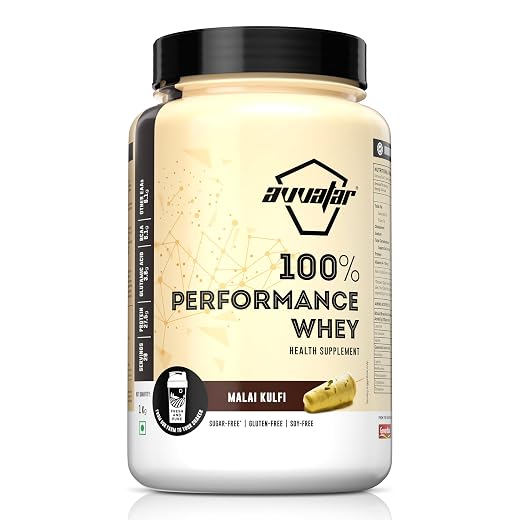
- Deliciously Creamy Malai Kulfi Flavour – Indulge in the rich, authentic taste of Malai Kulfi with a smooth, satisfying texture while fuelling your muscles with high-quality performance whey protein.
- Advanced Filtration for Fast Absorption – Made using Crossflow Ultra and Micro-Filtration Technology, ensuring rapid absorption for quicker muscle recovery and growth.
- Rich in BCAA & EAA – Naturally loaded with BCAAs and EAAs to support muscle protein synthesis, faster recovery, and enhanced performance.
- Pure, Fresh & Easy to Digest – Sourced from fresh cow’s milk and processed within 24 hours to retain maximum nutrition, with no artificial digestive enzymes.
- Made in India & Pure Vegetarian – Proudly manufactured in India’s first fully automated whey plant, ensuring purity, quality, and a completely vegetarian protein source.
Step 1 — Pinpoint Your Goal: Bulk, Cut, or Recovery?
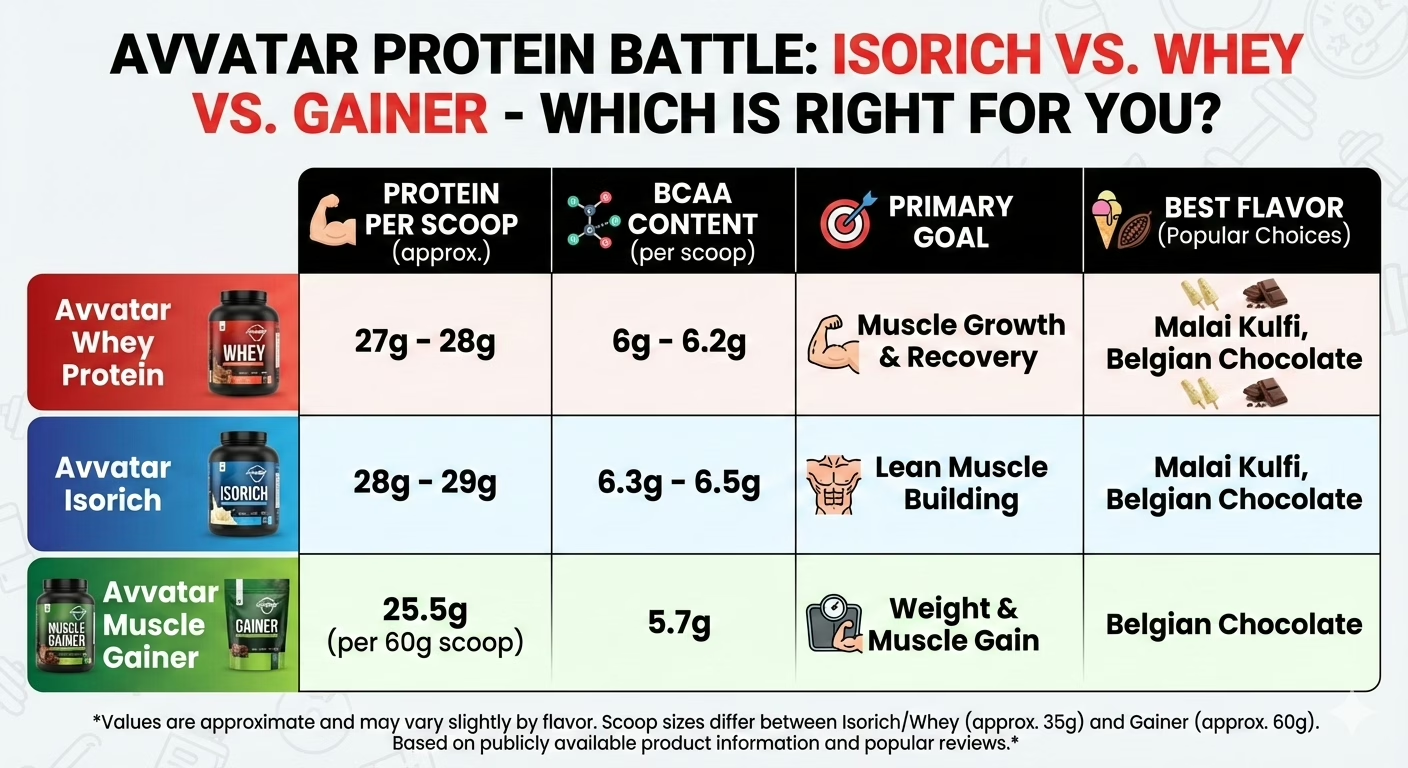
Identify your primary goal: bulk, cut, or recovery. Match the Avvatar variant to that aim and stop guessing.
- For bulk: choose Avvatar mass gainer or a higher‑calorie whey blend with carbs. Aim 1.6–2.2 g protein/kg body weight.
- For cutting: pick Avvatar Whey Protein Isolate or low‑carb concentrate. Aim 2.0–2.8 g/kg to preserve muscle while in a calorie deficit.
- For recovery: use fast‑absorbing isolate with good BCAA content (or mix with milk for slower release). Aim 1.2–1.6 g/kg.
Example: if you weigh 70 kg and are cutting, target 140–196 g protein/day (70 × 2–2.8). Always check the Avvatar label for protein per scoop, BCAAs, Farm‑to‑Shaker, vegetarian source, and certs (FSSAI/ISO) from Parag Milk Foods — Trustified Indian purity.
Protein helps muscle repair after workouts. Research shows whey protein accelerates muscle recovery and strength adaptation:


Step 2 — Decode the Jar: Ingredients, Protein Count, and ‘Farm‑to‑Shaker’ Claims
Scan the label like a pro. Read each field and compare numbers — don’t trust marketing copy alone.
Here’s a quick checklist to tick on every Avvatar jar:
- Protein per scoop: e.g., 24 g/scoop — note serving size.
- Protein source: whey concentrate, isolate, or blend.
- Carbs: total carbs and fiber (low for cutting).
- Fats: total and saturated fat.
- Added sugars: sucrose/maltodextrin counts.
- BCAAs: total leucine/isoleucine/valine per serving.
- Parag Milk Foods branding & batch traceability: look for lot numbers/trace codes.
- Farm‑to‑Shaker claim: shorter supply chain, Indian purity — verify traceability info.
- ‘Trustified’ / third‑party testing: FSSAI, ISO, or lab-test mentions.
- Vegetarian source claim: suitable for Indian lacto‑vegetarians?
Example: if label shows 25 g protein, 3 g carbs, 1.5 g fat, and “Farm‑to‑Shaker” with Parag lot code, you’re on the right track.
Trustified & Lab Tests (Why Avvatar Is Trusted)
Avvatar is famous in India for being Trustified — meaning:
- Tested for heavy metals
- Verified for label accuracy
- Checked for amino acid spiking
You can verify reports at:
https://www.trustified.in
Avvatar lab reports section (publicly available)
This is a huge deal when comparing Avvatar vs MuscleBlaze or imported brands.
Step 3 — Compare Value: Is Avvatar the No.1 Choice in India?
Compare Avvatar against rivals by calculating cost-per-gram of usable protein. Calculate total protein = protein per scoop × number of scoops, then do Price ÷ usable protein.
Example: ₹1,999 tub, 25 g protein × ~30 scoops ≈ 750 g protein → ₹1,999 ÷ 750 ≈ ₹2.67/g.
Check these quick signals:
- Declared purity & vegetarian source: confirm protein% and that whey is suitable for lacto-vegetarians.
- Parag Milk Foods / Farm‑to‑Shaker trustified supply chain & certs: look for FSSAI/ISO/third‑party test mentions and lot trace codes.
- Local consumer feedback: read Indian reviews on marketplace listings, forums and ask gym friends.
FAQ — Is it No.1 in India? Only if it wins on cost-per-gram, verified purity and Parag’s supply-chain credibility. Don’t just take ‘No.1’ marketing at face value — use these quick checks and local review signals to decide if it’s right for you.
Farm-to-Shaker: Why Avvatar Is Different
Most protein brands import whey after weeks of storage.
Avvatar doesn’t.
Avvatar’s Farm-to-Shaker system:
- Milk collected from Parag farms
- Whey processed within 24 hours
- Protein packed in India
- Short supply chain = fresher protein
That’s why Avvatar markets itself as
👉 “India’s freshest protein”
👉 “Parag Milk Foods protein guide” standard
This freshness advantage is something ON, MyProtein, and other imports simply cannot replicate in India.
Step 4 — Verify Purity & Vegetarian Source: Why It Matters in India
Verify purity by checking vegetarian source, milk‑derived, and no animal rennet labels. Read the jar: “vegetarian (microbial rennet)” means it’s lacto‑vegetarian friendly; “milk‑derived” confirms dairy origin.
Scan for farm‑to‑shaker traceability. Use your phone to scan the QR code and confirm batch details and Parag Milk Foods provenance — a Trustified supply chain increases confidence.
Request proof when unsure. Ask sellers for:
- Third‑party lab report / COA
- FSSAI / ISO certifications
- Batch trace showing Parag Milk Foods or farm origin
Example: scan a tub’s QR, see a Parag batch ID and COA link — that’s a stronger purity signal than “No.1” marketing.
Step 5 — Use It Right: Timing, Serving, and Farm‑to‑Shaker Recipes
Measure: 1 scoop (25–30g) for maintenance/recovery, 1.5–2 scoops (40–60g) to bulk, and 1 scoop between meals when cutting to meet protein targets.
Time: Drink post‑workout for fast whey recovery, between meals to curb hunger, and before bed only if mixed with milk/curd for slow release.
Stack: Add carbs (banana or 40–60g oats) post‑workout and mix 3–5g creatine daily with your shake.
Blend quick Indian recipes:
- Masala banana shake — banana, 1 scoop Avvatar, pinch of roasted chaat masala, cold milk, ice. Blend.
- Chai‑spiced smoothie — brewed strong tea, 1 scoop Avvatar, cinnamon, honey, chilled.
Shake: use a blender for recipes or a Trustified shaker for quick mixes. Store: keep Avvatar airtight, cool, dry; verify Parag Milk Foods Farm‑to‑shaker QR/COA to confirm vegetarian source and purity.
Step 6 — Owner, Certs, Trust & FAQ: All Your Burning Questions Answered
Verify Avvatar’s provenance: look for Parag Milk Foods on the label and a Farm‑to‑shaker QR/COA. Check the FSSAI number and seller details.
Certs to check:
- FSSAI licence & number
- Third‑party lab testing / COA / Trustified badge
- GMP / ISO logos (if listed)
Confirm authenticity: Scan the QR, match the batch number on Parag’s site, compare the COA PDF, and buy from authorised e‑commerce sellers or Parag outlets.
FAQs:
- Is it good? — Generally yes for value; verify COA and ingredients for your goal.
- Is it vegetarian? — Yes if label shows vegetarian source; confirm via COA/Farm‑to‑shaker.
- Is it really No.1? — Marketing claims vary; check sales data/reviews.
- How do I verify purity? — Scan QR, request COA, or send sample to a local NABL lab.
- Side effects? — Mostly mild (bloating); stop if allergic.
- Return policy? — Check seller/Parag return terms before buying.
Ready to pick your Avvatar Whey?
Use these steps to match product, purity and price to your goal; check Parag Milk Foods provenance, certifications and Trustified proof before you buy. Try Avvatar Whey, share your results, and start lifting stronger right now.
Yes. Avvatar Whey is beginner-friendly due to clean ingredients, vegetarian source, and tested purity. Start with 1 scoop daily.
Use the QR code or scratch code on the jar. Match batch number with Avvatar or Trustified report.
Usually no. Mild bloating can happen if:
You’re lactose sensitive
You take too much at once
Switch to Isorich (isolate) if digestion issues occur.
Yes, high protein + leucine supports muscle synthesis.
Avvatar wins on freshness & traceability; MuscleBlaze wins on variety.
Yes, when labelled microbial rennet.
Really helpful breakdown. I especially loved Step 1 — pinpoint your goal. I switched between ‘cut’ and ‘recovery’ goals last year and the serving timing advice was super useful.
One thought/question:
– The vegetarian source point is great for India, but does anyone know if Avvatar’s whey is actually from vegetarian-fed cows? Labels say ‘vegetarian whey’ sometimes meaning no animal rennet etc., which is confusing.
Also, love the farm-to-shaker recipes — bookmarked them. ❤️
Exactly — companies rarely disclose cow diets. If that’s a dealbreaker, ask the brand directly or look for organic/grass-fed certifications, though those are rarer and pricier here.
I emailed the brand once and they sent a supplier certificate saying ‘vegetarian-friendly processing’ — not ideal but better than nothing. Still a grey area.
Haha signage will say anything. Ask them for a farm visit video, maybe they’ll send you a TikTok. 😆
Thanks, Maya — good catch. ‘Vegetarian whey’ usually refers to the absence of animal-derived processing aids; it doesn’t guarantee vegetarian-fed cows. In India, ‘vegetarian source’ often means the whey hasn’t been processed with animal rennet or gelatin. For feed info you’d need supplier transparency or a farm certificate.
I’ve been using Avvatar whey for about 6 months to help with recovery after strength sessions. Results: less soreness and steady gains. Taste is decent and mixes well — no stomach issues for me (I have mild lactose sensitivity).
Would recommend trying a small pack first if you’re unsure.
Good to know! What flavor did you use? I’m lactose-sensitive too and worried about bloat.
Appreciate the review — real experiences help more than marketing copy.
Thanks for sharing your experience, Olivia — that’s exactly the kind of real-world feedback we hoped readers would share. For lactose-sensitive folks, check if the product uses whey isolate (lower lactose) or has lactase added (digestive enzyme).
Good guide overall. I’m most interested in Step 6 — Owner, Certs, Trust & FAQ. Can someone share which certifications are most trustworthy in India for whey purity (FSSAI? ISO? third-party labs?). Also: how much should a home user trust the brand’s COA (certificate of analysis) vs asking for independent testing?
If you’re serious, send a sample to a private lab (not cheap, but possible). For most users, a COA from an accredited lab + consistent customer reviews is enough.
Great question. In India, FSSAI registration is baseline. Look for third-party lab testing reports (COA from an accredited lab) and international seals (like Informed-Sport, NSF, or ISO-accredited labs) for higher confidence. A brand-provided COA is useful but ask if it’s from an independent accredited lab rather than the brand’s in-house report.
Nice guide — I liked the ‘Decode the Jar’ section. I always get confused by those fancy claims like “farm-to-shaker” and 100% cold-processed. Are there simple red flags to watch for on the label? Also, anyone tried the chocolate flavor? I’m picky 😅
Red flags: vague % protein claims (like “up to 80% protein”), proprietary blends that hide amounts, and random enzymes listed without purpose. Try a small tub first if available.
Good question, Evan — start by checking the protein per serving vs serving size, the ingredient list order (protein isolate/concentrate first is good), and look for third-party testing seals (like FSSAI notes, INAB labs, or international certs). Farm-to-shaker is mostly marketing unless they name the farm/process. For flavor: chocolate often hides sweeteners — check sugar/alcohols in the ingredient list.
I tried the chocolate once — pretty smooth but a bit sweet for me. If you like dark chocolate, mix with unsweetened cocoa powder to reduce sweetness. And yeah, the label tips above are gold!
Helpful article but IMO the price comparison could use a clearer method. You mention ‘price per gram of protein’ — maybe show a quick formula or example with two brands? Right now it’s a bit fuzzy and I don’t want to calculate every time I shop.
And flavors/sweeteners might affect price too — natural flavors cost more sometimes. Don’t pick only on price.
If you buy on sale, price per gram fluctuates a lot. I wait for festival sales in India — some tubs go 20-30% off.
Also remember to factor in shipping, discounts, and whether it’s concentrate vs isolate (isolate often costs more per gram but is purer).
Good point, Tom. Simple formula: (Price of tub in INR) / (Total grams of protein in tub) = Price per gram of protein. Example: 2,000 INR for 1,000g powder at 70% protein = 700g protein total → 2000 / 700 ≈ 2.86 INR per gram. We’ll add that example to the guide.
I have a bone to pick with ‘farm-to-shaker’ as a selling point. Marketing loves that phrase but it’s meaningless unless there’s traceability. The guide touches on verifying purity, but could do more on how to demand evidence:
– Ask for supply chain docs
– Request independent lab COAs (with lab accreditation number)
– Check FSSAI/LIC registrations
Also, show receipts of raw material testing or batch numbers. I work in QC and I’m tired of fuzzy claims. Show me the paperwork or stop the buzzwords. 😤
Totally agree, Nina. We’ve added a short checklist in Step 4 for what to request from brands: batch COA with lab accreditation, supplier names, and a traceable batch number. If they can’t provide those, treat ‘farm-to-shaker’ as marketing only.
I’m with you — paperwork matters. But for most buyers, that’s a lot to ask. Maybe the guide can include a template email to request these docs from brands?
Would be great if more brands made COAs public on their site by batch number. Transparency builds trust.
“Is Avvatar the No.1 Choice in India?” — that’s a bold headline. Rankings are always suspect unless there’s a study. Curious if the guide cites market share or independent reviews.
You’re right — be skeptical of ‘No.1’ claims. The guide suggests comparing price-per-gram of protein, certification badges, and verified customer reviews rather than taking that headline at face value. Look for independent lab reports where possible.
Rankings are often based on sales or sponsored surveys. I dig into lab tests before trusting any such claim.
Super practical guide. Step 5 on timing & serving is exactly what I needed.
I do have a couple of recipe tips that worked for me:
1) Blend a scoop with chilled coffee, half a banana and oats for a post-run shake — keeps me full.
2) If mixing in a shaker bottle leaves clumps, add powder last and shake vigorously for 30 sec, then let sit 1 min and shake again.
Also, minor nit: there are a few typos in the ingredient decoding subsection, but the info is solid. 😄
Also, patience: let whey sit in liquid for a minute before drinking — less chalky. Small things make a big diff.
I freeze blended shakes into popsicles for hot days — protein ice lol. Works well for portion control too 😂
Re: clumps, try a small whisk or immersion blender if you want a smoother texture. Shakers can be hit-or-miss.
Oat + banana tip = saving my mornings. I usually microwave oats then mix in the powder — works too. Thx!
Thanks for the recipes and the heads-up on typos — we’ll patch that section. The coffee + banana combo is a great recovery blend (carbs + protein).
Loved the quick tips. Two quick q’s: Does Avvatar offer blends (whey + casein) for night recovery? And any tips for mixing without a shaker (I travel a lot)? Also, why is protein timing sometimes hyped? Isn’t total daily protein all that matters? 🤔
I use a mason jar and a metal whisk ball — works surprisingly well when traveling. Also, casein blends are nicer for slow release overnight.
Some brands offer blend formulas (whey + casein) marketed for night use — check the label for casein/micellar casein. For mixing without a shaker: use a tight-lid jar and shake hard, or stir into yogurt/smoothie; warm liquids help dissolve powder. On timing: total daily protein matters most, but timing (post-workout, before sleep) can help with immediate recovery and overnight muscle protein synthesis — it’s a small but useful optimization for many athletes.