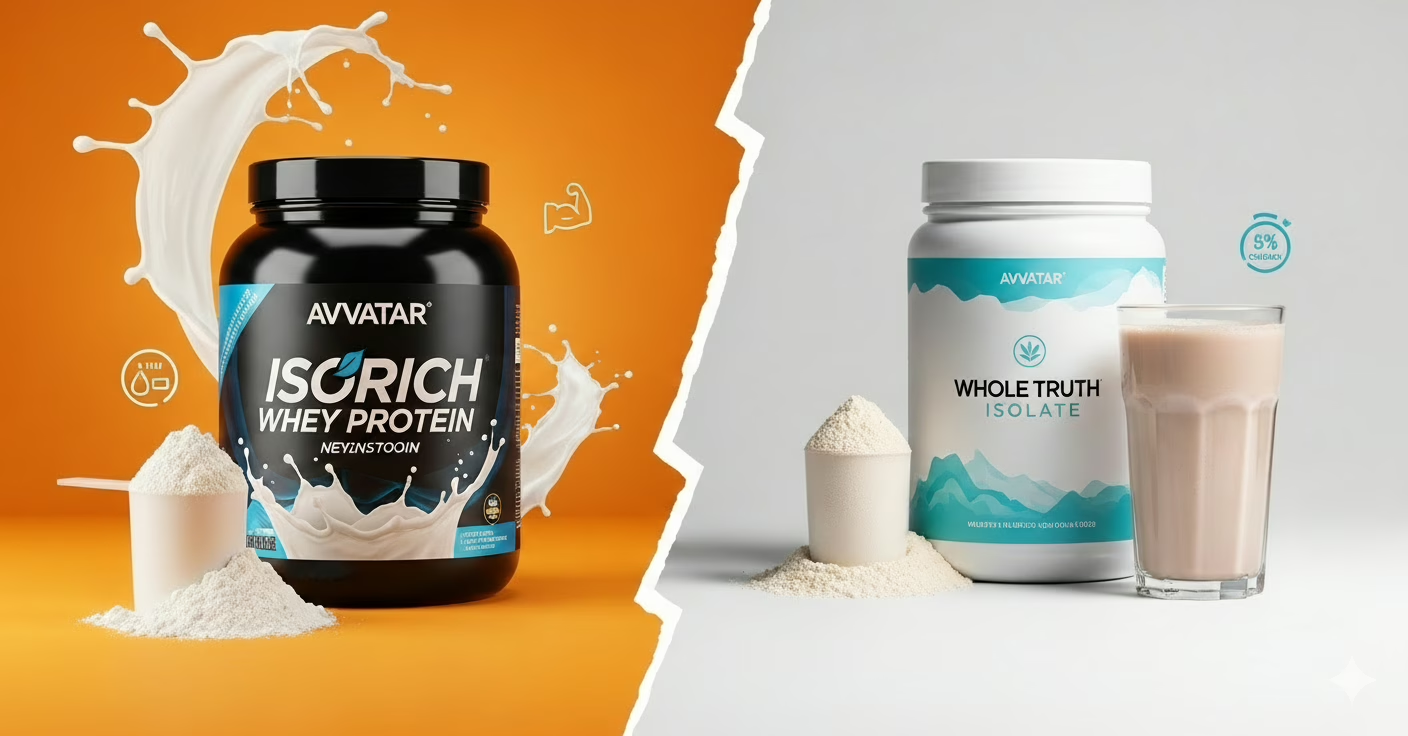
The short answer
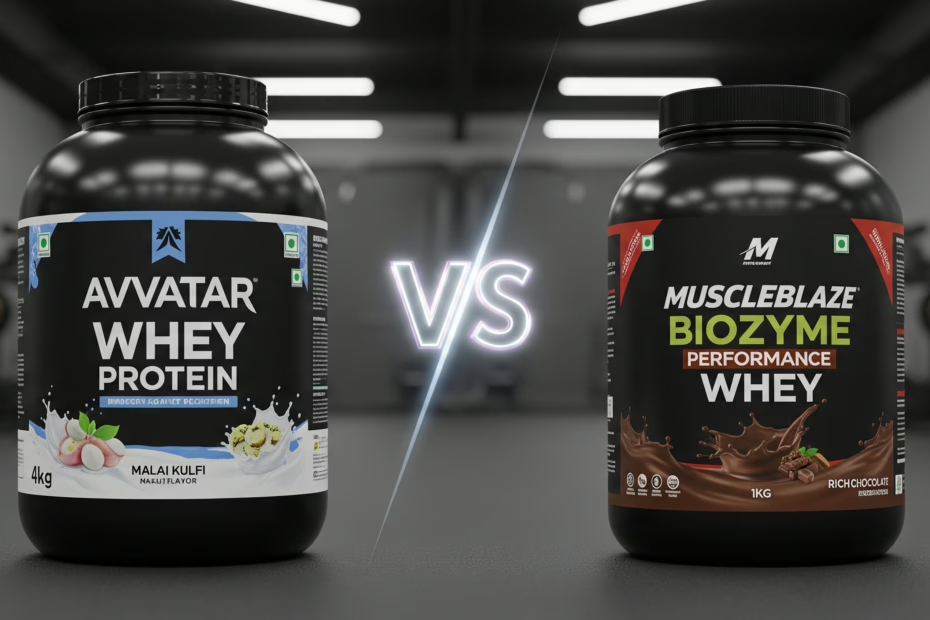
Matched pack-for-pack at 1 kg, Avvatar is the better value and MuscleBlaze is the better-documented product. Avvatar’s blend is the denser powder — about 78% protein by weight against MuscleBlaze’s 70% — so despite costing a little more per tub it works out roughly 5–6% cheaper per gram of protein. MuscleBlaze Biozyme Performance Whey is the only product here listed in three separate third-party testing registers, and the enzyme blend behind its absorption claim holds a granted US patent.
Choose Avvatar for value per gram, for natural flavouring without sucralose, and for Malai Kulfi. Choose MuscleBlaze if digestion is your sticking point, if you want the widest pack-size choice on one platform, or if independent testing paperwork is what reassures you.
Prices and register checks as at August 2026. Nobody at Naatural.in has laboratory-tested either powder — see How we checked this below.
Two Indian whey proteins dominate this decision, and the usual comparison between them is close to useless. It restates each brand’s own marketing, puts a bigger tub next to a smaller one, and declares a winner on sticker price.
This one does something different. We read both labels, did the arithmetic the labels make possible, and then went to the public registers each brand names to see what is actually recorded there. Some of what we found contradicts what this very page used to say — and we have corrected it in the open rather than quietly.
So this guide compares Avvatar Whey Protein (1 kg) and MuscleBlaze Biozyme Performance Whey (1 kg) — matched pack for pack, because comparing a bulk tub against a single tin flatters whichever one is bigger — and then widens out to the full Avvatar range, because “which Avvatar?” turns out to be the question more readers are actually asking than “Avvatar or MuscleBlaze?”
This article contains affiliate links. We may earn a commission on qualifying purchases, at no extra cost to you.
How we checked this
What we did, and what we did not do. We did not lab-test either powder, and we are not going to imply that we did. What we did instead: read the nutrition panel on both tubs from the listing images, worked out protein-per-rupee from the two numbers every label prints, and then took each brand’s own certification and testing claims to the register that would actually contain them — Labdoor, Trustified, LGC’s Informed Choice programme, India’s Clinical Trials Registry, and the US patent record.
Every check was dated and captured. Where a register confirmed a claim, we say so and say exactly which products it covers. Where a brand names no certifier at all, we say that too — and it means only that, not that we searched and came up empty.
In this article
- Side-by-Side Product Snapshot: Avvatar vs. MuscleBlaze
- Protein Quality, Absorption, and Effectiveness: Avvatar vs. MuscleBlaze
- Taste, Mixability, and Everyday Use: Avvatar vs. MuscleBlaze
- Price, Value-for-Money, Availability, and Safety for Indian Buyers
- Which Avvatar Whey Protein Is Which? The Full Range, Compared
- Frequently asked questions
- Final Verdict: Which Whey Suits You?
Side-by-Side Product Snapshot: Avvatar vs. MuscleBlaze
What you’re comparing
One kilogram against one kilogram, on the same platform, in the same week.
On the Avvatar side, the base blend — Avvatar Whey Protein, 1 kg, a whey isolate and concentrate mix, sold in Caramel Crème among other flavours, at around ₹4,200. On the MuscleBlaze side, Biozyme Performance Whey, 1 kg, the brand’s flagship enzyme-blended concentrate, at around ₹4,000.
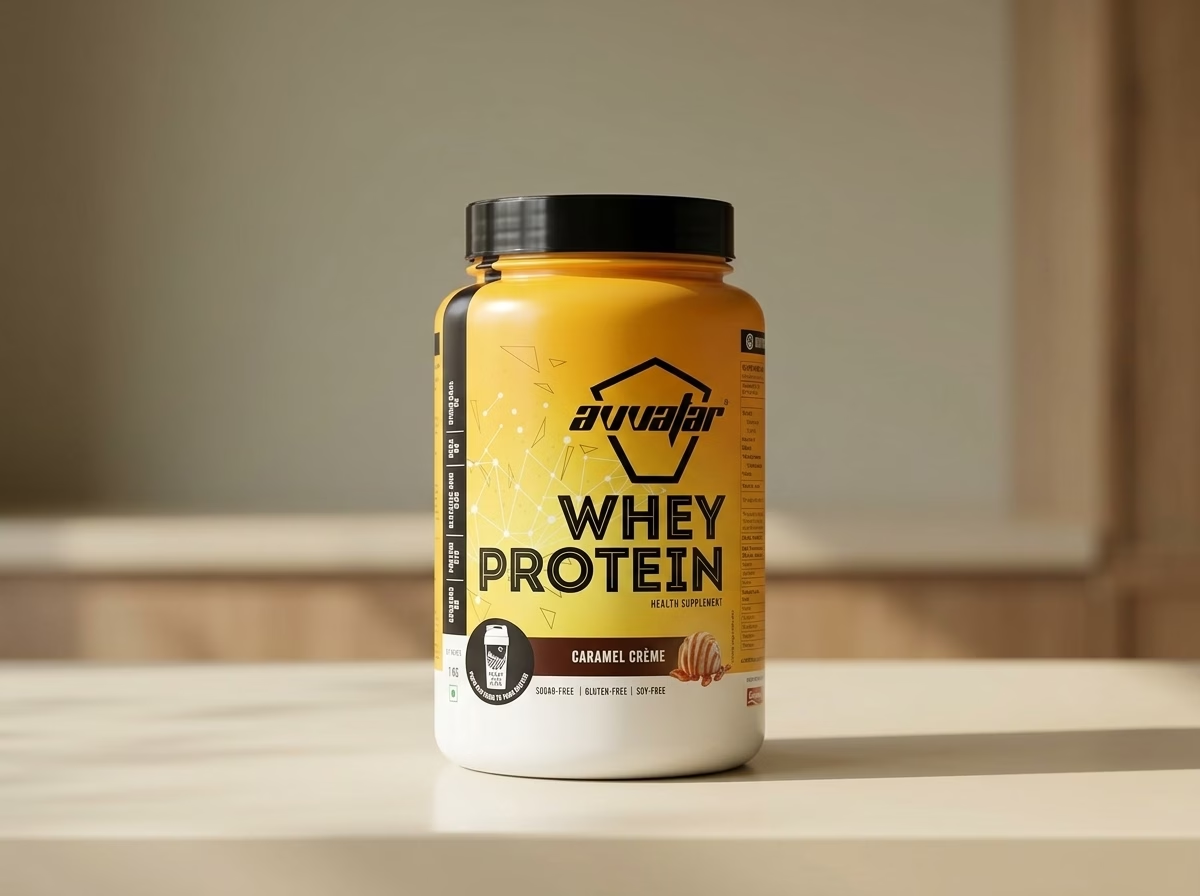
Avvatar Whey Protein, 1 kg
27 g protein per scoop 29 servings ~78% protein by weight
Isolate and concentrate blend. Natural flavours, no artificial additives, per the brand. Around ₹4,200.
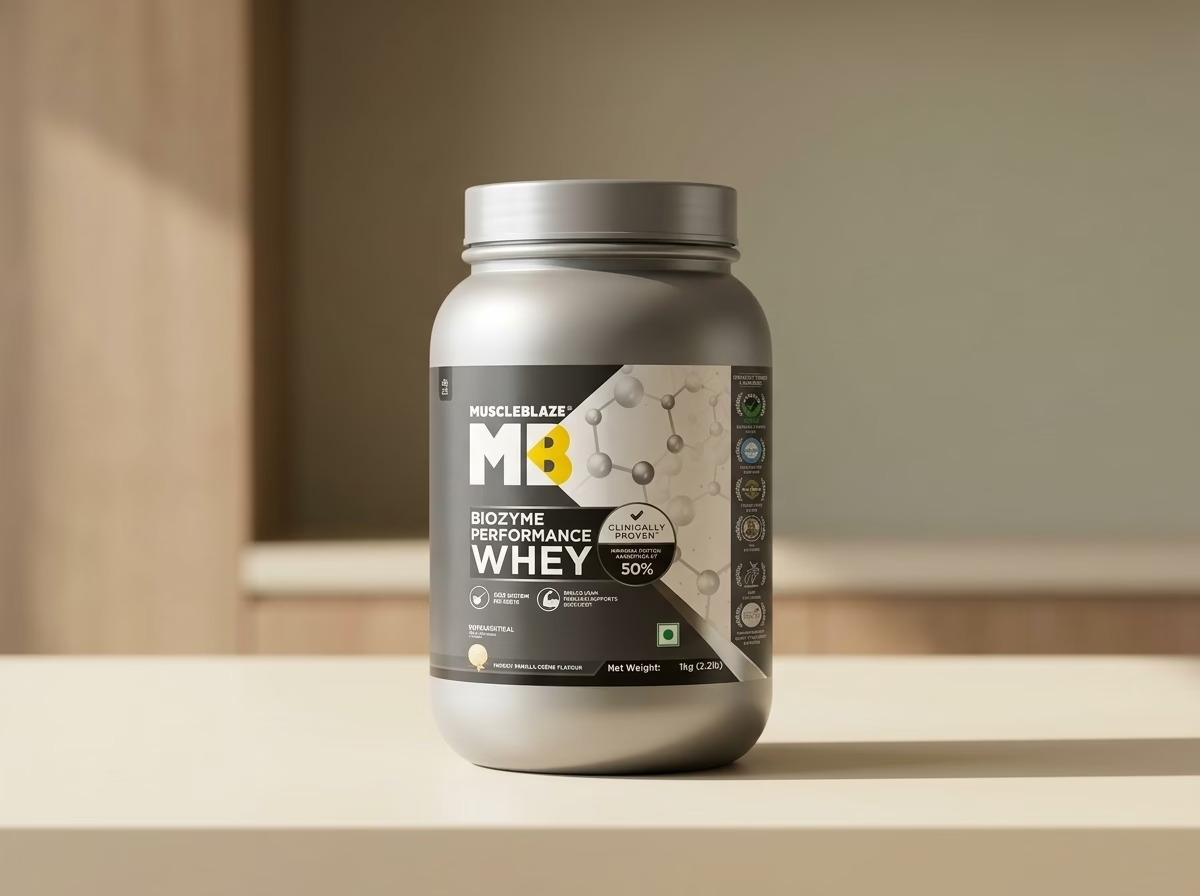
MuscleBlaze Biozyme Performance Whey, 1 kg
25 g protein per serving ~28 servings 70% protein by weight
Enzyme-blended concentrate. Listed in three third-party registers. Around ₹4,000.
A correction we owe you
An earlier version of this page compared a “4 kg Malai Kulfi” Avvatar pack. That product is not sold on the platform this page links to — the listing behind it resolves to a 1 kg Caramel Crème tub, and the 4 kg figure was stale metadata from a variant that has since been merged away. The value argument built on it was wrong in its arithmetic even though it happened to land on the right brand. It has been rebuilt from label data, and the working is shown below so you can check it yourself.
Avvatar WHEY PROTEIN — Key facts
- Pack: 1 kg
- Protein: 27 g per scoop, as listed by the brand
- Blend: whey isolate and concentrate
- Servings: 29 per pack — Avvatar states this on the pack and the listing, which is what makes the value maths below possible at all
- Flavouring: Avvatar states natural flavours with no artificial additives
- Intended use: daily recovery, and hitting a higher protein target with fewer scoops
Avvatar states that its milk is “milked, processed, and packed within 24 hours,” and points to its parent company’s own dairy supply chain as the reason. That is the brand’s claim, and no public register exists that could confirm or contradict it — worth knowing as a claim rather than a fact.
One thing bulk buyers should know. Avvatar does sell 2 kg and 4 kg packs of this blend, but the larger ones only through its own store, at around ₹7,700 and around ₹14,600. On Amazon the range stops at 2 kg. Buying the big tub means buying direct, which changes your returns position — see Authenticity, returns, and seller checks below, because it changes it more than you would expect.
MuscleBlaze Biozyme Performance Whey — Key facts
- Pack: 1 kg
- Protein: 25 g per serving, as stated by MuscleBlaze
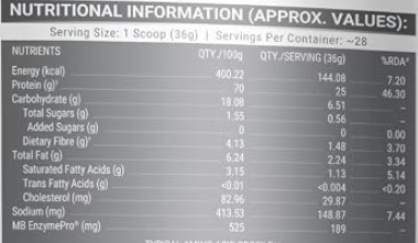
- Scoop: 36 g, roughly 28 servings per tub — printed on the nutrition panel
- Blend: whey protein concentrate (86%), with MB EnzymePro and bromelain
- Sweetener: sucralose, listed on the ingredients panel
- Technology: BioZyme enzymes, which MuscleBlaze states deliver around 50% higher protein absorption
That absorption claim has more behind it than most claims in this category, and less than the headline suggests. It traces to a registered clinical trial — CTRI/2019/02/017731, registered February 2019 and recorded as completed, testing the MB EnzymePro capsule alongside whey in 24 participants. The register holds the study’s methodology. It does not hold posted results. So the registration confirms that testing happened; it does not confirm the size of the effect. The enzyme composition itself is separately covered by a granted US patent, US12472242B2, issued November 2025 to Bright Lifecare.
Practical points for Indian buyers
- Scoop system. Avvatar ships one scoop loose in the tub, which sinks into the powder and has to be dug out. MuscleBlaze uses a scoop-on-top design that keeps it clean and makes dosing faster. A small thing that you notice every single morning.
- Flavour availability is not the same across platforms. Avvatar’s Malai Kulfi runs right through its range and is the flavour the brand is known for; several Avvatar SKUs are Kulfi-only. MuscleBlaze splits its flavours differently between its own store and Amazon. Picking a flavour before checking where it is actually stocked is a good way to waste the decision.
- Sweetener. If you avoid artificial sweeteners, this is settled before any other comparison starts: Biozyme’s label lists sucralose, Avvatar states natural flavours and no artificial additives.
- Both brands discount hard during sale events, and by more than the gap between their list prices. The cheaper tub in June is not necessarily the cheaper tub in October.
Side-by-Side Feature Comparison: Avvatar vs. MuscleBlaze
Scroll the table sideways to compare →
| Avvatar Whey Protein (1 kg) | MuscleBlaze Biozyme Performance Whey (1 kg) | |
|---|---|---|
| Protein per serving | 27 g | 25 g |
| Scoop size | ~34.5 g | 36 g |
| Servings per container | 29, as listed | ~28, from the nutrition panel |
| Protein by weight | ~78% | 70%, per the label |
| Blend | Isolate + concentrate | Concentrate (86%) with enzymes |
| Sweetener | Natural flavours, no artificial additives (brand’s statement) | Sucralose, per the ingredients panel |
| Claimed absorption | No absorption claim made | ~50% higher, per MuscleBlaze, from a registered trial (CTRI/2019/02/017731) whose results are not posted |
| Pack sizes | 1 kg and 2 kg on Amazon; 2 kg and 4 kg direct from the brand | 1 kg, 2 kg and 4 kg |
| Manufacturer | Parag Milk Foods Limited | Bright Lifecare Private Limited |
| Third-party testing | Four products in Trustified’s public register, Eurofins-tested and passed, including this blend (certified April 2023). Avvatar names no certifier in its own marketing. | The Biozyme and Biozorb line carries all three: Informed Choice (LGC, UK — Performance Whey and Iso-Zero, certified December 2022, listed for Asia), Labdoor (four SKUs), and Trustified. Trustified separately covers seven MuscleBlaze products. |
| Scoop system | One scoop, loose in the tub | Scoop-on-top |
| Typical price | around ₹4,200 | around ₹4,000 |
| Cost per gram of protein | ~₹5.40 | ~₹5.70 |
| See the Avvatar blend | See the Biozyme blend |
Certification coverage is per product and per batch, never brand-wide — that caveat travels with every mention of it on this page, and it is the single most useful thing to carry into your next supplement purchase in any category.
Which Avvatar matches which MuscleBlaze, tier by tier
The comparison above is one row of seven. Both brands run full ranges, and the tub most people should be comparing is often not the tub the internet compares. Matched by the job each product is built to do:
Scroll the table sideways to compare →
| Tier — the job it does | Avvatar | MuscleBlaze | The honest note |
|---|---|---|---|
| Entry-level, budget | Fuel Whey — brand store only | Beginner’s Whey, 1 kg, around ₹1,850 | MuscleBlaze’s entry tub is the cheapest protein on this page by a wide margin, and it earns that price with a much lower protein figure per scoop. Cheap per tub, not cheap per gram. |
| Mainstream daily blend | Avvatar Whey Protein, 1 kg, around ₹4,200 | Biozyme Performance Whey, 1 kg, around ₹4,000 | The pairing everything above compares. Avvatar wins per gram; MuscleBlaze wins on documentation. |
| Flavour-led daily blend | Performance Whey, 1 kg, around ₹3,400 | Biozyme Performance Whey again | MuscleBlaze has no separate flavour-led tier — Biozyme covers both jobs. |
| Premium blend | Alpha Whey, 1 kg, 25 servings, around ₹2,700 | Whey Gold, 1 kg, around ₹5,600 | The tiers do not line up on price at all. Avvatar’s premium blend is listed well below MuscleBlaze’s, which tells you the two brands mean different things by “premium.” Compare them on protein per gram, not on the label. |
| Isolate | Isorich, 1 kg, around ₹5,100 | Biozyme Iso-Zero, 1 kg, around ₹5,500 | The cleanest like-for-like pairing across both ranges. Iso-Zero is the better-documented; Isorich has the higher protein per serving. |
| Plain concentrate | — | 100% Clean Raw Whey Concentrate, 1 kg, around ₹3,000 | Unflavoured, no enzymes, no isolate. Avvatar has no direct equivalent on Amazon. Cheapest route to whey if flavour is not a requirement. |
| Isolate + creatine | Nitro Iso Whey, 2 kg, 50 servings, around ₹7,100 — 2.8 g creatine per serving | no equivalent | Nothing in the MuscleBlaze range pairs an isolate with a meaningful creatine dose in one tub. |
| Mass / weight gain | Muscle Gainer, Mass Gainer | MuscleBlaze mass gainer line | A different product category with a different measure — judge on calories and carb-to-protein ratio, not protein density. |
Two things fall out of this table that neither brand publishes. First, Nitro Iso has no counterpart anywhere in MuscleBlaze’s range — a genuine gap rather than a spec-sheet line. Second, the premium tiers are not priced as peers, so “premium” is a marketing word here rather than a position. Both are the kind of thing you only see when you lay the two ranges side by side, which is what this page is for.
One scope note that matters for the certification column above: MuscleBlaze’s Informed Choice and Labdoor coverage is for the Biozyme and Biozorb line only. Whey Gold, Beginner’s Whey and Raw Whey Concentrate are not covered by those two registers — Trustified does list several of them separately, which is a different certification with a different scope. Prices in this table were checked in August 2026; the product boxes on this page show current pricing.
Protein Quality, Absorption, and Effectiveness: Avvatar vs. MuscleBlaze
Blend and amino‑acid completeness
Both are complete proteins with the full essential amino-acid profile, and both carry enough leucine per serving to trigger muscle protein synthesis. At that level the comparison is a draw, and anyone telling you otherwise is selling something.
The real difference is density. Avvatar’s blend runs isolate alongside concentrate, which lifts the protein share of the powder to roughly 78% by weight. Biozyme Performance Whey is concentrate-based at 86% whey protein concentrate in the ingredient list, and the finished powder comes out at 70% protein by weight — a figure the label prints itself.
~78%
Avvatar — protein by weight
70%
MuscleBlaze Biozyme — protein by weight, per its own label
That eight-point gap is not a quality judgment. Concentrate carries more of the milk’s other components, some of which people actively want. It is a value judgment, and it is the whole basis of the arithmetic further down.
Absorption: enzymes vs. isolate
Two different answers to the same problem, and it is worth understanding which problem you actually have.
MuscleBlaze’s answer is enzymatic. Biozyme adds a proteolytic enzyme blend — MB EnzymePro, plus bromelain as a stabiliser — intended to break protein down more completely before it reaches the point of absorption. MuscleBlaze states this delivers around 50% higher protein absorption. As above, that claim traces to CTRI/2019/02/017731, a registered and completed trial whose methodology is public and whose results are not. Treat it as a documented programme rather than a proven number, and note that the patent priority date (February 2019) and the trial registration (also February 2019) line up as one coherent piece of work rather than a marketing afterthought.
Avvatar’s answer is compositional. More isolate, less of everything else. No absorption claim is made anywhere in Avvatar’s marketing, which is worth noticing in a category where absorption claims are close to mandatory.
Which matters to you depends entirely on whether you bloat. If whey concentrate sits badly with you, the enzyme route is a real, specific attempt at the problem. If it does not, you are paying for a solution to something you do not have.
How protein-per-scoop maps to your daily target
Take a 75 kg adult training seriously, at the common 1.6 g of protein per kilogram of bodyweight: 120 g a day. Food should carry most of it. If a shake covers 25–27 g, that is roughly a fifth of the day’s target in one step.
The 2 g difference per scoop between these two sounds trivial and mostly is — over a month of daily shakes it is about 60 g of protein, well under three extra servings. Where it matters is not per scoop but per tub, and that is a different calculation entirely.
Lactose, digestion, and who benefits from what
If you are genuinely lactose intolerant, neither of these is your product — you want a true isolate, and both brands sell one. Avvatar Isorich at around ₹5,100 and MuscleBlaze Biozyme Iso-Zero at around ₹5,500 are the cleanest like-for-like pairing anywhere across the two ranges, and Iso-Zero is the better-documented of the pair: it is one of the two products in LGC’s Informed Choice register.
If your issue is milder — heaviness or bloating rather than genuine intolerance — that is the case Biozyme’s enzyme blend is built for, and the case where its price premium over a plain concentrate is defensible.
Timing and practical use
Total daily protein does most of the work; timing does the rest, and the rest is smaller than the internet suggests. Post-workout is convenient rather than magic. Between meals is where a shake earns its keep for most people, because it closes the gap that actually causes them to miss their target.
One genuinely practical difference: Avvatar’s powder is denser, so a scoop of it is heavier work in plain water and benefits from a mesh shaker. MuscleBlaze’s dissolves more readily. Neither is a reason to buy, but it is a reason to own the right shaker.
Evaluating claims in India
Here is the transferable skill, and it is worth more than this comparison is.
A certification attaches to a named product and a named batch. It never attaches to a brand.
MuscleBlaze’s Informed Choice and Labdoor coverage is for the Biozyme and Biozorb line specifically — not Whey Gold, not Beginner’s, not Raw Whey, though Trustified does list several of those separately. Avvatar’s Trustified entries cover four products. Before you trust a badge on a tub, check that the tub is the product in the register.
Every one of these registers is public and searchable, and takes about a minute. Trustified and Labdoor both publish their certified-product lists. LGC’s Informed Choice programme has a searchable register at choice.wetestyoutrust.com. India’s Clinical Trials Registry can be searched through the WHO’s ICTRP portal. The US patent record is open. We used all five for this article, and you can repeat every search.
“Names no certifier” is not the same as “we checked and found nothing.” Avvatar’s marketing does not name a certifying body anywhere — not on its Why Avvatar page, not on its product pages, not on its Amazon listing. That is a statement about what the brand publishes, not a finding about the product’s quality. Its blend does appear in Trustified’s register, Eurofins-tested and passed, which the brand simply does not advertise.
Taste, Mixability, and Everyday Use: Avvatar vs. MuscleBlaze
Flavor profile — local vs. familiar
This is the least technical section on the page and, for adherence, possibly the most important. The best protein powder is the one you finish.
Avvatar’s Malai Kulfi is the genuine differentiator, and what is checkable about it is more interesting than a tasting note. It is built from an Indian dessert rather than adapted from a Western one, it runs right through the range, and several Avvatar SKUs are sold in Kulfi and nothing else — Alpha Whey’s 2 kg pack among them. A brand does not make a flavour its default unless it is working.
We have not tasted it, and this section will not pretend otherwise. What we can tell you is the decision it forces: a dessert-derived flavour is a stronger commitment than a neutral one. If you want something that disappears into coffee or oats, a distinctive flavour is a risk, not a feature — and at 1 kg you are committing to roughly 29 servings of that decision.
See Avvatar’s Malai Kulfi Performance Whey →
MuscleBlaze goes the other way — chocolate, French vanilla, cookies-and-cream. Familiar, and deliberately so. If you drink a shake daily for a year, neutrality is a feature rather than a shortfall.
Mixability & scoop handling
One difference here is a fact rather than an impression: the scoop. MuscleBlaze uses scoop-on-top packaging, so the scoop sits in its own compartment above the powder. Avvatar ships the scoop loose in the tub, where it sinks and has to be dug out. That is visible on both products’ packaging and it is the difference you notice every single morning.
On mixing itself we are reasoning from the labels rather than from a shaker. Avvatar’s powder is the denser of the two — roughly 78% protein by weight against 70% — and denser powders generally need longer agitation in plain water than concentrate-based ones. Treat that as an expectation, not a report: we have not mixed either powder, and anyone telling you exactly how a protein behaves in your shaker without having used it is guessing in a confident voice.
What is worth writing down is that neither brand publishes anything about this at all, and that the scoop difference — the one thing here that is genuinely checkable — is the one neither brand mentions.
Everyday Indian recipes
A dessert-derived flavour and a neutral one suit different uses, and that is a matter of logic rather than taste-testing. Malai Kulfi’s obvious pairings are the ones that lean into it — chilled milk, thick curd, overnight oats — where the flavour is the point. MuscleBlaze’s chocolate and vanilla are the safer choice anywhere the protein is meant to disappear: a smoothie with other fruit in it, pancake batter, coffee.
One rule that applies to both, and this one is chemistry rather than opinion: never add whey to anything actively boiling. Heat changes the protein’s texture, not its nutritional value — you lose the smoothness, not the protein. Stir it into something already off the heat.
Flavor fatigue & adherence
The most common reason a tub goes unfinished is boredom, not disappointment. A distinctive flavour is a bigger risk here than a neutral one — the thing that delights you in week one is the thing you can predict too well in week ten.
Practical suggestion: if you are new to either brand, buy the 1 kg rather than committing to a 2 kg or 4 kg on flavour you have not lived with. The per-gram saving on the big tub is real but modest, and it is a poor trade against three kilograms of something you have stopped wanting to drink.
Price, Value-for-Money, Availability, and Safety for Indian Buyers: Avvatar vs. MuscleBlaze
Per‑serving math (practical)
Two numbers on the pack decide value: protein per scoop and scoops per tub. Multiply them for the protein in the tub, then divide the price by that. Both brands print both numbers, so this comparison is available to anyone who reads a label.
Avvatar Whey Protein, 1 kg — 27 g of protein per scoop across 29 servings is about 783 g of protein in the tub. At around ₹4,200, that is roughly ₹5.40 per gram of protein.
MuscleBlaze Biozyme Performance Whey, 1 kg — a 36 g scoop, about 28 servings, 25 g of protein each: roughly 700 g of protein. At around ₹4,000, that is about ₹5.70 per gram of protein. The label’s own “70 g protein per 100 g” confirms it independently.
~₹5.40
Avvatar — per gram of protein
~₹5.70
MuscleBlaze Biozyme — per gram of protein
So the cheaper tub is not the better value. MuscleBlaze costs less at the till; Avvatar delivers about 5–6% more protein per rupee, because it is a denser powder — 78% protein by weight against 70%.
One trap worth avoiding when you check this yourself
“25 g protein per scoop” does not mean a 25 g scoop. Scoop weight includes carbohydrate, fat and flavouring. Divide 1,000 g by 25 and you get about 40 servings, which overstates the tub’s protein by more than 40% — and it is the commonest way these comparisons go wrong. It is how the earlier version of this page went wrong.
Amazon pricing, shipping & bulk savings
Bulk saves money on both brands, but the routes differ in a way that matters more than the discount. MuscleBlaze’s larger tubs sell on the same platform as its 1 kg. Avvatar’s 4 kg is a direct-from-brand purchase only. That is not just a convenience difference — it changes your returns position entirely, which the next section covers.
Both brands run deep discounts during sale events, and the gap between them moves more during a sale than their list prices suggest. If you are not in a hurry, that is worth waiting for; if you are, the per-gram figures above hold at list price.
Authenticity, returns, and seller checks
Returns differ sharply between these two, and neither brand advertises it.
Avvatar’s own policy states that returns on consumables are “only accepted if it was purchased through www.avvatarindia.com,” and then only for shipping damage or defects — a seven-day window, a phone call first, and a Return Authorization Number. Buy Avvatar anywhere else and the brand’s return route does not apply to you at all.
MuscleBlaze goes further, allowing “a return of a product if you change your mind, provided that the product is in an intact condition.” It excludes returns “due to personal preferences after it has been opened (flavour like/dislike).”
MuscleBlaze will take back an unopened tub you had second thoughts about; Avvatar will not. Neither will take back a tub you opened and disliked the taste of.
Both policies as published in August 2026.
On authenticity, the practical checks are the same for both: buy from the brand’s own storefront or a seller the brand recognises, check that the batch and manufacturing date are printed and legible rather than stickered over, and confirm the inner seal is intact before the outer packaging goes in the bin. Avvatar operates its own authentication page for verifying a pack; MuscleBlaze’s parent company holds a published US patent application covering a method for determining whether a protein supplement is genuine or counterfeit, which tells you the problem is real enough to engineer against.
Buy from the brand’s own storefront
Both brands run their own Amazon storefront, which is the simplest way to check you are buying from a seller the brand recognises.
Certifications & athlete safety
If you are tested in competition, this section is the only one that matters, and the answer is unusually clear.
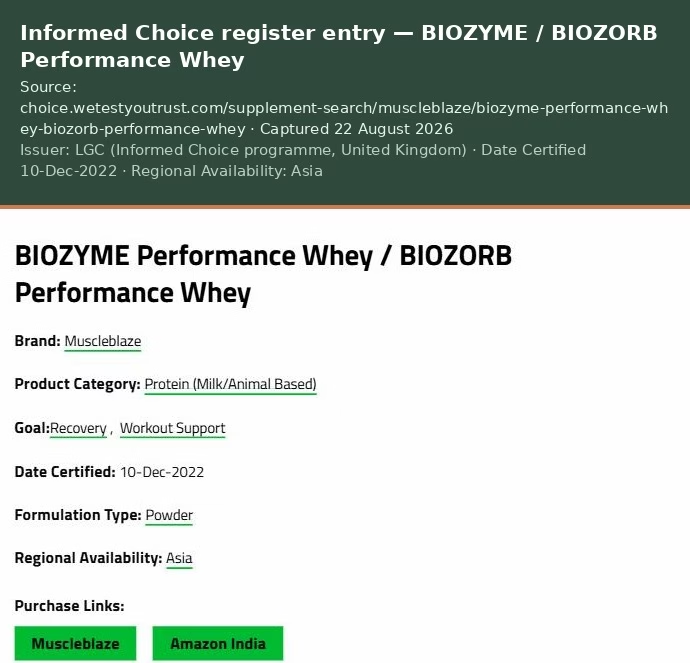
MuscleBlaze Biozyme Performance Whey and Biozyme Iso-Zero are listed in LGC’s Informed Choice register, certified 10 December 2022, with regional availability recorded as Asia and purchase links to MuscleBlaze and Amazon India. Informed Choice is the banned-substance screening programme most relevant to tested athletes, and the register notes that batch test details remain visible only until that batch expires — so this is batch-level certification, not a permanent brand mark. Four Biozyme and Biozorb products are separately certified by Labdoor. Seven MuscleBlaze products appear in Trustified’s register, including several outside the Biozyme line.
Avvatar has four products in Trustified’s public register, Eurofins-tested and passed, including the base blend compared here, certified April 2023. Avvatar names no certifier in its own marketing — and to be precise about what that means: it means the brand does not publish a certifying body, not that we searched a register and found it absent. The Trustified listing is real; Avvatar simply does not lead with it.
Avvatar makes no clinical claim at all, and there is no registered trial under Avvatar or Parag. That is the expected state for a supplement brand and is not a finding — most brands in this category have never run one.
If you are weighing these two against the wider Indian market rather than only against each other, our guide to the best whey protein brands in India applies the same register-first method across the category.
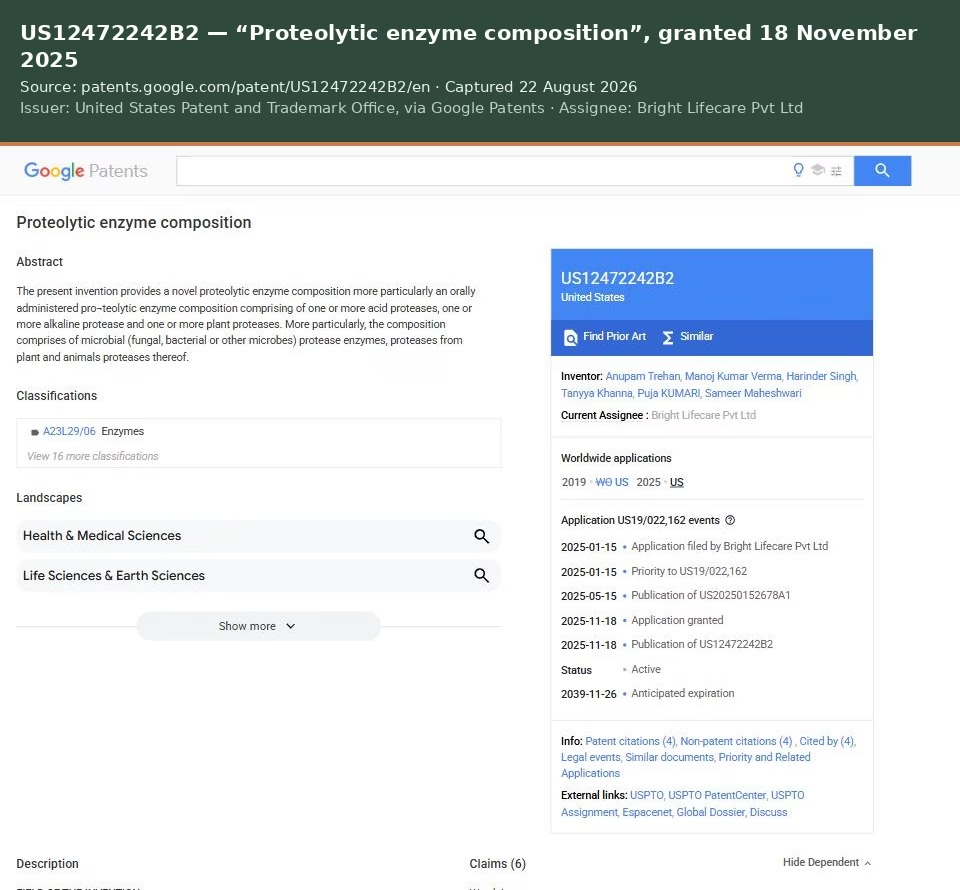
How we checked, in full
Every certification and testing claim on this page was taken to the issuer’s own public register: Labdoor, Trustified, LGC Informed Choice, the Clinical Trials Registry – India (searched through the WHO ICTRP portal, which mirrors it), and the US patent record.
Before recording any result we ran control searches to establish that each register works and covers this market — Informed Choice’s own record for Biozyme lists Asia and an Amazon India purchase link, which settles coverage from the register’s own data rather than our inference. Every check was captured with its source URL and date.
Results are reported with their scope attached — which named products a certificate covers, and which it does not — because a certificate that covers a brand’s isolate but not the tub you are holding is technically true and practically useless. Where a brand names no certifier, we say “none named,” and we mean exactly that.
Quick label‑reading checklist
Six things, in order, on any protein tub in India:
- Protein per serving AND serving size in grams. Both, or the maths below is impossible.
- Servings per container. Multiply by protein per serving for the protein in the tub.
- Price ÷ protein in the tub. This is the only price comparison that means anything.
- Protein per 100 g, if printed — it cross-checks your own arithmetic in one step.
- The sweetener line. Sucralose, aspartame, stevia or none — decide before you compare anything else.
- The certification badge, then the register. Find the product in the issuer’s own list. If it is not there, the badge may still be honest and simply cover a different SKU — but you now know which.
Which Avvatar Whey Protein Is Which? The Full Range, Compared
More people arrive at this page asking “which Avvatar?” than “Avvatar or MuscleBlaze?” — and until now the page did not answer them. Avvatar sells eight lines. The differences between them are real, poorly explained by the brand, and worth about two thousand rupees a tub if you get them wrong.
Avvatar Whey Protein, 1 kg
1 kg 29 servings 78.3% protein by weight ~₹5.40 per gram
The base isolate-and-concentrate blend, and the Avvatar side of the headline comparison. Around ₹4,200.
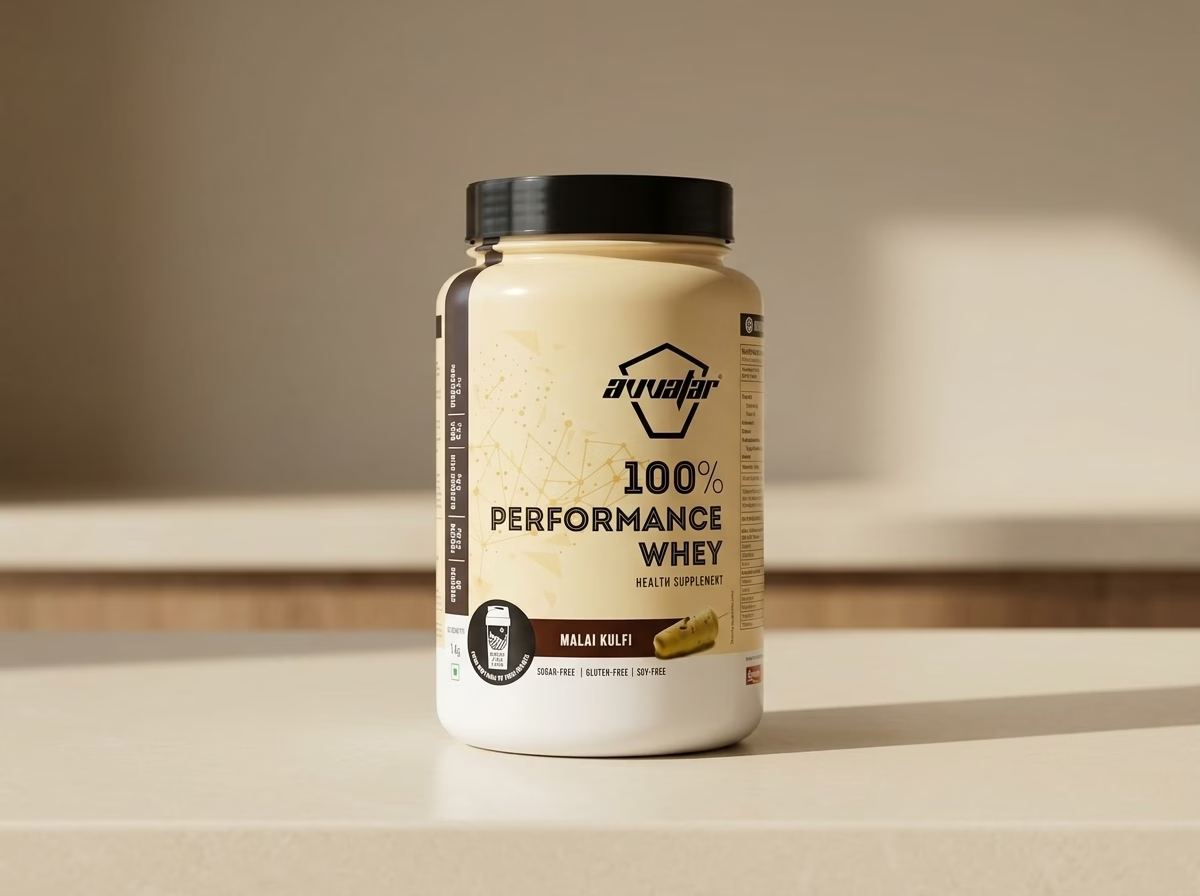
Avvatar 100% Performance Whey, 1 kg
1 kg 29 servings 79.8% protein by weight ~₹4.29 per gram
Best value per gram in the range, and denser than the base blend. Around ₹3,400.
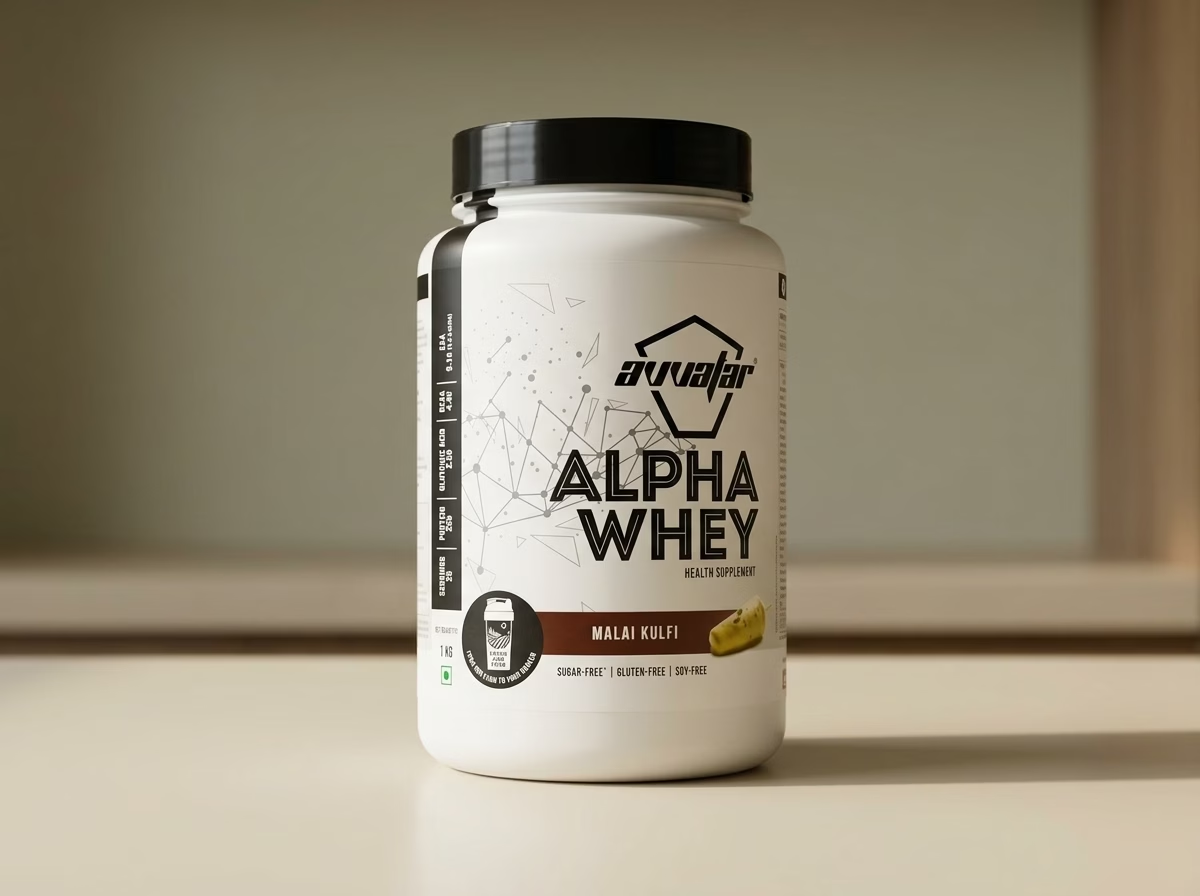
Avvatar Alpha Whey, Malai Kulfi
1 kg 25 g per serving 25 servings ~₹4.27 per gram
Cheapest per gram in the range — but the least dense powder at 62.5% protein by weight. Around ₹2,700.
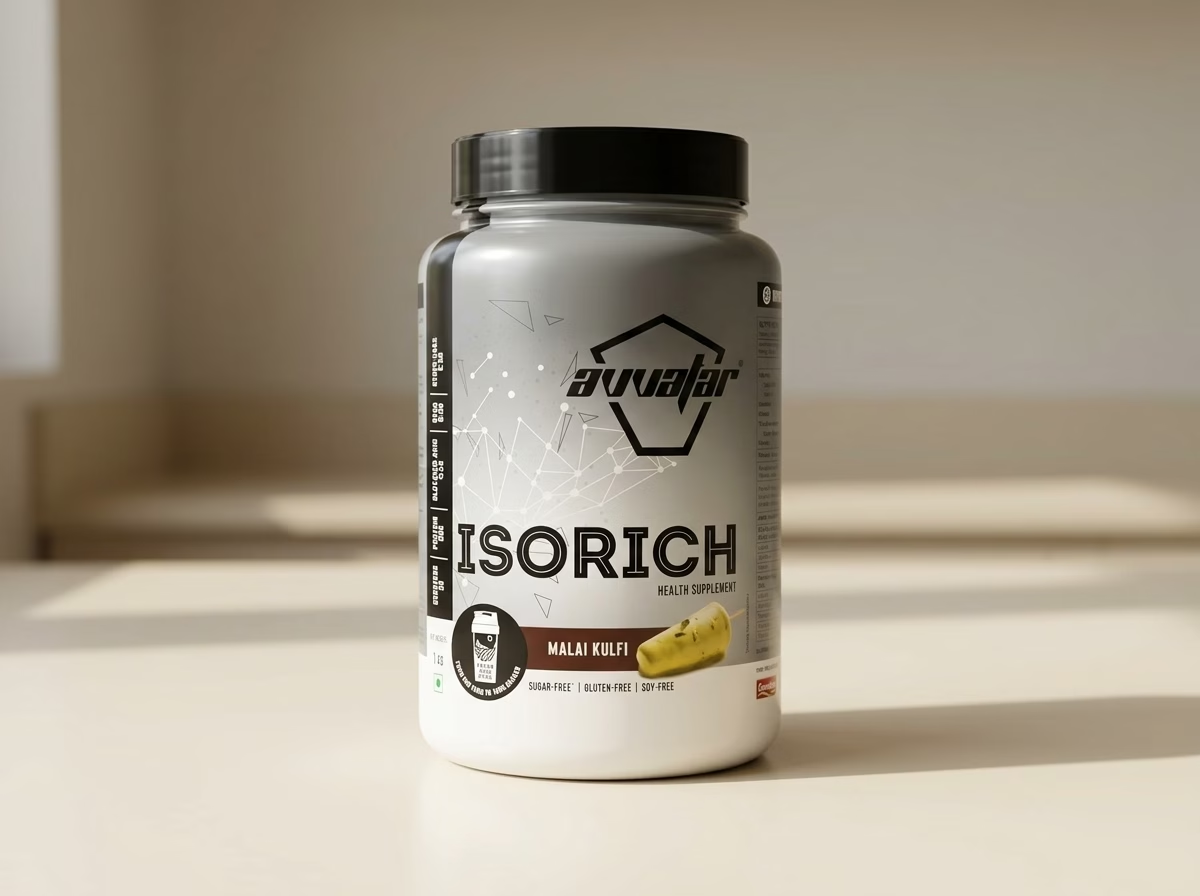
Avvatar Isorich, 1 kg
1 kg 29 servings 84% protein by weight ~₹6.11 per gram
The densest powder in either range — and the most expensive per gram. You are buying leanness, not economy. Around ₹5,100.
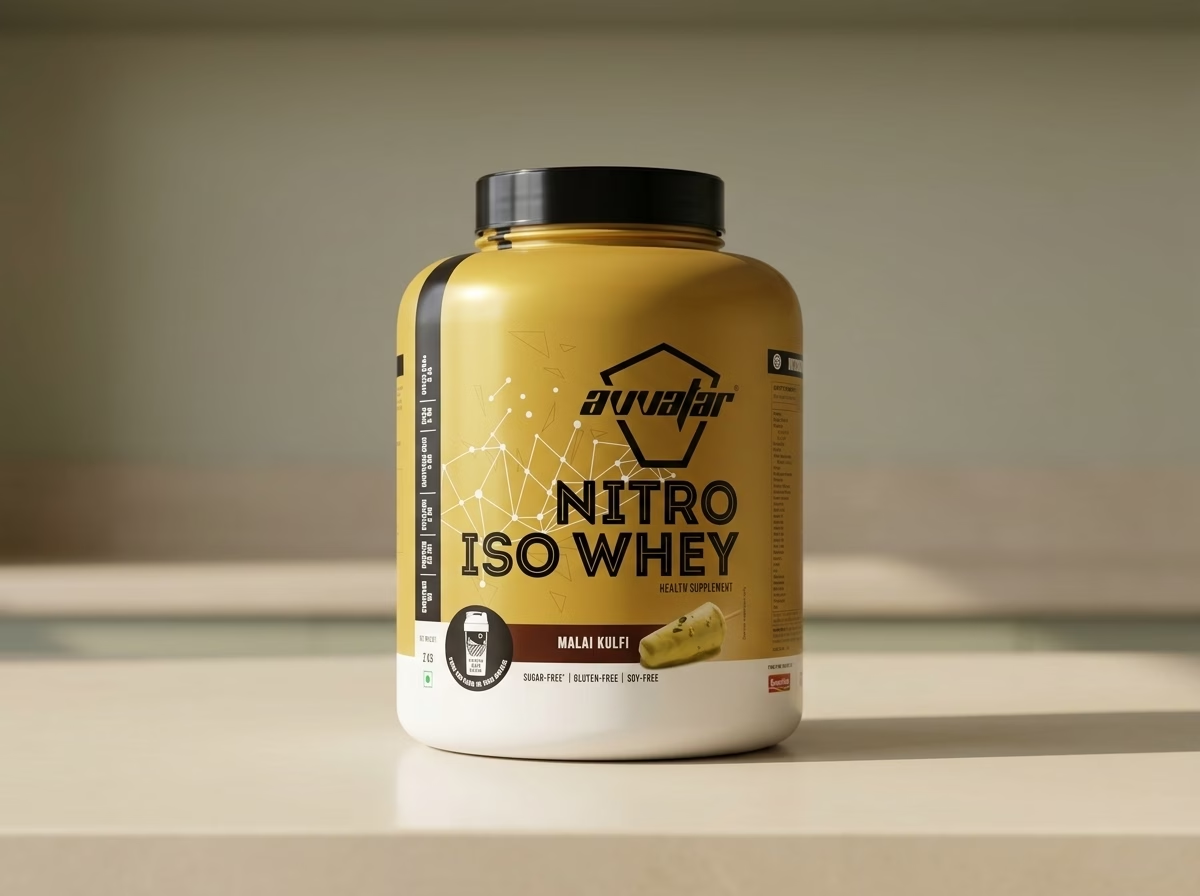
Avvatar Nitro Iso Whey
2 kg 50 servings +2.8 g creatine ~₹5.00 per gram
A 2 kg pack, not 1 kg — better value per gram than Isorich. Nothing in the MuscleBlaze range matches it. Around ₹7,100.
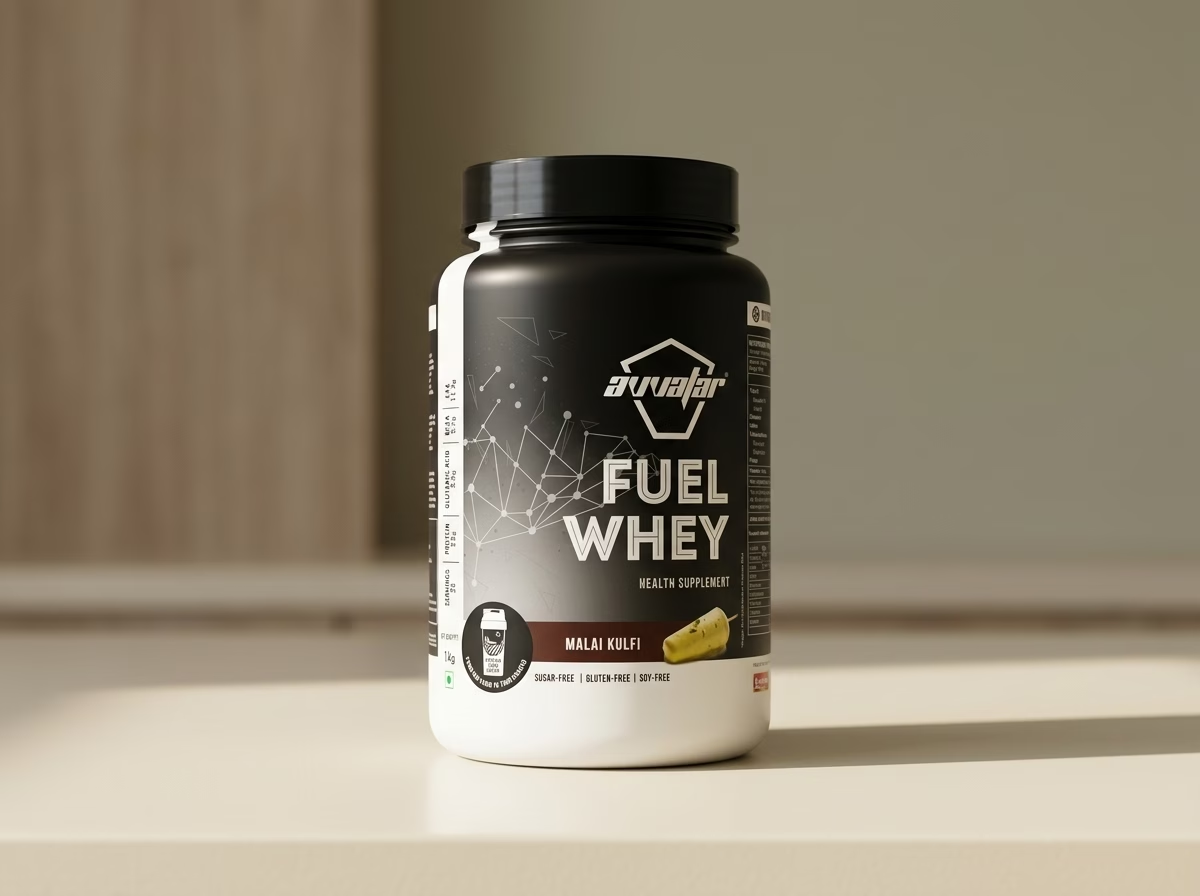
Avvatar Fuel Whey
Entry tier Brand store only Judge per gram
Where the range starts. Sold through Avvatar’s own store rather than Amazon.
Muscle Gainer and Mass Gainer sit outside this comparison — they are judged on calories and carbohydrate, not protein density. Prices checked August 2026.
Avvatar Whey Protein vs Performance Whey — what actually changes
The base Avvatar Whey Protein is an isolate-and-concentrate blend at 27 g of protein per scoop. Avvatar 100% Performance Whey sits at around ₹3,400 for 1 kg with roughly 27.5 g per serving and is flavour-led — it is the Malai Kulfi workhorse of the range.
The honest summary: the protein figures are close enough that the choice is really about flavour, price on the day, and which one is actually in stock. If Performance Whey is discounted below the base blend — and it often is — take it.
Alpha Whey vs Performance Whey — the difference most people are searching for
This is the single most-asked question about the Avvatar range, and the brand answers it nowhere clearly.
Alpha Whey is the premium-positioned blend: a 1 kg Malai Kulfi pack, 25 g of protein per serving across 25 servings, at around ₹2,700. Performance Whey is the flavour-led mainstream blend — also 1 kg, 27.5 g per serving across 29 servings, at around ₹3,400.
So the premium line is neither the higher-protein line nor the denser one. Do the arithmetic and the two separate cleanly: Alpha holds about 625 g of protein in its kilogram, Performance Whey about 798 g. That is 62.5 % protein by weight against 79.8 % — a real gap, and it is the whole difference between them.
Per rupee they land almost level, at roughly ₹4.30 per gram each. So the honest way to choose is not price: Performance Whey gives you the same value in a denser powder, so you carry less of everything that is not protein. Alpha earns its place on flavour delivery, not on the label. Run the per-gram arithmetic before assuming a premium tier is the better buy — in this range it frequently is not.
Isorich vs Nitro Iso Whey — the two isolates
Avvatar Isorich is the straightforward isolate: 1 kg, 29 g of protein per serving across 29 servings, at around ₹5,100. At 841 g of protein in the tub it is 84% protein by weight — the densest powder in either brand’s range.
Avvatar Nitro Iso Whey is the same idea with creatine folded in — and it is sold as a 2 kg pack: 50 servings, 28.5 g of protein per serving plus 2.8 g of creatine monohydrate, at around ₹7,100. That pack size matters and is easy to miss: set against the 1 kg tubs everywhere else on this page, a figure of around ₹7,100 reads as expensive until you notice you are buying twice as much.
Nitro Iso has no MuscleBlaze counterpart, and that is a genuine finding rather than a spec-sheet line — nothing in the MuscleBlaze range pairs an isolate with a meaningful creatine dose in one tub. Whether that is worth the premium depends on one question: are you already taking creatine separately? Creatine monohydrate is among the cheapest supplements available, so buying it bundled at an isolate’s price point only makes sense if the convenience genuinely matters to you.
The per-gram arithmetic reverses the obvious conclusion. Nitro Iso works out at roughly ₹5.00 per gram of protein; Isorich at roughly ₹6.10. So the isolate-plus-creatine tub is not the indulgence and the plain isolate is not the sensible saving — Isorich is the most expensive protein per gram in the whole Avvatar range, and Nitro Iso beats it by about 18%.
What you are paying for with Isorich is density, not economy: 84% protein by weight against Nitro Iso’s 71%. If you want the leanest possible powder, that is a real reason to choose it. If you want protein per rupee, it is the wrong end of the range — and if you were going to buy creatine separately anyway, Nitro Iso covers both for less.
Fuel Whey — where the range starts
Avvatar Fuel Whey is the entry point, sold through Avvatar’s own store rather than featuring prominently on Amazon.
Its job in the range is price, and the sensible way to judge it is against the base blend on protein per gram rather than on tub price — a cheaper tub with a lower protein share is not a saving. The same arithmetic in the price section settles it in about a minute with the label in front of you.
Muscle Gainer and Mass Gainer — when protein isn’t the goal
If you are struggling to gain weight rather than to hit a protein target, a whey tub is the wrong product and the per-gram-of-protein comparison stops being the right measure. Avvatar’s Muscle Gainer and Mass Gainer lines carry deliberately high carbohydrate loads for exactly that case.
MuscleBlaze runs an equivalent mass gainer line. Judge these on calories and carbohydrate-to-protein ratio, not on protein density — the metric that decides the whey comparison actively misleads here.
So which Avvatar whey protein is best for you?
Ranked on protein per rupee, from the verified pack data — pack sizes stated, because they are what the arithmetic turns on:
Scroll the table sideways to compare →
| Product | Pack | Protein in the tub | Protein by weight | Cost per gram |
|---|---|---|---|---|
| Alpha Whey | 1 kg, 25 servings | 625 g | 62.5% | ~₹4.27 |
| Performance Whey | 1 kg, 29 servings | 798 g | 79.8% | ~₹4.29 |
| Nitro Iso Whey | 2 kg, 50 servings | 1,425 g | 71.2% | ~₹5.00 |
| Avvatar Whey Protein (base) | 1 kg, 29 servings | 783 g | 78.3% | ~₹5.40 |
| Isorich | 1 kg, 29 servings | 841 g | 84.1% | ~₹6.11 |
- Best value per gram: Performance Whey — level with Alpha on price per gram, and far denser, so you are not carrying the difference
- Cheapest per gram, with a caveat: Alpha Whey, at 62.5% protein by weight — the lowest density in the range. Cheap protein in a bulkier powder
- Densest powder: Isorich at 84 % — and the most expensive per gram in the range. You are buying leanness, not economy
- Best if you want creatine in the same tub: Nitro Iso Whey, and it is better value per gram than Isorich, not worse
- Best entry price: Fuel Whey, checked on protein-per-gram rather than on tub price
- Not the value pick, despite being the default: the base Avvatar Whey Protein — fourth of five on protein per rupee
Why this table exists
Every figure in it comes from the pack the link on this page actually goes to, checked on 22 August 2026 — not from a spec sheet or a brand page. Two of these products are not the size a quick scan would assume, and that is exactly how value comparisons go wrong.
And across the whole range: only the products actually listed in Trustified’s register carry third-party testing. Four Avvatar products are in it. The others are not — which means only that they have not been submitted, not that anything is wrong with them.
Frequently asked questions
Which is better — Avvatar or MuscleBlaze whey protein in India?
Matched at 1 kg, Avvatar is the better value and MuscleBlaze is the better-documented product. Avvatar’s blend is about 78% protein by weight against MuscleBlaze’s 70%, so it works out roughly 5–6% cheaper per gram of protein despite costing a little more per tub. MuscleBlaze Biozyme Performance Whey is listed in three separate third-party registers — Informed Choice, Labdoor and Trustified — and its enzyme blend holds a granted US patent. Pick Avvatar for value and flavour, MuscleBlaze for documentation and digestion.
Is Avvatar protein better than MuscleBlaze for muscle building?
For muscle building specifically, neither has a meaningful edge. Both are complete proteins with enough leucine per serving to trigger muscle protein synthesis, and the 2 g difference in protein per scoop is not what decides results. Total daily protein, training and sleep decide results. Choose on value, flavour and digestion instead — those are the things you will actually notice.
What is the price difference between Avvatar and MuscleBlaze in India?
Compared like for like at 1 kg, the two land close together: Avvatar’s Whey Protein blend sits at around ₹4,200 and MuscleBlaze Biozyme Performance Whey at around ₹4,000. Step up to Avvatar’s Isorich isolate and it is nearer ₹5,100, against roughly ₹5,500 for MuscleBlaze Biozyme Iso-Zero. Both brands discount heavily during sale events, so the gap between them moves more than their list prices suggest. Prices checked August 2026 — always confirm on the listing before buying.
Which Indian whey protein brand has fewer fillers — Avvatar or MuscleBlaze?
Avvatar, on the numbers the labels print. Its blend is roughly 78% protein by weight against MuscleBlaze Biozyme Performance Whey’s 70%, so about eight percentage points more of the tub is protein rather than everything else. Avvatar also states natural flavours with no artificial additives, while Biozyme’s ingredients panel lists sucralose. Whether that matters depends on whether you avoid artificial sweeteners.
Is Avvatar or MuscleBlaze better for weight loss in India?
For a calorie-controlled diet you want an isolate rather than either of the blends compared above. Avvatar Isorich sits at around ₹5,100 and MuscleBlaze Biozyme Iso-Zero at around ₹5,500 for 1 kg — the cleanest like-for-like pairing across the two ranges. Iso-Zero is the better-documented of the pair, as one of the two products in LGC’s Informed Choice register. Beyond that, protein powder supports a deficit; it does not create one.
Is Avvatar whey protein good?
On the two things that can be checked from a label, yes: it is a dense powder at roughly 78% protein by weight, and at around ₹5.40 per gram of protein it is better value than its closest MuscleBlaze equivalent. Its blend also appears in Trustified’s public register, Eurofins-tested and passed. The honest caveat is that Avvatar names no certifying body anywhere in its own marketing, so if third-party paperwork is what reassures you, MuscleBlaze’s Biozyme line is the more thoroughly documented choice.
How many scoops are in a 1 kg tub of Avvatar or MuscleBlaze?
Avvatar Whey Protein lists 29 servings per 1 kg pack at 27 g of protein each, from a scoop of roughly 34.5 g. MuscleBlaze Biozyme Performance Whey’s nutrition panel gives a 36 g scoop and about 28 servings, at 25 g of protein each. The common mistake is assuming “25 g protein per scoop” means a 25 g scoop and dividing 1,000 by 25 to get 40 servings — scoop weight includes carbohydrate, fat and flavouring, and that error overstates a tub’s protein by more than 40%.
What is the difference between Avvatar Alpha Whey and Performance Whey?
Both are 1 kg packs, and the premium positioning does not survive the arithmetic. Performance Whey lists roughly 27.5 g of protein per serving across 29 servings — about 798 g in the tub, or 79.8% protein by weight. Alpha Whey lists 25 g across 25 servings — about 625 g, or 62.5%. Per rupee they land almost level at roughly ₹4.30 per gram each, so the real difference is density: Performance Whey gives you the same value in a leaner powder. Alpha earns its place on flavour, not on the label.
Avvatar Isorich or Nitro Iso Whey — which should I buy?
Check the pack sizes first, because they are not the same. Isorich is a 1 kg tub at around ₹5,100, 29 g of protein across 29 servings — roughly ₹6.10 per gram of protein, and the densest powder in the range at 84% protein by weight. Nitro Iso Whey is a 2 kg tub at around ₹7,100, 28.5 g across 50 servings, plus 2.8 g of creatine monohydrate per serving — roughly ₹5.00 per gram. So Nitro Iso is the better value of the two by about 18%, not the indulgence it looks like next to a row of 1 kg tubs. Buy Isorich if you want the leanest powder; buy Nitro Iso if you want protein per rupee, or if you were going to buy creatine separately anyway.
Is Avvatar whey protein third-party tested?
Four Avvatar products appear in Trustified’s public register, Eurofins-tested and passed, including the base blend compared here — certified April 2023. What Avvatar does not do is name a certifying body anywhere in its own marketing, on its site or its listings. That is a statement about what the brand publishes, not about the product. MuscleBlaze’s Biozyme line is more thoroughly documented, appearing in Informed Choice, Labdoor and Trustified.
Is MuscleBlaze Biozyme’s 50% higher absorption claim proven?
It is documented rather than proven, and the difference matters. MuscleBlaze states around 50% higher protein absorption, and that claim traces to a real registered clinical trial — CTRI/2019/02/017731, registered February 2019 and recorded as completed, with 24 participants. The register holds the study’s methodology but no posted results, so the registration confirms testing took place without confirming the size of the effect. The enzyme composition itself holds a granted US patent, US12472242B2, issued November 2025.
Can I return whey protein bought on Amazon in India?
It depends on the brand more than on the platform, and neither brand advertises this. MuscleBlaze’s policy allows a return if you change your mind, provided the product is intact and unopened, but excludes returns based on flavour preference once opened. Avvatar’s policy states that returns on consumables are only accepted for purchases made through its own website, and then only for shipping damage or defects, within seven days and after a phone call. Both as published in August 2026 — check the current policy before buying.
Final Verdict: Which Whey Suits You? Avvatar vs. MuscleBlaze
Matched at 1 kg, the cheaper tub is not the better value.
MuscleBlaze Biozyme Performance Whey costs less at the till — around ₹4,000 against roughly ₹4,200 — but Avvatar’s powder is denser, 78% protein by weight against 70%, so it works out about 5–6% cheaper per gram of protein. Any comparison that names a winner on sticker price alone is measuring the wrong thing, and that includes the earlier version of this page.
Value per gram
Choose Avvatar
Choose Avvatar if value per gram is what you are optimising, or if you avoid artificial sweeteners — Avvatar states natural flavours and no artificial additives, while Biozyme’s label lists sucralose. Its Malai Kulfi is the rare protein flavour built for an Indian palate rather than adapted to one, and its blend is listed in Trustified’s public register, Eurofins-tested and passed.
Digestion & documentation
Choose MuscleBlaze
Choose MuscleBlaze if digestion is your sticking point, if you want the widest choice of pack sizes on one platform, or if independent paperwork is what settles it for you. The Biozyme line is the only product on this page that appears in three separate third-party registers — Informed Choice in the UK, Labdoor in the US and Trustified in India — and the enzyme composition behind its absorption claim holds a granted US patent.
And if you are choosing between Avvatars rather than between brands, the range section above is the one to read: the premium tier is not the higher-protein tier, and the arithmetic that settles Avvatar vs. MuscleBlaze settles that question too.
What we would check before either. Certification attaches to named products and batches, never to a brand. MuscleBlaze’s three-register coverage is for the Biozyme and Biozorb line specifically — not Whey Gold, not Beginner’s, not Raw Whey, though Trustified does list several of those separately. Avvatar’s Trustified entries cover four products, and the brand names no certifier of its own anywhere in its marketing. Before you trust a badge on a tub, check that the tub is the product in the register.
That last question is the one worth taking with you: which products does that certificate actually cover? It works on any supplement, in any category, long after this particular comparison has gone stale.
Every check we ran, in full
Each capture carries its source and the date we checked it. Every register below is public — you can repeat all five searches yourself in under ten minutes. If a brand believes anything here is out of date, send us a certificate number and we will re-check it.
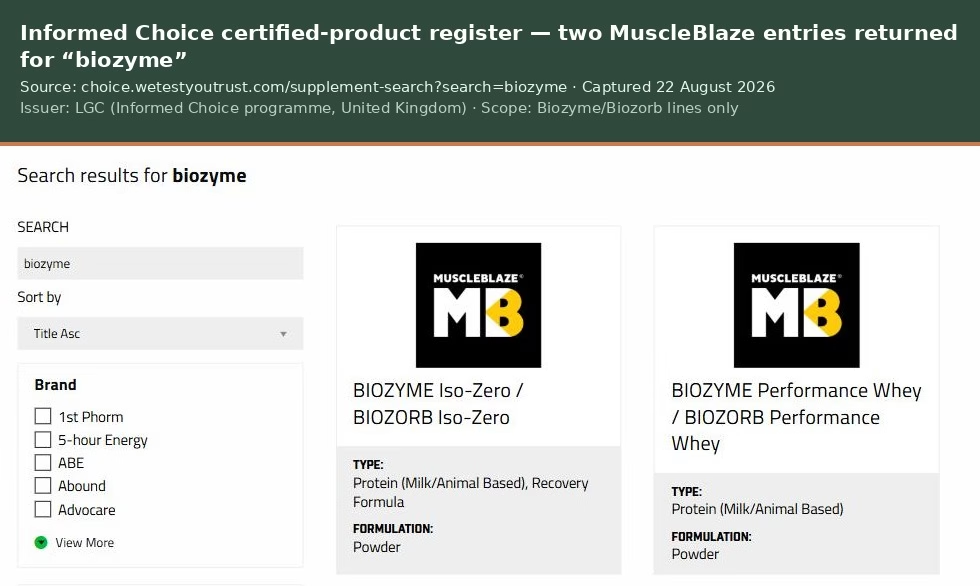
Tap any capture to open it full size — register screenshots need pinch-zoom on a phone.
About this article
Written and researched by Martin M. — Martin does the product research, register checks and label arithmetic behind Naatural.in’s comparisons.
Reviewed by Victoria M — founder of Naatural.in; Victoria sets editorial direction and reviews every product recommendation before publication.
Neither Martin nor Victoria lab-tested these products, and nothing in this article should imply otherwise. Every claim here is either printed on a label, published by a brand and attributed to it, or recorded in a public register we searched and dated.
Related reading
Start here