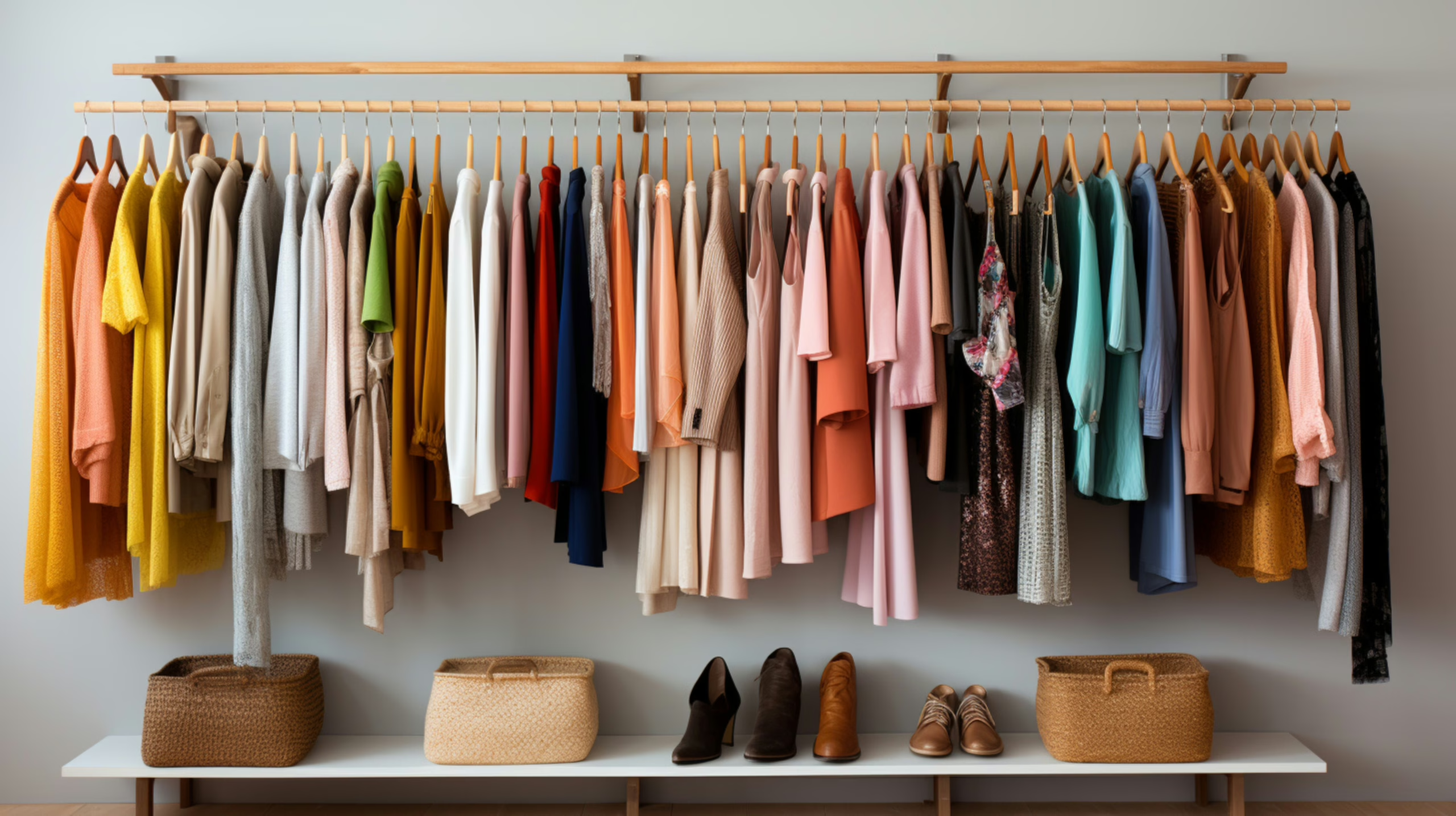
Let’s start with a quick question: How often do you look at your overflowing wardrobe and feel like you have nothing to wear? And then a week later, you add another “must-have” to your cart because it was on sale?It might be time to rethink what your wardrobe says about you — and that’s where understanding the Conscious Closet Meaning truly begins.
Yeah…
what if your wardrobe wasn’t a place of chaos, guilt, or impulse, but of clarity, confidence, and conscious choices?
Welcome to the world of the Conscious Closet — a space (and a mindset) that’s not just about clothes, but about the story your clothes tell. If you’ve ever wondered what the Conscious Closet’s meaning is, you’re in the right place.
What is a Conscious Closet?
A Conscious Closet is not about being minimalist or ditching fashion. It’s about making mindful, sustainable, and ethical choices regarding your clothing — what you buy, how often you wear it, how you take care of it, and what happens to it when you’re done.
“A conscious closet isn’t about having less. It’s about loving more — loving what you wear, who made it, and how it fits into the world.”
This captures the core of the Conscious Closet meaning: fashion that aligns with your values, not just your trends. It means:
- Choosing natural fabrics over synthetic ones.
- Supporting local or ethical brands.
- Repairing or repurposing clothes instead of tossing them.
- Swapping with friends or thrifting.
- Understanding the true cost of a ₹399 T-shirt.
It’s fashion that feels good on your body, soul, and the planet.
What it Means to Shift Towards a Conscious Closet?
Let’s be real, fast fashion is addictive. New styles every week, influencer hauls, big fat sales… It’s designed to trigger dopamine and keep us hooked. But it comes with a cost.
When you embrace a conscious closet, you:
- Stop overbuying and start enjoying.
- Discover your true style instead of chasing trends.
- Support fair wages and ethical working conditions.
- Reduce your contribution to landfills, water waste, and pollution.
- Save money long-term by investing in quality over quantity.
“Your wardrobe should reflect you, not a brand’s marketing calendar.”
And here’s the magic: the more conscious your closet becomes, the more confident and content you feel. You stop dressing to impress — and start dressing to express. That shift is a major part of the Conscious Closet, meaning clothing with purpose and mindfulness.
How a Conscious Closet Can Help the Environment
Now for some jaw-dropping truths:
- The fashion industry is the third-largest polluter globally.
- It takes 2,700 liters of water to make one cotton T-shirt. That’s enough for one person to drink for 900 days.
- Over 85% of textiles end up in landfills each year.
- Synthetic fabrics like polyester release microplastics every time we wash them, which end up in oceans and our food chain.
“Fashion shouldn’t cost the Earth. But right now, it does.”
By choosing a conscious wardrobe, you help promote sustainability. This makes up a huge part of the Conscious Closet, meaning not just wearing better, but living better. By doing so, you:
- Cut down your carbon and water footprint.
- Help break the cycle of overproduction.
- Promote circular fashion — reuse, recycle, repair.
- Inspire others to slow down and think before they buy.
Small steps, yes. But small ripples make big waves.
The State of Conscious Closets in India
Here’s the good news — India is waking up to conscious fashion.
Our roots are deeply tied to handlooms, natural dyes, and sustainable living. The saree you saw your grandmother wear for 30 years? That’s slow fashion. The cotton kurtas from local haats? That’s ethical clothing. We’ve always known how to do it — we just got distracted by malls and mass production. Now, the Conscious Closet meaning is being redefined with our own roots: handlooms, upcycling, and traditional crafts.
Today:
- Indie fashion brands are reviving Indian weaves and crafts.
- Urban millennials are embracing thrifting, upcycling, and capsule wardrobes.
- Influencers are talking about mindful fashion swaps instead of blind hauls.
- Platforms like Amazon India now offer curated sustainable fashion picks.
Sure, we’re at the beginning — but the shift is happening. And it’s beautiful to watch.
How to Transition to a Conscious Closet (Without Overwhelm)
You don’t need to dump everything and buy new sustainable clothes. That’s not the point. Here’s a simple step-by-step guide to begin your journey:
1. Audit Your Closet
Go through everything. Ask:
- Do I wear this often?
- Do I feel good in it?
- Can I style this in 3+ ways?
Sort into: Keep, Repair, Donate, Repurpose.
2. Buy Less, Choose Better
Next time you’re tempted to impulse buy:
- Wait 48 hours.
- Ask: Will I wear this at least 30 times?
- Check the label — is it made of natural, breathable fabric?
3. Discover Your Style
Trends fade. Style stays. Find what works for you — silhouettes, colors, patterns — and stick to it.
4. Learn to Care
- Wash less often and in cold water.
- Air dry instead of machine dry.
- Store properly to make things last.
5. Support Ethical Brands that Mean Conscious Closet
Instead of 4 cheap tops, buy 1 well-made shirt from a brand that respects its makers and the planet.
6. Swap, Rent, Thrift
Organize a clothing swap with friends. Try thrift stores or online thrift pages. Rent for weddings or events instead of buying something you’ll wear once.
“Moving towards a conscious closet is not a race. It’s a relationship — with your clothes, your choices, and your values.”
Brands on Amazon India That Supports the Meaning of Conscious Closet
Amazon is often associated with fast shopping, but it’s also home to some amazing Indian ethical and sustainable brands. Here are a few worth checking out:
1. Okhai
Category: Women’s wear, Home decor
About: Started by the Tata Group to empower rural artisans, Okhai celebrates handcrafted clothing using traditional Indian techniques — think mirror work, handblock printing, and hand embroidery.
Vision: To give rural women financial independence while preserving India’s craft heritage.
2. Suta
Category: Sarees, Blouses, Dresses
About: Founded by sister duo Sujata and Taniya, Suta brings modern simplicity to classic Indian sarees. Their fabrics are mostly natural, and their supply chain is deeply artisan-led.
Vision: To make sarees cool again, while staying rooted in tradition and kindness.
3. FabIndia
Category: Everyday ethnic wear, men’s and women’s clothing, accessories, home
About: One of India’s oldest and most loved sustainable brands, FabIndia works with rural artisans to create handwoven, natural fiber-based clothing and lifestyle products.
Vision: Empower traditional craftspeople through sustainable livelihoods while celebrating Indian heritage.
“Every kurta, dupatta or dhurrie from FabIndia is stitched with a story — of art, dignity, and patience.”
2. Tjori
Category: Indo-western wear, organic skincare, kidswear, accessories
About: Tjori blends ancient Indian crafts with modern aesthetics. They use natural fabrics, block prints, and Ayurvedic principles in many of their creations.
Vision: To bring Indian wellness, heritage, and sustainability to the global stage.
4. EcoRight
Category: Conscious handbags, totes, lunch bags, travel pouches
About: Based in Ahmedabad, EcoRight designs quirky, durable bags made from organic cotton, recycled PET bottles, and eco canvas. Their factories are SEDEX and Fair Trade certified.
Vision: Make sustainability fun, functional, and fashionable.
“Their bags scream ‘statement piece’ but whisper ‘low carbon footprint.’ That’s the kind of drama we like!”
5. Aurelia (TCNS Clothing)
Category: Women’s ethnic and Indo-Western
About: While not a slow fashion brand in its entirety, Aurelia uses breathable, high-quality fabrics like cotton and rayon, and is expanding toward eco-friendly production processes.
Why it fits: For conscious buyers looking for longevity and comfort in ethnic fashion, Aurelia is a dependable bridge brand.
Bonus Tip: Filter Smartly on Amazon
Want to hack your way through Amazon’s catalog to find conscious fashion faster?
Try searching:
- “Organic cotton women’s tops”
- “Sustainable handbags India”
- “Khadi kurta men”
- “Handloom sarees online”
- “Fair Trade Fashion India”
And don’t forget to check product descriptions and reviews — many small, ethical sellers list under lesser-known names but offer beautiful, sustainable options.
Final Threads: Let’s Reimagine Our Wardrobe
A Conscious Closet isn’t a privilege or a Pinterest goal. It’s a quiet, everyday revolution.
It’s choosing to value quality over quantity, stories over trends, and people over price tags. And ultimately, that’s the Conscious Closet meaning — clothing that cares.
And the best part? You don’t need to be perfect. You just need to start — one mindful shirt, one ethical brand, one loving repair at a time.
“Your style isn’t fast or slow. It’s you. Let it reflect your values, not just your vibe.”
Now, tell me this — what’s one small change you’ve made (or plan to make) in your wardrobe to be more conscious? Drop it in the comments. I’d love to hear your story — and maybe even feature it in a follow-up post!


 By
By